Youth and Terrorist Recruitment : New Study in Areas Under Jihadist Influence Spécial
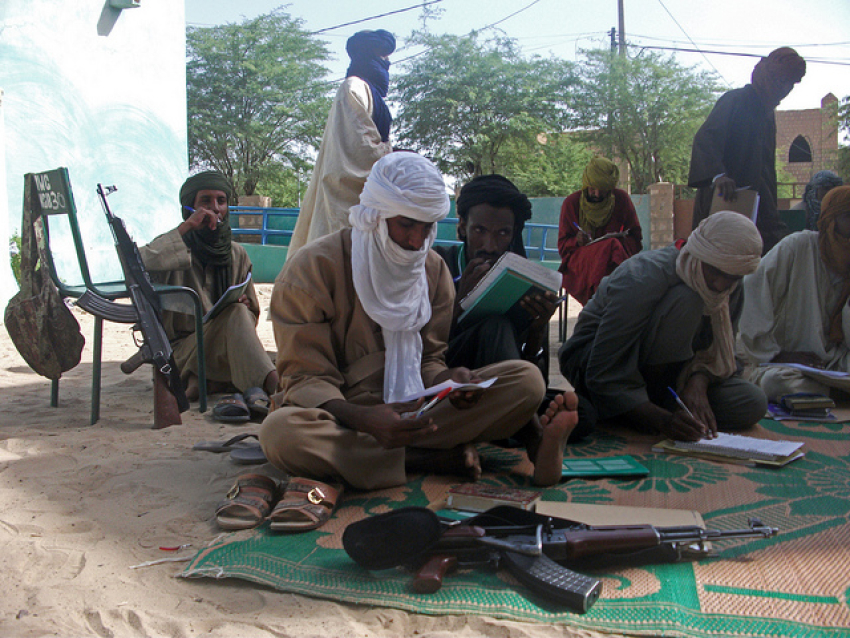 © Flickr / Magharebia
Timbuktu Institute – August 2026
The Timbuktu Institute – African Center for Peace Studies and the Institute for Strategic Research (IRS) of the International Academy for the Fight Against Terrorism (AILCT) have published the interim findings of a field study conducted from January to April 2026 in two Sahelian areas severely affected by jihadist violence: Ménaka, in northeastern Mali, and Diffa, in southeastern Niger. Titled "Young Boys and Girls in Areas Under Jihadist Influence," the full study — which will be published and presented to the authorities before wider dissemination — examines the mechanisms of youth recruitment and the levers for their protection, using a comparative approach unprecedented across the two field sites. The findings discussed in this article were presented by the study's scientific coordinator, Dr. Bakary Sambe, during a debriefing session organized by the Institute for Strategic Research of the International Academy for the Fight Against Terrorism (AILCT) in Jacqueville, Côte d'Ivoire.
To capture, as closely as possible, the drivers of recruitment and the dynamics shaping young people's trajectories, the study drew on in-depth fieldwork carried out over several months with local populations and stakeholders. Timbuktu Institute field teams conducted, over several months, individual interviews with young people aged 18 to 35, complemented by additional interviews with key informants (NGOs, religious leaders, local authorities, former combatants) and five focus groups organized in Ménaka in April 2026. This data collection, grounded in a qualitative approach and a principle of ongoing observation rather than one-off interviews, was carried out within a strict ethical framework guaranteeing full anonymity, informed consent, and consideration of fears of reprisal.
Economic factors at the heart of recruitment
The first finding, consistent across both field sites, is that poverty and unemployment constitute the main gateway to recruitment, cited by 97% of respondents as the primary vulnerability factor, ahead of the effects of dropping out of school (88%), forced displacement (80%), and food insecurity (74%). However, religious or ideological narratives — sometimes overlooked by certain analysts — emerge as an important framing device, present across all the factors cited as motives for joining jihadist groups. The study documents three recruitment strategies depending on context: economic enticement (money distributed gradually, promises of motorbikes, status symbols), which dominates in Ménaka; religious manipulation, used by Boko Haram in Diffa; and direct coercion, present in both areas, including through abductions.
Real but limited resilience
Faced with these recruitment dynamics, communities possess genuine resilience resources, though their reach remains limited by still-insufficient support. In these contexts, the family remains cited by 88% of respondents as the first line of protection, followed by religious leaders (72%), customary authorities (60%), and, in Ménaka, a generally positive relationship with defense and security forces (65%). Yet these mechanisms are themselves weakened by poverty, population displacement caused by insecurity, and fear of reprisals. Respondents appear unanimous on one point: awareness campaigns disconnected from any economic support do not work, nor do vocational training programs without identified job prospects.
Six vulnerability profiles
The study also offers a tool directly usable by field actors. It identifies a typology of six profiles of vulnerable youth: rural school dropouts, orphans or children separated from their families, young heads of household (young parents), frustrated and marginalized youth, young girls exposed to gender-based violence, and former combatants seeking reintegration. Each profile is accompanied by its triggers, warning signs, and priority windows for intervention — underscoring the importance of a differentiated approach in prevention and counter-terrorism strategies.
Five areas of recommendations
Finally, the recommendations, drawn from respondents' own views and perceptions, are organized around five areas: 1) employment and economic empowerment, regarded as the absolute priority; 2) strengthening access to education; 3) psychosocial support; 4) restoring state presence in neglected areas; and 5) support for community-based resilience mechanisms. In this regard, specific recommendations focus particularly on protecting girls, notably against the risk of digital "love traps." Finally, to technical and financial partners, the study sends a clear message: prioritize multi-year funding (3 to 5 years minimum), integrated rather than sectoral approaches, and the systematic involvement of communities in both the design and evaluation of prevention and counter-terrorism projects and initiatives.
Dernier de Timbuktu Institute
- RAPPORT - Désinformation, démocratie et enjeux de stabilité et de sécurité : quels défis partagés entre le Sahel et l’Europe ?
- Doha Global Security Forum : West Africa Makes Its Voices Heard
- Global Security Forum de Doha : l'Afrique de l'Ouest fait entendre ses voix
- Dakar consultations – “Between ECOWAS and the AES, dialogue is no longer just a diplomatic option, it is an imperative of collective security” (Dr. Bakary Sambe)
- Concertations de Dakar - “Entre la CEDEAO et l’AES, le dialogue n’est plus une simple option diplomatique, c’est un impératif de sécurité collective » (Dr. Bakary Sambe)