Damiba affair: Territorial reconquest and consolidation of power in Burkina Faso Spécial
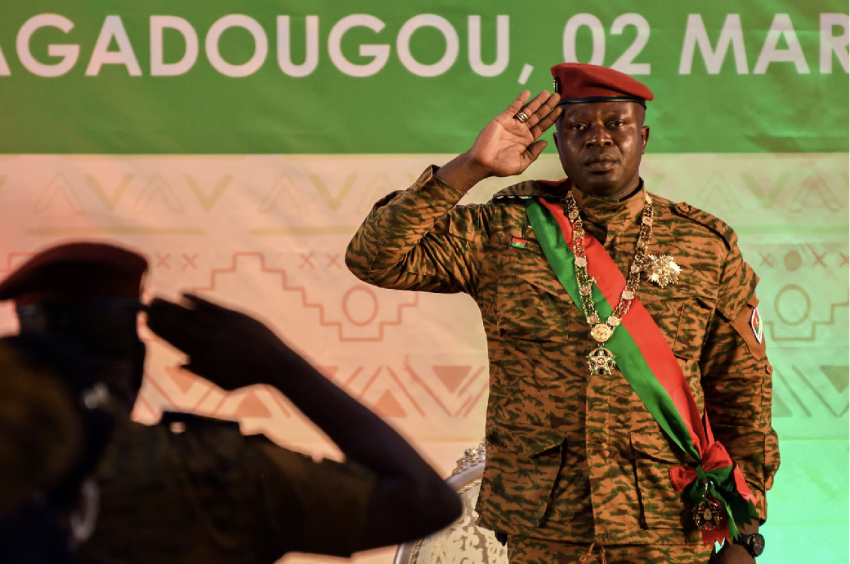 © ANNE MIMAULT/REUTERS
From January 17 to 25, 2026, Burkina Faso was marked by a major political and security event: the handover of former junta leader Paul-Henri Sandaogo Damiba, who had been living in exile in Togo since his fall in September 2022, to the Burkinabe authorities. He has often been accused of attempting a coup against the state since his exile. This information has been confirmed by the country's judicial authorities. This event demonstrates that the Burkinabe transition is engaged in a war, not only against armed groups, but also against those who attempt to disrupt internal cohesion with the aim of neutralizing any attempt at a coup d'état and destabilization of the ruling power. According to several sources, the transfer was carried out under the guarantee that the individual concerned would not be sentenced to death.
Security emergency and political tightening: Burkina Faso's dual conflict put to the test by the Damiba affair
In the coming weeks, government communications are likely to focus on increased vigilance by the security services, the neutralization of subversive networks, and the need to maintain strict discipline within the armed forces. This sequence is part of a broader context of the militarization of governance, already observable for several months, in which the state justifies political tightening on the grounds of security emergency. For more than three years, Burkina Faso has been facing a dual structural conflict: an asymmetrical territorial conflict linked to irregular armed groups, and an intra-elite conflict fueled by successive coups, personal rivalries, and shifting loyalties. The Damiba affair illustrates the fragility of the political-military architecture: even when ousted, former leaders remain a potential political resource for dissident networks.
Territorial reconquest and demonstration of authority: securing the east as a lever for consolidating power
Meanwhile, regaining power has remained a priority for the regime since it came to power. The field visit by the Minister of State for Patriotic Defense to the eastern region, notably to Fada N'Gourma, Falagountou, Ougarou, Diapaga, and Kompienga, is part of this dynamic. It is part of the "strategy for the gradual reconquest of territorial integrity and restoration of security." In the near future, we can expect a tightening of political and security control at the top of the state and the opening of broader legal proceedings against other figures perceived as threats.