Senegal : Between regional ambitions and institutional tensions in Dakar Spécial
Timbuktu Institute Week 2 - June 2026
Download the full Sahel weather report
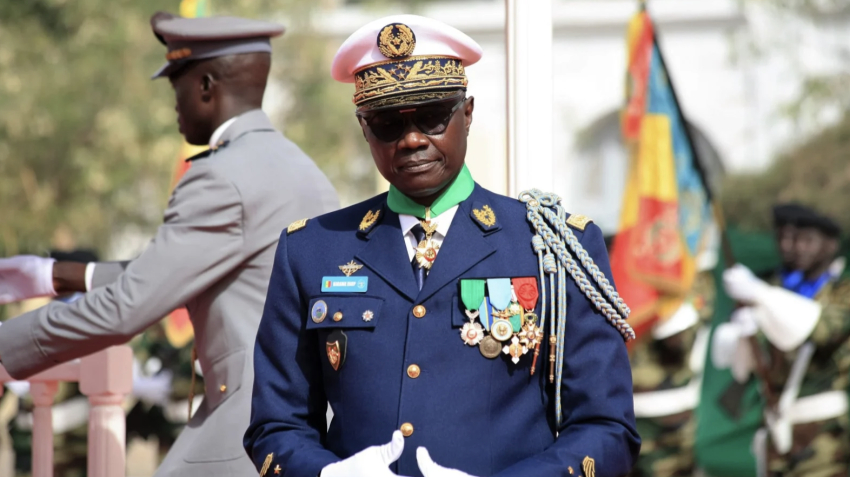
Against a backdrop of ongoing shifts in the regional balance of power, Senegal is working to strengthen its position, with its sights set on playing a central role in the current dynamics. It is in this context that Dakar is currently conducting a diplomatic offensive in West Africa to bolster General Birame Diop’s candidacy for the presidency of the ECOWAS Commission for the 2026–2030 term. Following stops in Freetown and Abidjan, Foreign Minister Cheikh Niang’s tour continued on 8 June in Lomé, where he was received by the President of the Togolese Council, Faure Gnassingbé. Conveying a message from President Diomaye Faye, Senegal’s foreign minister officially presented the candidate nominated by Senegal and sought the support of the Togolese authorities. This move forms part of a broader regional strategy aimed at strengthening support for the Senegalese candidacy in the run-up to the upcoming ECOWAS elections. According to Dakar, this campaign aims to promote a candidate deemed capable of contributing to the revitalisation of the regional institution, given the major security and political challenges in West Africa. It also comes at a time when Senegal, which currently holds the chairmanship of the ECOWAS Commission, makes no secret of its desire to play a greater role within the regional organisation.
Meanwhile, on 10 June, President Diomaye Faye received an envoy from his Mauritanian counterpart, Mohamed El Ghazouani, as part of efforts to strengthen political dialogue between the two neighbouring countries. The special envoy, the Mauritanian Minister for Foreign Affairs and African Cooperation, Mohamed Salem Ould Merzoug, delivered a message from the Mauritanian Head of State. This meeting forms part of the ongoing regular exchanges between Dakar and Nouakchott, which maintain strategic and structured diplomatic relations. In this instance, the discussions reaffirmed the two countries’ shared commitment to strengthening their cooperation in several priority sectors, notably the economy, energy, fisheries and security, within a regional context characterised by a high degree of interdependence. Beyond being a diplomatic gesture, this meeting illustrates the depth of Senegal-Mauritanian relations and the desire of both countries to strengthen a partnership described as fraternal, in the face of the political, economic and security challenges facing the sub-region.
Institutional balances in flux
On the domestic front, amid escalating tensions between President Diomaye Faye and his former Prime Minister Ousmane Sonko, a coalition comprising trade unions, intellectuals and civil society actors has appealed to public opinionto warn of the risks of an institutional crisis. At the heart of the controversy lies Sonko’s reinstatement to the National Assembly – the legality of which is contested by n the opposition – and which enabled his election as Speaker. The signatories believe that only the Constitutional Council can resolve this dispute and restore a climate of political calm. They are urging it to rule swiftly on the appeal already lodged by opposition MPs, in order to prevent the conflict from turning into a protracted power struggle between the presidency and the parliamentary majority.
Meanwhile, two Pastef MPs, Ismaila Diallo (First Deputy Speaker of the National Assembly) and Cheikh Thioro Mbacké (Third Deputy Speaker), have announced their resignation from their posts as Deputy Speakers of the National Assembly of Senegal. On the one hand, Ismaila Diallo justifies his decision on the grounds of a “sense of responsibility and loyalty” to his commitment. For his part, Cheikh Thioro Mbacké describes it as a decision taken after careful consideration, motivated by “personal and political considerations”. However, both elected representatives remain Members of Parliament. Whilst the underlying reasons for these moves are not yet entirely clear, they appear to be a new episode in the political manoeuvring within Parliament, where the Pastef intends to wield its legislative power in the political dispute pitting it against the Head of State.