Cameroon : elusive peace, media under pressure and constrained partnerships Spécial
 © AFP
© AFP
Timbuktu Institute October 2026 - Week 1
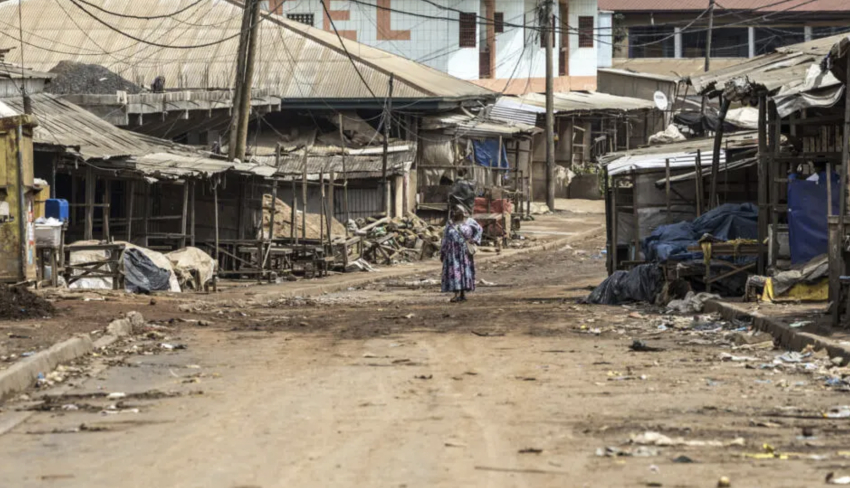
Nearly ten years after the outbreak of the Anglophone crisis, Cameroon is still facing a rift that has brought interrupted schooling, displaced families and territories durably scarred by fear. In the North-West and South-West regions, persistent violence, population displacement and disruption of daily life are a constant reminder that peace remains largely to be built. And Yaoundé is well aware of this. On a visit to the city of Buea, Prime Minister Joseph Dion Ngute again called, on 28 September, for an end to the cycle of violence. But at the same time, the kidnappings, the threats against schools and the “ghost town” operations held on the same day were a reminder, if one were needed, that political dialogue continues to run up against a persistent security reality. “Dialogue must produce results,” the head of government insisted, as if to underline that the challenge remains to change the actual conditions for peace. That said, the choice of Buea is not insignificant. In the South-West, the crisis has deeply disrupted public services, particularly education. Five teachers were kidnapped on 8 September in Wum before being released the next day. On 25 September, the head of a public secondary school had been shot and wounded during an attempted kidnapping in Bamenda. In several localities, separatist groups also continue to impose curfews and threaten parents who send their children to school. The September school term thus offered a new measure of the conflict’s grip on daily life. It was in this context that the “ghost town” day of 1 October confirmed this state of affairs. For the separatists, the anniversary of the 1961 reunification retains strong symbolic value, especially as it coincides with the proclamation of “Ambazonia” in 2017. In Bamenda, Buea and neighbouring localities, the slowdown in activity was accompanied by a large security deployment. Ten years after the start of the crisis, the toll remains heavy: several NGOs report more than 6,000 deaths and hundreds of thousands of displaced people.
Media standoff
This difficulty in restoring lasting order in the Anglophone regions finds another echo in the standoff now pitting the Cameroonian authorities against part of the media landscape. On 29 September, the National Communication Council (CNC) suspended Vision 4 for one month, the channel owned by businessman Jean-Pierre Amougou Belinga, after several months of tension with the regulator. The sanction stemmed from the broadcast, on 2 June, of a particularly critical report targeting a lawyer for the civil party in the Martinez Zogo case. Journalist Martial Owona had already been suspended for three months, while the L’Anecdote group had refused to respond to the CNC’s summonses. Its media director, Philippe Boney, had even declared that he “couldn’t care less about the CNC”. The confrontation then moved to a different arena, with the group challenging the legality of the sanctions in court and questioning the mandate of the Council’s chairman, Joseph Chebongkeng Kalabubsu. The regulator’s response matched this escalation: Vision 4 and Philippe Boney were suspended for one month, Martial Owona’s sanction was extended to six months, and Jean-Claude Fouda Abega, publication director of L’Anecdote, was also suspended. However, the channel was able to keep broadcasting in Cameroon through Vision 4 RCA, its Central African version, which falls outside the CNC’s jurisdiction.
Between levers and dependencies
In parallel, Yaoundé also intends to strengthen its room for manoeuvre on the economic front, notably by focusing on infrastructure capable of supporting regional trade. It was in this context that, on 4 October, President Paul Biya authorised a loan of around 390 million dollars from the International Bank for Reconstruction and Development (IBRD) to modernise the Douala-Bangui corridor. The route is strategic for the Central African Republic, but also for Chad, whose goods travel the more than 800 kilometres between Douala and Garoua-Boulaï. This investment is part of a broader infrastructure modernisation policy, including more than 212 million euros of financing from the Islamic Development Bank for the Douala-Bafoussam road. These projects are meant to strengthen Cameroon’s role as a gateway to the sea for several landlocked Central African countries. However, they add to an already closely watched financial equation, with several experts warning of the risks of accumulating debt.
Strengthening infrastructure also opens up another dimension of Yaoundé’s strategy: its external partnerships. On the diplomatic front, relations with Washington in turn illustrate both the room for manoeuvre and the dependencies Cameroon has to contend with. The appointment on 28 September of Christian Jové Ehrhardt as United States ambassador to Yaoundé has thus brought back into focus an agreement discreetly concluded between the two countries in December 2025. The diplomat had previously played a role in the US policy of deporting migrants to third countries, notably in the discussions that led to Cameroon’s commitment to receive up to 1,000 people deported from the United States. The arrangement, revealed several months later, had sparked controversy. Migrant rights organisations denounce the US policy of deportations to third countries and the risks of persecution or torture to which some migrants could be exposed. Cameroon, for its part, has remained discreet about the terms of the agreement. In this respect, Christian Jové Ehrhardt’s appointment to Yaoundé takes on particular resonance. The man who contributed in Washington to the policy of deporting migrants to third countries is arriving in a country that is itself expected to play a role in that system. Beyond bilateral cooperation, this appointment thus raises the question of Yaoundé’s capacity to negotiate its interests in a relationship where American priorities may also translate into new expectations of it.