Migration: a driver of socioeconomic resilience in eastern Senegal? Spécial
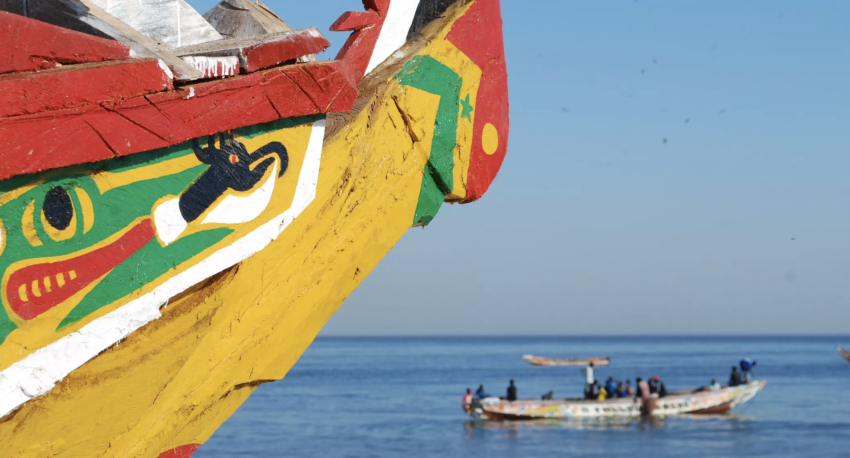 © Cheikh Tidiane Ndiaye / Unsplash
Timbuktu Institute – January 2026
The prevailing security-focused interpretation of migration in European countries tends to obscure its structural impact on African societies of origin, particularly in eastern Senegal. However, these movements act as real drivers of economic, social, and community resilience, strengthening local cohesion and the capacity to prevent violent extremism. It was in light of this premise that the Timbuktu Institute, in partnership with the Rosa Luxemburg Foundation, held a webinar on January 27 on the theme: "Migration and Resilience in Eastern Senegal: Positive Contributions to the Prevention of Violent Extremism." The discussions, moderated by the president of the Timbuktu Institute, Dr. Bakary Sambe, provided an opportunity to question the essentially security-based approach to migration in the West and to shed light on the extent to which it constitutes a lever for socio-economic and community resilience while contributing to the prevention of violent extremism.
For several decades, Senegal has been facing a complex immigration phenomenon fueled by socio-economic vulnerabilities, the aspirations of young people, and the perilous routes to Europe. Nevertheless, it should be noted that, as a relevant social fact, migration is not simply a phenomenon of mobility but is also part of the dynamics of territorial regulation and community stabilization. If we agree that the history of human societies is also a history of migration on the one hand, and that migration is a source of socio-economic resilience for communities on the other, why is the dominant analysis of migration confined to the prism of security, asks moderator B. Sambe?
According to Abdoulaye Kane, anthropologist and associate professor at the University of Florida, "the resurgence of far-right parties in Europe has contributed to reducing migration, from the point of view of host countries, to an essentially security-based interpretation. However, this approach obscures the economic contribution of migrants, both to host countries and to countries of origin." In the wake of the post-9/11 war on terror, he continues, "migration has been almost criminalized. Moreover, clichés about African demographics have fueled the idea that high youth unemployment rates automatically lead to an influx of young people into Europe, when in fact the majority of migration is intra-continental."
The diaspora: a fundamental contribution to communities
The link between migration and the development potential of the communities of origin is clear. For example, studies show that the department of Bakel derives a significant part of its livelihood from these remittances. "In the cases of Bakel and Goudiry, for example, where rainfall scarcity and declining agricultural production are problems, the contribution of immigrants is immeasurable," points out Bangaly Diallo, an expert in local and community development. According to him, "everything that the state struggles to provide is largely taken care of by the diaspora. Migrants have even financed the construction of health centers and schools. Through their associations, they have helped transform small villages into dynamic towns, thereby strengthening socio-economic resilience at both the family and community levels. Examples include the Tuabou Jikke association, the Codéria (Diawara Renovation Committee) and the Association of Goudiry Nationals," he explains.
This perspective is confirmed by Mamadou Fadé, a territorial development facilitator, who points out that these diaspora investments are having a tangible impact on communities. Due to the severe drought of the 1970s, migration "went from being a survival strategy to the main source of sustenance for communities. Very quickly, migrants helped build schools and mosques, provided livestock, and then became directly involved in production. Today, we can say that their support has improved access to basic social services. For example, all twelve health centers and high schools and middle schools in the municipality of Ballou (Bakel) were financed by the diaspora, not to mention strong support for local entrepreneurship through processing units, butcher shops, multifunctional markets, etc.," he reveals.
Immigrants as models of social success
Historically, eastern Senegal has been and remains the site of a long tradition of migration, which has ultimately established a culture of migration. Thus, according to anthropologist Abdoulaye Kane, migration has become, to a certain extent, a marker of social distinction (in the Bourdieusian sense). "Once migrants managed to make small fortunes and support extended families, migration became established in the minds of young people as the preferred route to social success," he notes. He adds: "This is why families sometimes put pressure on their members by highlighting the successes of immigrant members of neighboring families. Nevertheless, all this inevitably comes up against an image of the West as an El Dorado, which is quite far from reality."
Mamadou Fadé agrees. According to the territorial development coordinator, the figure of the immigrant has become so established as a model of socio-economic success that "if certain areas remain relatively untouched by the dynamics of extremist radicalization, it is largely because young people can still identify with this prospect of social advancement." What's more, even marriage dynamics are influenced by this. "Sometimes, when a family asks for a woman's hand in marriage, it sometimes happen , that the woman's family asks if there are any immigrants in the man's family," he says.
What does the future hold for this diaspora aid?
Given that communities in eastern Senegal derive a significant part of their livelihood from diaspora resources, there is a risk that this dynamic could run out of steam in the absence of sufficient commitment from the state, says moderator B. Sambe. This is a legitimate concern, according to Abdoulaye Kane, who notes that "it is precisely to perpetuate this dynamic that, in France in particular, these associations have set up youth sections to take over. In addition, the fact that more and more people of African descent are returning to settle and invest in their country of origin is helping to invigorate this dynamic."
From another perspective, local development expert Bangaly Diallo believes that "Vision Senegal 2025 must take full advantage of this contribution from the diaspora in order to strengthen the collaboration and consultation frameworks already established between diasporas and local authorities with a view to the emergence of medium-sized cities." Furthermore, with a view to strengthening microinsurance programs for community projects, "the diaspora should be leveraged in this regard to secure local projects, such as farms or small businesses, so that even in the event of a climate or economic crisis, community initiatives would remain viable," suggests Mamadou Fadé, a territorial development facilitator.