Ivory Coast: internal restructuring and regional diplomacy in the Sahel Spécial
 © ACF et FB
Timbuktu Institute – Week 4 - January 2026
Between the reshuffle of the executive branch and the escalation of regional diplomatic tensions following incidents in Niger, Côte d'Ivoire has experienced a week marked by the close intertwining of domestic politics and diplomatic issues. This situation illustrates the strong interdependence between internal dynamics and the regional environment, showing that political developments in Côte d'Ivoire are inseparable from diplomatic and security tensions in West Africa.
Post-Niamey attack accusations: diplomatic escalation and weakening of Niger-Côte d'Ivoire relations
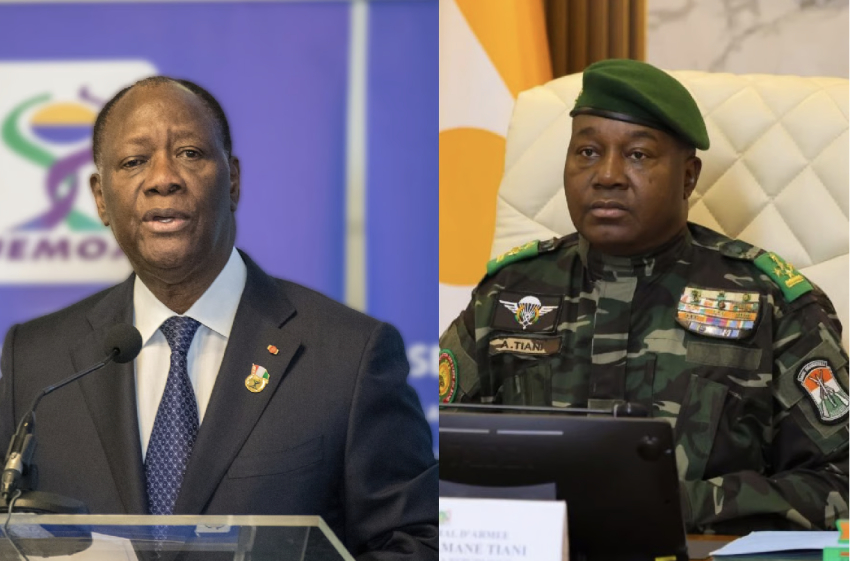
After the attack on Niamey airport, Niger openly accused France, Benin, and Côte d'Ivoire of being involved in these abuses. This accusation of complicity reflects a hardening of diplomacy, revealing a climate of increased mistrust in the region in recent times. This accusation is part of a pattern of blaming external parties, which tends to strain regional relations and complicate prospects for security and diplomatic cooperation, particularly between Niger and Côte d'Ivoire, but also between ECOWAS and UEMOA. For its part, Abidjan responded by recalling its ambassador to Niamey and firmly rejecting these allegations, while reiterating its commitment to the principle of non-interference. The Ivorian Ministry of Foreign Affairs and International Cooperation expressed its "strong indignation" and denounced "in the strongest terms" remarks that it considers contrary to diplomatic practice and which undermine "the honor and dignity of the Ivorian head of state and the Ivorian people." This episode illustrates the fragility of relations between states in a Sahel undergoing profound change.
Côte d'Ivoire and the tensions in the Sahel: how to reconcile security imperatives, diplomatic pressures, and regional cohesion?
A long-standing member of ECOWAS and close to certain international partners, including France, Côte d'Ivoire finds itself in a delicate position, torn between the need to stabilize its borders and the management of political accusations from ESA states. Recent incidents highlight the risk of regional polarization. This observation underscores the country's strategic vulnerability, caught between internal security imperatives and regional political and diplomatic pressures. It is also important to highlight the danger of a hardening of divisions in West Africa, to the detriment of dialogue and regional cooperation, which would bring the two entities (ECOWAS and ECCAS) closer together in a unified dynamic.
Government continuity, refocusing on security, and the need for diplomatic de-escalation
At the same time, the government reshuffle in January is part of a logic of institutional continuity, while reflecting a refocusing on security issues. Furthermore, regional tensions following the attack in Niamey could affect trade flows, port activities, and regional security cooperation frameworks in the short and medium term. Its position at the crossroads of external actors and Sahelian countries requires it to adopt a measured diplomatic approach and rigorously manage the risks weighing on its economic axes . In the coming days, it is in Abidjan's best interest to defuse this conflict in order to counter any diplomatic escalation, prevent lasting regional polarization, and preserve the security and economic cooperation mechanisms that are essential to the stability of West Africa.