 © Ludovic MARIN/AFP
Timbuktu Institute – Week 4 - January 2026
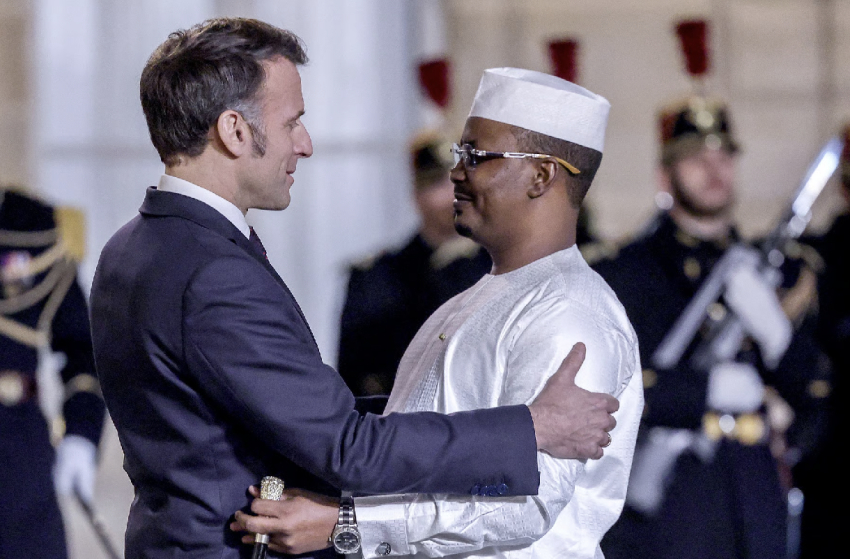
After a year of tensions between Chad and France, marked by the withdrawal of French troops from Chad, the two countries have decided to turn a new page in their bilateral relations. Chad's President Mahamat Idriss Déby Itno was received at the Élysée Palace on January 29 by his French counterpart Emmanuel Macron. At the end of a working meeting, the two heads of state welcomed a "revitalized partnership based on mutual respect and shared interests." In a joint statement, Déby and Macron "agreed on a series of guidelines that will serve as a roadmap for revitalizing the Franco-Chadian partnership in areas of shared interest to both countries." The two also discussed the war in Sudan, a neighboring country of Chad that has been impacted by the conflict. On this subject, both "urge" the warring parties "to implement the humanitarian truce proposed by the 'Quad'" - the international mediation group composed of the United States, Egypt, the United Arab Emirates, and Saudi Arabia.
However, this meeting did not sit well with part of the Chadian opposition. As proof, the coalition Groupe de concertation des acteurs politiques (GCAP), which had suspended its activities a month ago, broke its silence with a scathing statement. Accusing France of "almost total interference" in Chad's affairs, the GCAP denounced the "diplomatic dealings and wheeling and dealing" between Déby and Macron. According to the opposition alliance, "these agreements are against the Chadian people, trampling on their freedom and their right to decide their own destiny." Indeed, without necessarily subscribing to this interpretation, it would not be reckless to question this thaw between the two countries. Admittedly, France and Chad are long-standing historical allies. However, this new rapprochement highlights the complex challenges facing N'Djamena, which is working to strengthen its international alliances while maintaining sub-regional stability. But more than that, it also illustrates the structural tension between diplomacy and internal political legitimacy, where the mistrust of a muzzled opposition could exacerbate the perception of a possible nervousness on the part of the government among its citizens and political actors.
Diplomatic offensive
Clearly, the end of January was a period of intense diplomatic activity for N'Djamena. While the head of state met with his French counterpart in Paris, the Chadian Minister of the Armed Forces, General Issaka Malloua Djamouss, received several international delegations, notably from Turkey, the United States, and Hungary, as well as the Regional Director for Africa of the French defense company Safran. These meetings focused on strengthening technical and military cooperation, training the Chadian armed forces, and establishing strategic partnerships. According to General Djamouss, this series of meetings aims to consolidate bilateral defense relations and strengthen Chad's capacity to address regional security challenges. In fact, this series of meetings is tangible evidence of Chad's desire to combine diplomacy and military strategy to establish its regional role by increasing international partnerships in order to strengthen its security in the face of geopolitical challenges in the sub-region.