 © TDR
© TDR
Timbuktu Institute – Week 2 – February 2026
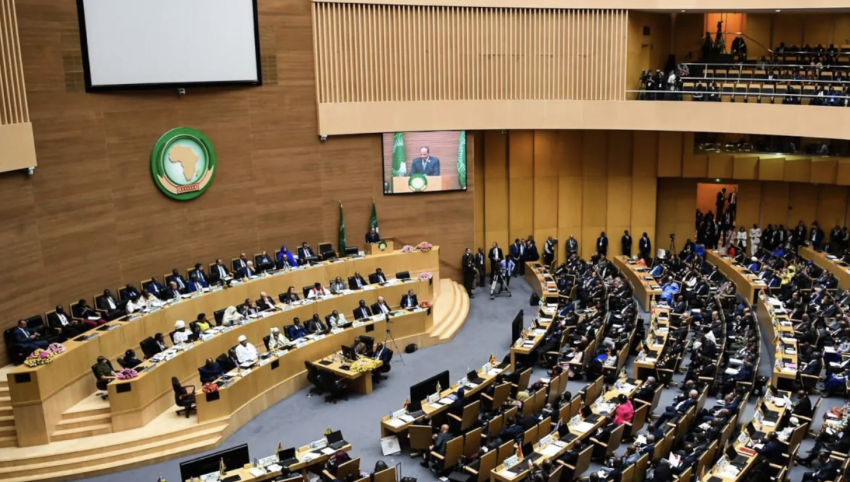
Benin can congratulate itself on a major diplomatic success. As the 48th session of the Executive Council of the African Union (AU) for 2026-2028 opened on 11 February in Addis Ababa, Ethiopia, Benin was elected a member of the AU Peace and Security Council. In a statement, Cotonou welcomed this as a "sign of confidence and recognition of Benin's ongoing commitment to peace, security, stability and conflict prevention on the African continent. Of the ten seats on the Council up for election, Benin is one of six new members, along with Lesotho, Gabon, Morocco, Somalia and South Africa.
Domestically, following the general election, the 10th legislature in the country's history elected the leader of the main presidential majority party, Joseph Djogbénou, as its head on 8 February. The former Minister of Justice and former President of the Constitutional Court was the only candidate for the position. It was therefore no surprise that he was unanimously elected by a Parliament made up entirely of the two parties of the ruling majority, the Progressive Union-Renewal (UP-R) (his party) and the Republican Bloc (BR). In his speech, Joseph Djogbénou emphasised institutional continuity, stressing that the change in leadership should not jeopardise the functioning of the institution in line with his predecessor, Louis Gbèhounou Vlavonou.
Reopening of the Tsamiya-Kamba corridor
The Tsamiya-Kamba corridor, which allows passage from Benin to Niger via Nigeria, has been open again since 9 February, after being closed for several months. This cross-border road link between the three countries is of great importance for the transit of goods from the port of Cotonou (Benin) to Niger through Nigerian territory. The reopening was authorised by Nigerian President Bola Tinubu ‘as part of efforts to ease trade restrictions while preserving national security’. The reopening of this transit route has cleared the way for more than 1,600 lorries loaded with goods bound for Niamey, which had been stuck in Cotonou.
The Nigeria-Niger border had been closed since 2019 to combat smuggling. And the Niger-Benin border had been kept closed due to diplomatic tensions between Cotonou and Niamey since 2023. This situation hampered road convoys, which were forced to take a long detour via Togo and Burkina Faso. Beyond simply resuming traffic, this reopening reflects a political desire for gradual détente between the states concerned, even if it is more in line with a pragmatic approach to managing regional tensions. It therefore appears that sub-regional dialogue is far from broken and that economic imperatives, particularly for landlocked Niger, are important in shaping diplomatic decisions in the sub-region. In this sense, this consensual measure between Abuja, Niamey and Cotonou is likely to stimulate sub-regional cooperation and, at the same time, highlight the strategic role of the port of Cotonou in Niger's economy and in West African trade.