Cameroon: Pope Leo XIV's visit, a sounding board for political tensions?
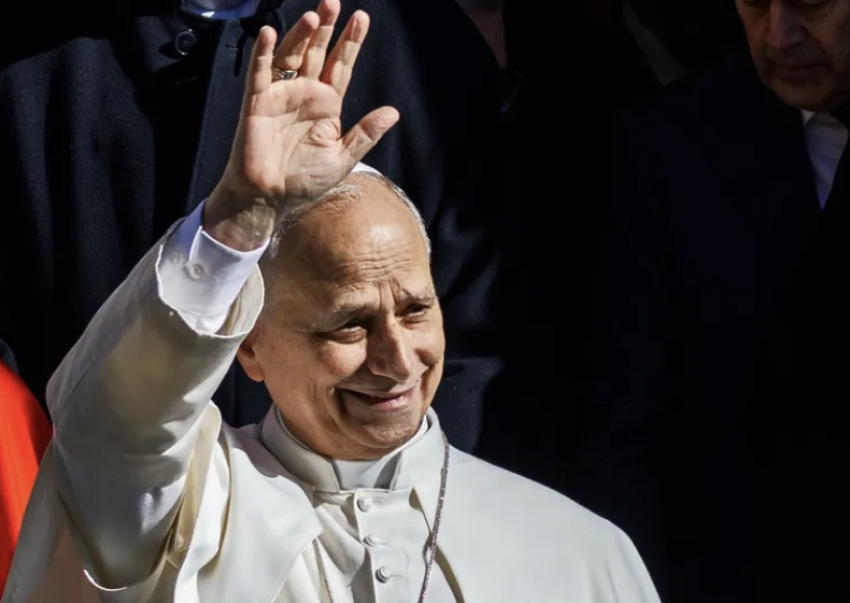 © Hans Lucas / AFP
Timbuktu Institute - Week 4 - February 2026
For his first visit to Africa, Pope Leo XIV will travel to Cameroon. While the country's authorities are preparing a warm welcome for the pontiff, the Pope's visit, scheduled for 15 to 18 April, already appears to be a potential flashpoint for political tensions. This is because the socio-political situation that has prevailed since the disputed presidential election in October 2025 is still far from calm. In this case, part of the clergy and the opposition believe that Yaoundé intends to use the papal visit to legitimise its power in the run-up to the next legislative elections. It is in this context that Jesuit Father Ludovic Lado sent a public letter to the Pope asking him to change his agenda. But without success. ‘The main thing is that the Pope is aware of what is happening in the country, including the assassination [of opposition figure] Anicet Ekane (...) I will respect the Pope's decision to visit Cameroon, even if I do not agree with it. He is my superior,’ he resolved.
Similarly, the diaspora movement ‘Project C’, which supports opposition leader Issa Tchioma Bakary, was keen to alert the Pope. ‘You are invited to Cameroon, not to serve the truth of Christ, but to validate a lie written in the blood of those who dared to believe that their votes would count,’ the movement asserts in an open letter. Furthermore, a petition signed by writer Calixthe Beyala and posted online on 25 January condemns a ‘dictatorial regime’ and urges the Pope ‘not to visit Cameroon’. While it is doubtful that this protest will succeed in changing the papal agenda, it does highlight the toxic and volatile nature of the socio-political situation in a country where the legitimacy of power continues to be subject to criticism.
Anicet Ekane, a death that cannot be ignored
The case of opposition leader Anicet Ekane, who died in custody on 1 December 2025 following the post-election crisis, is further evidence, if any were needed, of the depth of socio-political tensions. While the Ministry of Defence published the autopsy findings on 24 February, concluding that the death was ‘natural’ and linked to ‘serious medical conditions’, the deceased's relatives rejected this conclusion. According to his son, who was contacted by Jeune Afrique, the autopsy was conducted ‘in an unhealthy context’ where the request for ‘the presence of an independent third party to ensure a minimum of objectivity was systematically refused’.
Furthermore, it is in this overall context of political turmoil that another challenge facing the Cameroonian authorities arises: drug trafficking. In this regard, nearly 2.5 tonnes of narcotics (including 1,057 kg of cocaine and 1,442 kg of tramadol) seized four days earlier at Douala International Airport were destroyed on 24 February by the Littoral Regional Commission. Despite their apparent disparity, these two events seem to paint a picture of a country grappling with a multitude of challenges (political, judicial and security-related) whose management is testing the state's ability to maintain its institutional credibility.