Senegal : Between internal constraints and diplomatic ambitions Spécial
 © laviesenegalaise
Timbuktu Institute - Week 4 - February 2026
Patricia Llombart Cussac's analysis goes beyond diplomatic courtesy; she highlights Senegal's unique position as the ‘last bastion’ of institutional stability in the face of the rise of transitional regimes in the Sahel. For the European Union, maintaining Senegal as a privileged partner is a strategic necessity. This explains the massive support for the new regime's food and energy sovereignty projects, seen as an opportunity to demonstrate that a democratic transition can meet the aspirations of young people without breaking with the constitutional order.
The Dakar-Conakry security pivot: a response to the regional ‘vacuum’
The ratification of the defence agreement with Guinea by Senegalese MPs marks a turning point. With regional organisations such as ECOWAS weakened, Senegal is favouring strong bilateral agreements with its direct neighbours. The challenge is twofold: to prevent instability in the Sahel from ‘spilling over’ to the south and to secure areas where resources are shared. This Dakar-Conakry axis is becoming a new pole of stability, independent of traditional multilateral structures, for managing asymmetric threats along the borders.
Gold mining in Kédougou: the battle for resource sovereignty
The dismantling of illegal sites in Kédougou is not just a simple police operation, it is an act of regaining economic control. Illegal gold mining is often linked to hidden financing networks and causes ecological disasters (mercury pollution). By cracking down on these sites, the Senegalese state is seeking to formalise the mining sector so that it truly benefits the public treasury, while drying up potential sources of financing for armed groups operating in border areas.
Pastef's ‘Ndogou’: the delicate balance between party and state
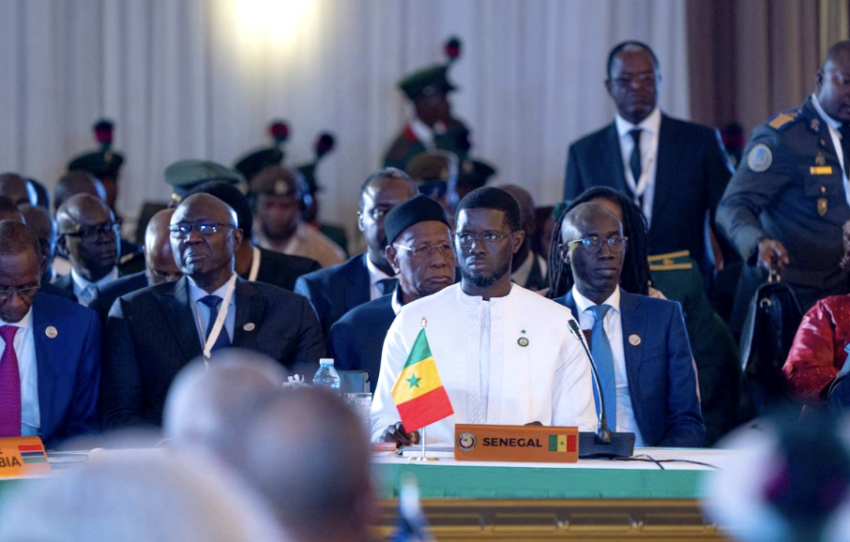
The revelations about this meeting at the Palace illustrate the challenge of the ‘rupture’ advocated by Bassirou Diomaye Faye. This moment of religious and political communion serves to reassure Pastef leaders who fear a dilution of the party's ideology in the technocratic management of the state. This is where the cohesion of the majority is at stake: how to remain a fighting party while assuming the burdens and compromises of power. These ‘ndogous’ are in fact political seminars of great importance for maintaining discipline within the ranks.
Interpol offensive: migration from the perspective of organised crime
Senegal's involvement in this Interpol operation marks a paradigm shift. We no longer talk only about ‘migrants’, but about ‘victims of criminal networks’. By targeting the logistical infrastructure of traffickers (financiers, landlords, transporters), the aim is to break the economic model of irregular migration. For Senegal, it is also a way of showing its international partners that it is tackling the migration issue at the top, by attacking the mafia roots of the problem rather than just the individuals at sea.