Ivory Coast: Security cooperation with Washington and political tensions Spécial
 © TDR
© TDR
Timbuktu Institute Week 1 - March 2026
This week, Ivory Coast finds itself at the centre of multiple strategic issues. While Abidjan is strengthening its security cooperation with the United States ahead of the 2026 World Cup, the country is still experiencing political tensions linked to post-election dynamics. At the same time, the authorities are highlighting the progress made in promoting women's rights, while acknowledging the continuing challenges in effectively implementing reforms. These different developments illustrate the delicate balance between institutional consolidation, political governance and regional diplomatic ambitions.
2026 World Cup: Côte d'Ivoire integrated into security arrangements
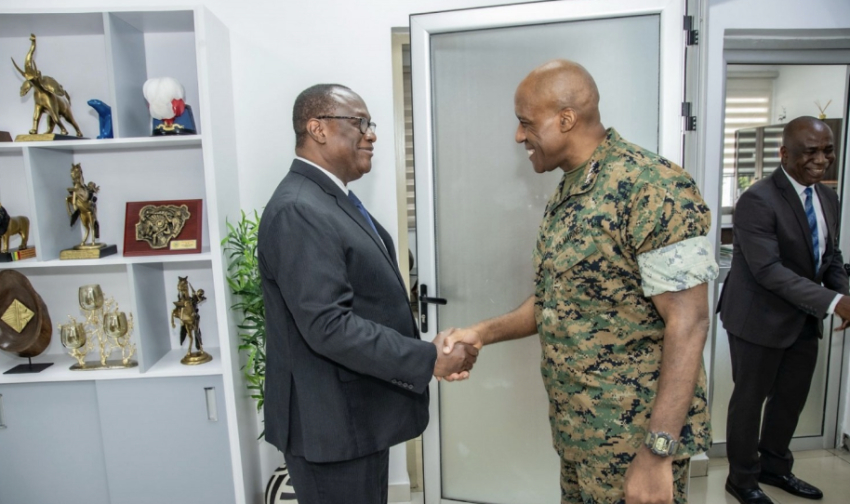
This week saw a strengthening of the security partnership between Washington and Abidjan. The United States has included Côte d'Ivoire in the security arrangements for the 2026 World Cup, which it will organise jointly with Canada and Mexico. The Counter-Terrorism Operational Intelligence Centre (CROAT), attached to the Ministry of Defence, will be at the heart of this system, and General Ousmane Yéo will be the FBI's main point of contact. This choice confirms Côte d'Ivoire as a ‘reliable partner with solid security structures and institutional stability that inspires confidence’. This integration into the global security system is a major strategic recognition for Abidjan. It validates Côte d'Ivoire's investments in intelligence and cybersecurity capabilities and strengthens the country's position as a sub-regional hub. On the diplomatic front, it consolidates a privileged security partnership with Washington, in a Sahelian context of partial withdrawal by the United States in favour of competing powers.
PDCI-RDA trial: verdict postponed, political tension remains
Domestically, the post-election period continues to be the subject of much discussion. The verdict in the case involving Yapo Yapo Calice, chief executive secretary of the PDCI-RDA, has been postponed until 27 March 2026. The prosecution has requested a three-year suspended prison sentence and a fine of 500,000 CFA francs for disturbing public order. The defence is arguing for an outright acquittal, describing the charges as political. According to Luc Adjé, the defence lawyer, ‘there was no offence. This is a political charge.’ This trial crystallises the tensions between the PDCI-RDA, the main opposition party, and the ruling party. The postponement of the verdict prolongs the uncertainty that is keeping pressure on the opposition as political deadlines approach. The classification of political activities as ‘disturbance of public order’ illustrates the tensions surrounding civil liberties in Côte d'Ivoire, and this case will be closely monitored by human rights observers.
Advancement of women: legal progress and persistent challenges
Meanwhile, Abidjan is taking stock of progress made in women's rights in all areas of social life. At a forum held by the Government Information and Communication Centre (CICG), advisor Namizata Fofana Binaté highlighted several advances made by Côte d'Ivoire: the 2016 Constitution guaranteeing equality, the 2021 law on gender-based violence, and the 2019 law imposing a 30% quota for women in decision-making bodies. According to her, ‘it is together that we can guarantee women's access to justice.’ Côte d'Ivoire has laid solid legislative groundwork for the promotion of women's rights. However, access to justice remains a major obstacle to effective empowerment, even though women represent 48% of the population (RGPH). The gap between the legal framework and its effective application is the main challenge, particularly in rural areas.