Ivory Coast: Institutional consolidation and turmoil within the opposition Spécial
 © AFP
© AFP
Timbuktu Institute – Week 2 – March 2026
Against a backdrop of land reform and border security, Ivory Coast is seeking to strengthen its Parliament and provide better training for its elected representatives. However, this institutional determination is coming up against a more complex political landscape: the PDCI-RDA, the main opposition party, is plagued by a series of suspensions that reveal significant strategic divisions. This week is therefore marked by an Ivorian political landscape in the midst of transformation, oscillating between the search for international legitimacy and conflicts over internal cohesion.
Parliamentary induction: key aspects of the mandate for the new legislature
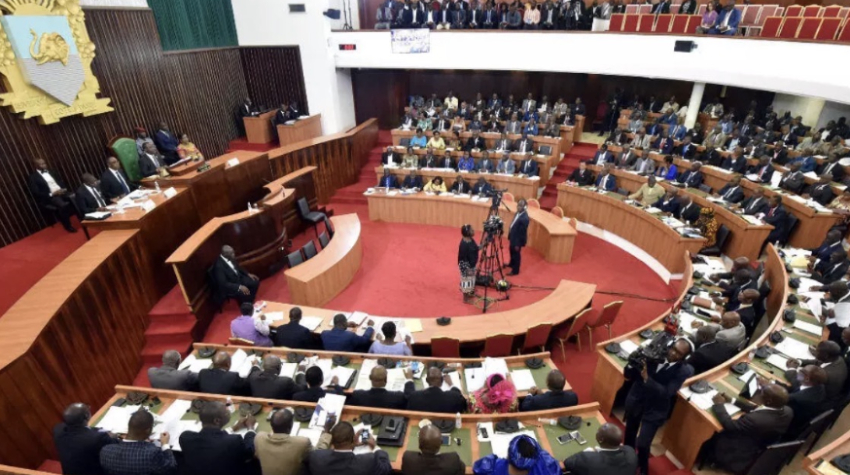
From 5 to 11 March 2026, the National Assembly of Côte d’Ivoire organised an orientation seminar for new MPs. This training session covered the essential duties of an MP, the functioning of standing committees, as well as the obligations of attendance and discretion associated with the mandate. The seminar was led by parliamentary administration officials, including Secretary-General Alain Addra. This initiative is part of an organisational tradition aimed at ensuring legislative effectiveness from the start of each term. This seminar constitutes an essential institutional integration measure aimed at professionalising parliamentary activity by providing representatives with the technical and ethical tools necessary for the exercise of their mandate.
PDCI-RDA: heading for a parliamentary exodus?
During this period, tensions within the PDCI-RDA have intensified. Four of them have ended their membership of the party’s parliamentary group. The MPs concerned are Kouamé Koffi Athanase, N'zi N'da Affoué Éliane, Adja Alain and N'gouan Jérémie Alfred, who represent the constituencies of Bocanda, Port-Bouët and Aboisso respectively. In a letter dated 6 March, they cited personal reasons whilst confirming their loyalty to the party. Numerous internal sources point to tensions regarding the leadership and strategic management of the PDCI, the main opposition party. Other political representatives may follow suit in the coming days. On 13 March, PDCI leaders urged their representatives to adopt a calm and disciplined approach. This series of suspensions reflects a crisis of internal cohesion within the PDCI-RDA, exposing marked divisions between the parliamentary group and the leadership regarding the party’s strategic direction. By citing ‘personal reasons’ whilst retaining their membership status, these elected representatives are sparking a quiet revolt that weakens the main opposition force in Côte d’Ivoire at a crucial political juncture.
Ivory Coast: a political landscape marked by reforms and internal tensions
From an institutional perspective, the establishment of a training seminar for new MPs and the country’s inclusion within the framework of international security demonstrate the state’s desire to improve its capabilities and strengthen its image as a reliable partner. Conversely, the turmoil within the PDCI-RDA reveals the internal friction inherent in a major opposition party within a political system where the prospect of a change of government is essentially hypothetical. The combination of a newly constituted Parliament, a weakened opposition and an unstable regional context requires a delicate balance between governmental efficiency and political diversity. The recently elected National Assembly may be called upon to address major legislative issues, such as land reform, regional security policies in the face of terrorist threats on the northern borders, and economic challenges linked to soaring commodity prices.