The Decapitation of Boko Haram’s Leadership: A Tactical Breakthrough in Northern Nigeria Spécial
 © 2026 BBC
Timbuktu Institute – Week 2 – March 2026
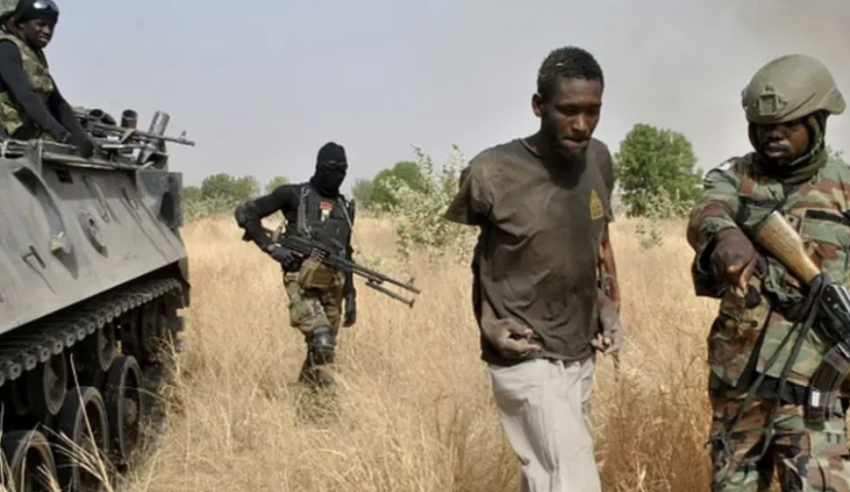
The operation of 9 March 2026, marked by the neutralisation of 45 terrorists and the “decapitation” of Boko Haram’s leadership, represents a turning point in the Nigerian army’s doctrine. Historically, the counter-insurgency campaign in the North-East has suffered from a reactive stance, leaving the initiative to jihadist groups. This precision offensive demonstrates the growing importance of fusion intelligence, enabling strikes against decision-making centres of gravity rather than mere frontline fighters. By eliminating senior figures, the army seeks to disrupt the group’s logistical and ideological coordination.
However, the argument for “decapitation” is a double-edged sword. In such a resilient structure, the disappearance of leaders often leads to fragmentation into even more unpredictable micro-cells. The risk is that lieutenants will emerge seeking to prove their legitimacy through increased violence against civilians. For this success to be sustainable, the state must urgently re-establish basic services in the “cleared” areas, as the final victory will not be won solely through kinetic force, but through the ability to offer a credible political alternative to the jihadist project.
The North-West front: the war against mass banditry
Alongside the jihadist front, the elimination of 45 bandits in the North-West on 9 March highlights the complexity of a hybrid threat. These groups, initially criminal in nature, have mutated into a structured paramilitary insurgency, capable of paralysing the country’s agricultural heartland. The army now treats these “bandits” with the same conventional warfare methods as the terrorists in Borno. The challenge here is to secure vital corridors to prevent a national food crisis.
This militarisation of the response to banditry shows that Nigeria is engaged in a war on two fronts hundreds of kilometres apart, which is stretching its logistical resources to their limits. The extreme mobility of the bandits, who use forested areas as sanctuaries, makes total pacification difficult. The success of these operations will depend on the army’s ability to maintain a permanent presence, thereby preventing criminal groups from re-establishing themselves as soon as elite units move to another sector.
The asymmetry of lethality: the human cost of the conflict
The toll on 10 March 2026, with ten soldiers and four civilians killed, serves as a reminder that despite successful offensives, the insurgency retains a high capacity for lethal harm. This highlights the war of attrition in which the country finds itself, where weakened groups rely on ambushes and improvised explosive devices (IEDs). For a regular army, the loss of trained officers and soldiers is strategically more costly than the loss of irregular fighters to the enemy.
The death of civilians alongside military personnel suggests attacks on logistics routes or supply convoys. The terrorist objective is clear: to break the bond of trust between the population and the state’s protectors. This “asymmetry of pain” forces the general staff to constantly re-evaluate the protection of its forces. The need to secure roads slows down offensive operations, creating a cycle in which the army must devote an increasing proportion of its personnel to static defence rather than the active pursuit of insurgents.
Technological change: low-cost terrorist aviation
The increased use of commercial drones (COTS) modified by terrorists, reported on 10 March, radically alters the tactical balance. For a few hundred dollars, insurgents acquire reconnaissance and strike capabilities that partially neutralise the army’s air superiority. The COTS drone enables the mapping of military bases and the targeting of mortar fire with unprecedented precision, creating a constant threat to ground troops.
This “democratisation” of the third dimension requires the Nigerian army to invest heavily in electronic warfare and anti-drone systems. Strategically, this shifts the conflict into the technological realm, where the invisible enemy can strike without risk to human life. The response cannot be purely defensive; it requires increased surveillance of electronic smuggling networks to cut off access to these technologies before they reach the theatre of operations, whilst adapting the camouflage tactics of regular units.
Yobe State: the strategy of pursuit and containment
Finally, the elimination of 20 jihadists in Yobe State on 12 March confirms that this region remains a strategic fallback sanctuary. Yobe serves as a rear base for groups seeking to escape military pressure in Borno. By striking these units on the move, the army is attempting to prevent the insurgency from spreading to the centre of the country. This operation illustrates the agility of the security forces, now capable of conducting rapid raids based on real-time intelligence.
However, the persistence of activity in Yobe shows that the conflict is a game of “communicating vessels”. Unless the borders with neighbouring states are completely sealed off, tactical successes will remain isolated. Stability will depend on coordination with the Multinational Joint Task Force (MJTF) to prevent the exfiltration of fighters to Niger or Chad. Victory in Yobe is therefore a milestone in a war of movement where control of geographical and social space is as crucial as the tally of enemy bodies neutralised.