 © TDR
© TDR
Timbuktu Institute – Week 2 – March 2026
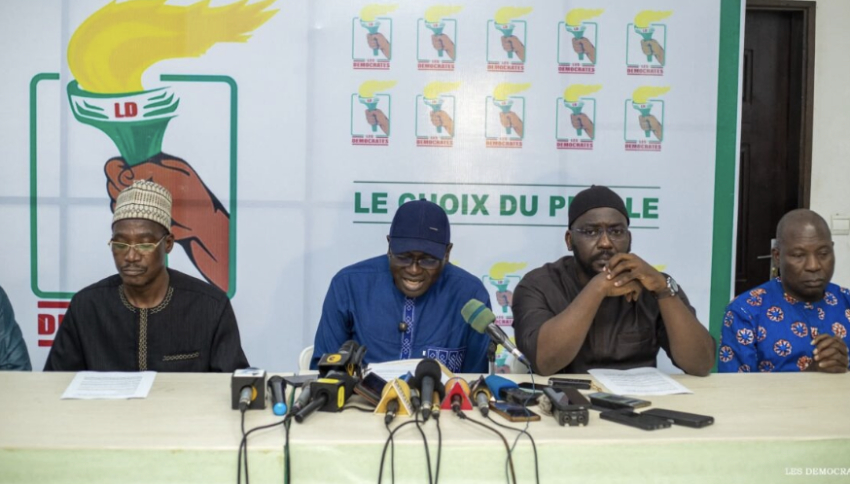
It is an understatement to say that the Beninese opposition currently finds itself in a critical situation. Since the consternation following the news of the resignation of Thomas Boni Yayi, former president and leader of the Les Démocrates (LD) party, the opposition has been working to untangle the situation. After the party’s National Coordination Committee rejected the former president’s resignation, a delegation of LD officials travelled on 10 March to his home in Tchaourou (his hometown) to meet with him. It emerged from this meeting that the former head of state remains firm and is standing by his resignation. In the meantime, several options appear to be under consideration within the LD, including the organisation of an extraordinary congress to elect a new party president. For the time being, First Vice-President Eric Houndété has been chosen to act as interim party president, according to a statement released on 13 March. Furthermore, according to Basile Ahossi, former vice-president of the LD, one cannot ignore the fact that the party’s management was problematic. In his view, “personal conflicts between President Patrice Talon and himself were paralysing the party’s activities”, which he considers to be “decapitated” and heading “towards collapse”.
Be that as it may, the future prospects for the LD party do not appear particularly bright given the current state of Benin’s political landscape. It is no doubt with this in mind that the national executive secretary of Force Cauris pour un Bénin Émergent (FCBE), Paul Hounkpè, is calling for a united opposition. In a statement released on 12 March, the candidate running in next April’s presidential election urges political parties, civil society organisations and opposition figures to unite behind a united front dubbed ‘Coalition Forces for an Emerging Benin’. Given the current political landscape, in which the presidential camp’s candidate and Minister of the Economy, Romuald Wadagni, is the clear favourite, there is a strong likelihood that this call will fall on deaf ears. This is all the more likely given that the FCBE, due to its governance agreement and parliamentary coalition pact with the ruling camp, is perceived by a section of public opinion as a “moderate opposition” party.
A robust response to the terrorist threatFollowing recent attacks in the north of the country, the Beninese armed forces have launched a rigorous counter-offensive. Indeed, when an attack targeted a strategic army position at Lodge Pendjari within the park on 7 March, the response was firm and forceful. The soldiers managed to repel the assault and neutralise 17 members of the armed groups involved in the offensive. On the Beninese side, one soldier lost his life during the exchange of fire. Whilst this operational success is to be commended, it serves as a reminder that northern Benin is now clearly an active security front. In this sense, the persistence of security challenges indicates not only the intensification of the threat posed by armed groups but also the