 © Associated Press
Timbuktu Institute – Week 3 – March 2026
Download the full Sahel weather report
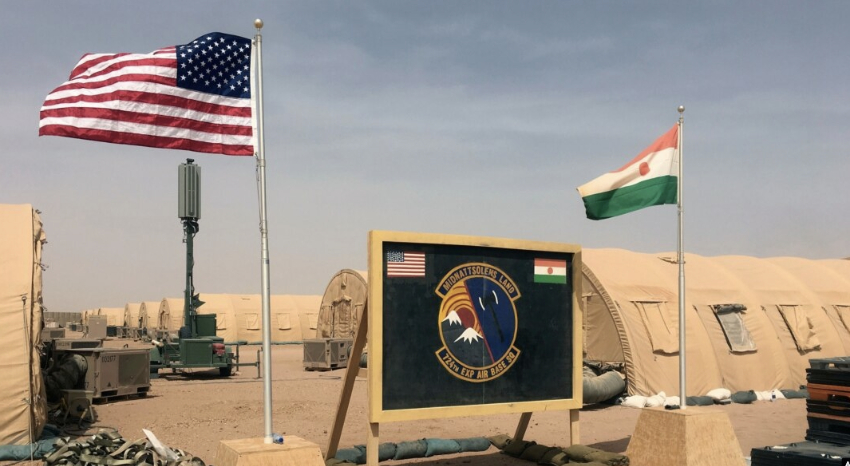
The United States’ desire to re-engage with Niger, despite the transitional authorities remaining in power, marks a major turning point in US strategy in the Sahel. This rapprochement illustrates a shift from “values-based diplomacy”, focused on the rapid restoration of constitutional order, to “security-realist diplomacy”. Washington’s strategic rationale is twofold: on the one hand, to prevent Niger from falling entirely into Russia’s sphere of influence, and on the other, to preserve essential counter-terrorism surveillance capabilities. Niger, due to its central geographical position, remains the indispensable pivot for monitoring the movements of Islamic State and Al-Qaeda. For the United States, the challenge is to avoid a repeat of the Malian scenario, where the breakdown left a vacuum filled by Africa Corps. This “re-engagement” suggests that Washington is prepared to accept a longer transition period in exchange for continued technical and military cooperation, particularly at Agadez Air Base 201. This approach could create friction with certain European allies, but it offers Niger unprecedented diplomatic leeway, allowing it to diversify its security partners whilst asserting its sovereignty in the face of former colonial powers.
The complete break and the rebuke of the European Union
The firm rebuke of the European Union by the Nigerien Minister of Foreign Affairs symbolises the end of an era of diplomatic subordination as perceived by Niamey. By directly opposing Brussels’ directives, particularly regarding the legitimacy of the government and the management of the migration crisis, Niger is asserting its determination to dictate its own terms of cooperation. Niamey’s strategic argument rests on “unapologetic sovereignty”: the transitional government refuses to allow development aid to be used as a lever for political pressure. This standoff places the EU in a delicate position, as the breakdown in dialogue deprives Europe of its main levers of action on trans-Saharan migration flows. For Niger, this reorientation is a powerful tool of domestic policy, uniting the population behind a narrative of anti-imperialist resistance. It also prompts the country to consolidate its alliances within the AES Confederation, transforming its isolation from Europe into an opportunity to strengthen regional solidarity. This crisis highlights that the EU is now facing a new Sahelian geopolitical landscape where emerging powers and security interests take precedence over traditional institutional frameworks.
The fight against psychotropic drug trafficking in Maradi: a matter of national security
The seizure of psychotropic drugs carried out by Nigerien Customs in Maradi highlights the danger posed by smuggling networks in this strategic border area. Maradi, due to its proximity to Nigeria, constitutes a major logistical hub for illicit flows feeding the Sahel. The strategic rationale behind this operation goes beyond the fight against drug addiction; it concerns state security. Drug trafficking is intrinsically linked to the financing of Armed Terrorist Groups (ATGs), with these substances serving as a currency of exchange for the purchase of weapons or being consumed by fighters to suppress fear during assaults.
The success of this seizure demonstrates the increased effectiveness of Niger’s operational intelligence. By targeting transport routes, Customs is disrupting the underground economy that undermines social stability. This operation forms part of the ‘blocking of flows’ doctrine adopted by the CNSP to cut off the income of criminal networks. Securing Maradi is crucial to prevent the region from becoming a transit sanctuary. This tactical victory highlights the importance of coordination between defence and security forces to counter a hybrid threat that uses legal trade channels to conceal activities destabilising the entire sub-region.