Burkina Faso: Escalating security threat and a tightening political climate Spécial
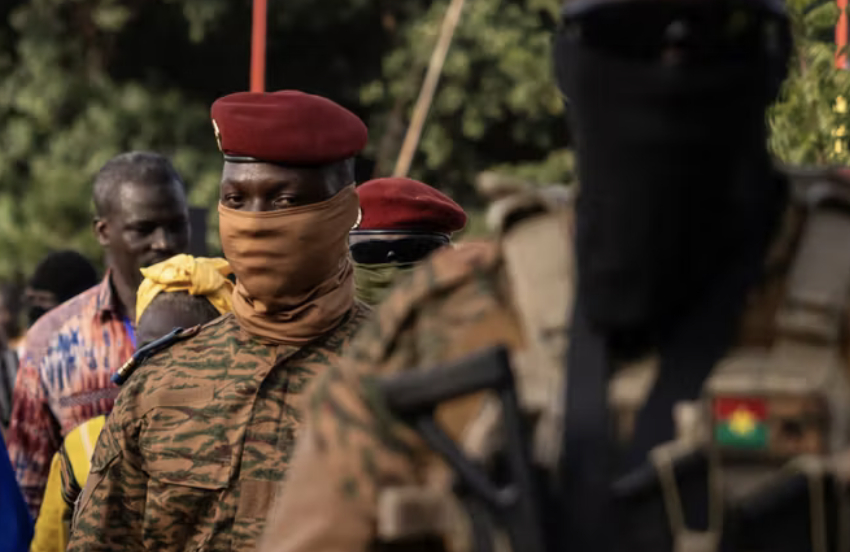 © OLYMPIA DE MAISMONT / AFP
Timbuktu Institute – Week 3 – March 2026
Download the full Sahel weather report
In Burkina Faso, the week has been marked by two worrying trends: a worsening of insecurity in border areas, due to the actions of armed groups, and a narrowing of political space, illustrated by attacks on the freedoms of opposition figures. These concurrent developments reflect a multidimensional weakening of the state, both in terms of security and institutional stability.
A deterioration in security in border areas
A report published on 12 March 2026 by the NGO Human Rights Watch highlights the severity of the abuses perpetrated by the Group for the Support of Islam and Muslims in northern and eastern Burkina Faso. The report details a heavy toll: at least 38 civilians have been killed, 9 women have been abducted and numerous homes have been set on fire. It also identifies the border area with Benin, Togo and Niger as the main focus of the deteriorating security situation. This resurgence of violence is part of a strategic campaign of territorial encirclement being carried out by JNIM. This development demonstrates the group’s growing ability to exploit poorly controlled border areas to extend its influence and disrupt state security measures. It also reveals a desire to create cross-border corridors, which increases the risk of insecurity spreading to the coastal countries of West Africa.
Political tension illustrated by an infringement of political freedoms
Meanwhile, on 18 March 2026, Idrissa Barry, national secretary of the opposition movement Servir et non se servir (SENS), was arrested in Ouagadougou by individuals presenting themselves as gendarmes whilst he was attending a meeting at Saaba town hall. Since then, his whereabouts have been unknown. This incident occurred four days after SENS issued a statement in which the organisation accused government forces and the VDP of being responsible for “deadly attacks” against civilians. Human Rights Watch has described this arrest as an enforced disappearance, which constitutes a serious violation of international law. This situation illustrates a worrying hardening of the political climate, marked by a growing restriction on the space for opposition figures to express themselves, which has been extensively studied by the Timbuktu Institute in recent months. It could also heighten internal tensions and further undermine the legitimacy of the authorities, in a context where the security situation is already severely deteriorated. Recent developments in Burkina Faso highlight a critical convergence between the security crisis and political tension. This dual pressure undermines the state’s capacity to respond and increases the risks of lasting instability, both nationally and regionally.