Between Anticipation and Resilience : Côte d’Ivoire’s Multidimensional Security Model Spécial
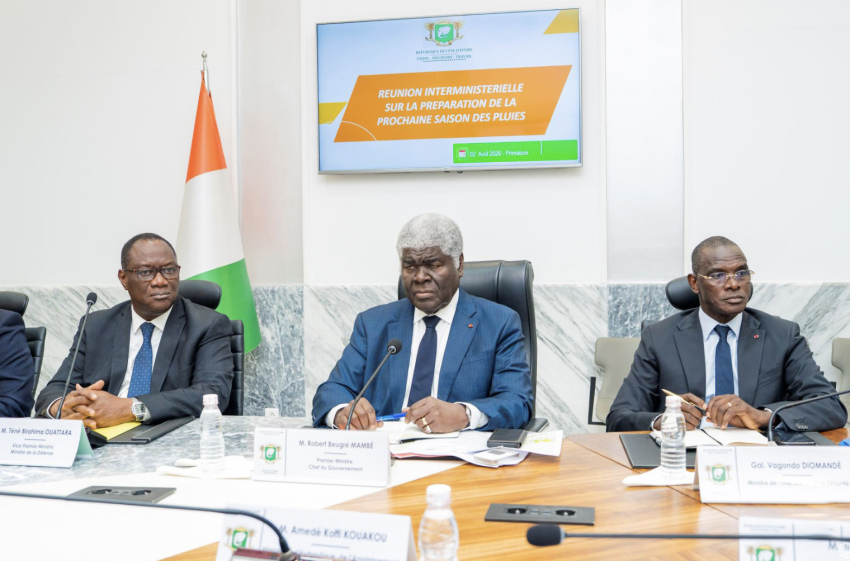 © CICG-CÔTE D’IVOIRE PAR DR
Timbuktu Institute - Week 1 - April 2026
This week, Côte d’Ivoire reaffirmed its unique position in terms of security governance in West Africa. Faced with a regional environment marked by rising asymmetric threats and climate-related vulnerabilities, the country prioritizes a proactive and integrated approach. By combining risk prevention, community resilience, and international cooperation, Ivorian authorities seek to contain factors of instability before they escalate into major crises. This strategy, both proactive and multidimensional, reflects the country’s commitment to pursuing sustainable stabilization.
Risk anticipation and a multidimensional approach: Côte d’Ivoire’s proactive security strategy
With this in mind, Côte d’Ivoire has implemented a series of measures to anticipate security risks, particularly those related to climate-related hazards. On April 2, 2026, the government held a high-level meeting dedicated to preparing for the rainy season, with the goal of preventing floods and their human and material consequences. This initiative is part of a commitment to learn from past disasters and adopt a proactive approach. Côte d’Ivoire stands out for its security approach based on anticipation and a multidimensional perspective. Unlike other regional contexts dominated by primarily military responses, the country integrates social, economic, and environmental dimensions into its security strategy. This approach helps reduce structural vulnerabilities and strengthen the resilience of communities.
Strengthening Resilience in Northern Mali: Structured International Support in the Face of Sahelian Threats
At the same time, Côte d’Ivoire has received significant international support to strengthen stability in its northern regions. In this regard, the ATINORD project, funded by the European Union and the French Development Agency, aims to strengthen community resilience, improve social cohesion, and prevent violent extremism in border areas exposed to Sahelian influences. This international support underscores the importance placed on preventing security risks in the north of the country, through an integrated approach combining development and security. It also demonstrates the partners’ commitment to sustainably supporting the country’s stability in the face of expanding Sahelian threats. Furthermore, the country’s relative political stability depends on the inclusive management of internal dynamics. Ivorian authorities have intensified their collaboration with civil society, in partnership with international actors, to strengthen political dialogue and prevent internal tensions. Côte d’Ivoire stands as an example of proactive stabilization in West Africa. By adopting an integrated approach, it is strengthening its resilience in the face of multiple threats. However, the sustainability of this model will depend on its ability to consolidate its internal gains and reduce its dependence on external support.
In short, Côte d’Ivoire’s security strategy rests on a delicate balance between anticipation, development, and cooperation. By focusing on climate risk prevention, strengthening resilience in vulnerable areas, and involving socio-political actors, the country is equipping itself with robust tools to address contemporary security challenges. However, consolidating this momentum will require constant vigilance, particularly in the face of persistent Sahelian threats and internal vulnerabilities.