Mali: Crisis communication and political management in the aftermath of 25 April Spécial
 © Autre presse par DR
Timbuktu Institute – Week 1 – May 2026
Download the full Sahel weather report
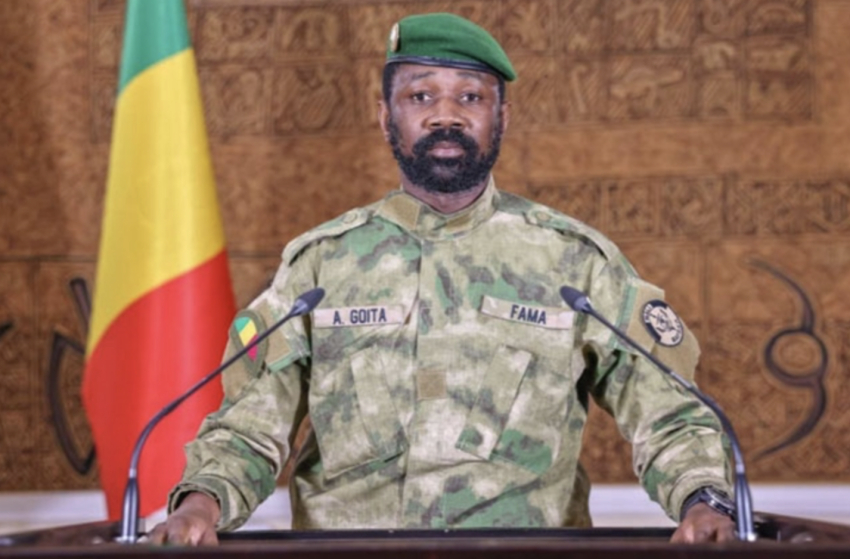
The transitional President, Assimi Goïta, addressed the nation in a speech broadcast on national television in an effort to stabilise public opinion. This address followed a series of violent attacks that had cast doubt on the state’s ability to protect its citizens. The President assured the public that the situation was under control, seeking to reassure the population and project an image of complete control. By addressing the nation directly, he sought to quell destabilising rumours and reaffirm the strength of the military command. This speech aimed to restore confidence in the Malian Armed Forces (FAMa) and to demonstrate that the state remains operational despite growing pressure from armed groups. He urged Malians not to succumb to the information war, whilst promising a response to any attempt to undermine the integrity of the national territory. By asserting that everything is under control, the government is seeking to prevent panic that could destabilise the domestic situation. However, the effectiveness of this speech is at odds with the reality on the ground. Whilst the President’s words reassure the population, they also create an expectation of concrete results.
AES response: air strikes by the unified force
The unified force of the Alliance of Sahel States (AES) has launched a major counter-offensive in the form of air strikesin northern Mali. Confirmed by the Nigerien authorities, these operations follow the bloody attacks that have struck several parts of Malian territory. This intervention marks an operational turning point for the AES, proving that solidarity between Mali, Niger and Burkina Faso is now being translated into concrete military action. The airstrikes targeted convoys of vehicles and logistical positions of the armed groups, using air superiority to locate the enemy in desert areas that are difficult to access. The intensification of these operations demonstrates a determination to give the armed groups no respite, whilst sending a message about the new regional alliance’s capacity to protect its territory. This response is presented as a success demonstrating the alliance’s growing technological capabilities in the face of a constantly shifting threat. By striking from the air, the AES seeks to inflict heavy material losses on the armed groups without exposing its ground troops to ambushes. It is a show of force aimed at legitimising the alliance in the eyes of the population by demonstrating its ability to ensure the protection of its member states. However, the regional dimension of these strikes shows that the Malian conflict remains a source of intense diplomatic friction. External accusations highlight the difficulty for Bamako in waging its war whilst maintaining a calm dialogue with the international community.
The capture of Tessalit by the FLA
On the ground, the situation remains complex, as evidenced by the capture of the strategic camp at Tessalit by the Azawad Liberation Front (FLA) in early May 2026. Videos have circulated showing rebel fighters occupying this key base near the Algerian border, a historic crossing point and a major security chokepoint in the Far North. Meanwhile, the FLA spokesperson has spoken out publicly to affirm the movement’s determination to control its ancestral territories and repel the armed forces. The fall of Tessalit, a base equipped with a runway essential for resupply and control of the Malian Sahara, represents a significant logistical setback for the Malian army. This demonstrates that despite the massive air strikes by the AES, ground-based groups retain the will to coordinate and seize territory. This rebel advance weakens the state’s line of defence in the North and forces military commanders to rethink their strategy of territorial occupation in the face of highly mobile forces with intimate knowledge of the area. The loss of Tessalit highlights the disconnect between the aerial successes claimed by the government and the reality of territorial control on the ground. For the FLA, this victory is not merely military; it is political: it strengthens their position of strength ahead of any potential talks. Control of such an isolated and strategic base complicates the resupply of the FAMa. This shows that the current war is being fought on at least two fronts: technological air superiority for the state and mastery of the terrain for the rebels, making stabilisation increasingly complex.
Centralisation of power: Assimi Goïta also becomes Minister of Defence
Mali has undergone a major political shift with President Assimi Goïta’s decision to appoint himself as Minister of Defence. By combining these two roles, he is cutting out the middlemen to directly oversee day-to-day military operations. This move demonstrates his determination to consolidate his power and act more swiftly in the face of threats to the country. It is a clear signal that he is securing his position as a warlord, where the regime’s future now depends heavily on successes on the ground. This decision also allows him to ensure the military’s loyalty by personally managing the armed forces’ budget and strategy in a highly tense climate. Assimi Goïta’s self-appointment is a gamble on the centralisation of command. If the situation improves, he will be the nation’s saviour; conversely, if failures mount up, he will be solely responsible in the eyes of the army and the people. It is a high-risk strategy to maintain absolute control over the country.