 © 2026 Good Governance Africa
Timbuktu Institute – Week 2 – may 2026
Download the full Sahel weather report
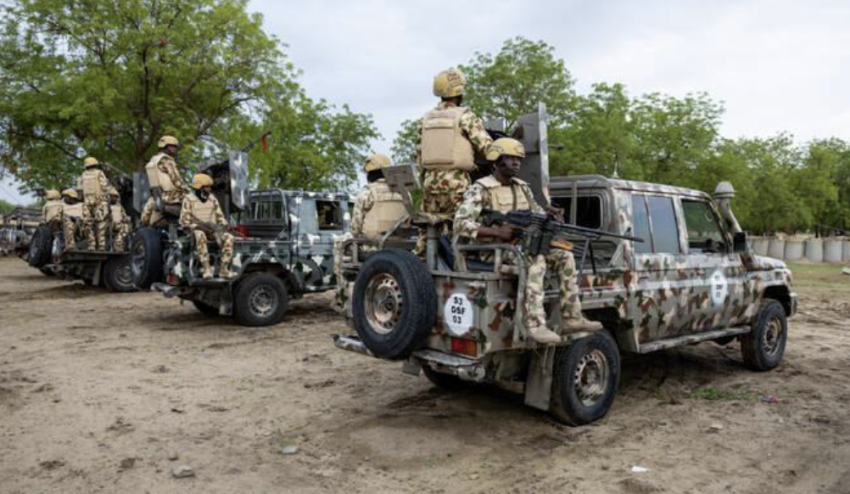
In Nigeria, May is clearly continuing to be a month of intense security activity. Following the bloody setback suffered by the armed forces at the start of the month, Abuja has been steadily stepping up its military response. It is against this backdrop that Nigeria and the United States have intensified their military cooperation against the Islamic State group in West Africa through new operations carried out in the north-east of the country. On 17 May, joint air strikes targeted jihadist positions around Metele and Dogon Chukwu, in Borno State, near the borders with Niger and Chad. According to Nigerian authorities and the US Africa Command (AFRICOM), these operations resulted in the elimination of around 20 fighters, including senior jihadist leader Abu-Bilal al-Minuki and several of his lieutenants. Abuja, for its part, claims that the United States mainly provided intelligence, without any official deployment of ground troops, although US media reports suggest that a US commando unit took part in the assault. Two days prior to these operations, in the same state of Borno, several dozen children were abducted in the Askira Uba district during an attack attributed to jihadists. According to eyewitness accounts reported by Agence France-Presse (AFP), armed men on motorbikes stormed a school in the village of Mussa, near the Sambisa Forest, known as a stronghold of jihadist groups. Between 35 and 43 primary and nursery school pupils are reported to have been kidnapped in less than half an hour, shortly after a military patrol had passed through the area. On the same day, further child abductions were reported in Oyo State, in the south-west of the country, following coordinated attacks on several schools. Beyond the intensification of military operations, this sequence seems above all to reveal the scale of the security pressure weighing on Abuja, which must contain security threats that are geographically dispersed. Furthermore, this diversity of hotspots of in e security tends, at the same time, to accentuate the fragmentation of the Nigerian state’s response capabilities.
Another blunder by the Nigerian armed forces?
One of the week’s events was the deadly airstrike carried out on 10 May by the Nigerian army on the weekly market in Tumfa, in Zamfara State. According to several local sources, community leaders and Amnesty International, the bombing reportedly killed between 72 and over 100 people, mostly civilians, and left dozens injured. Witnesses claim that military aircraft first flew over the area before returning several hours later to strike the market at a time when it was particularly busy. For their part, the Nigerian military authorities reject the possibility of a mistake, maintaining that the operation targeted a gathering of terrorist leaders and armed criminal groups, commonly referred to as ‘bandits’. The army also claims to have acted on the basis of intelligence indicating a strategic meeting of fighters in the village of Tumfa, considered a stronghold of armed groups involved in kidnappings, looting and attacks on surrounding villages. According to Abuja, the strike is said to have neutralised several members of these groups. Beyond these conflicting accounts, this episode—which is by no means unprecedented—reignites questions about the operational limits of counter-terrorism efforts in Nigeria. Given that the armed forces often cite the difficulty of distinguishing with certainty between military targets and civilian areas in certain environments, the perception among civilians that they are victims of reprisals is unlikely to prevent a potential stalemate.