 © Afrik 2026
Timbuktu Institute – Week 2 – may 2026
Download the full Sahel weather report
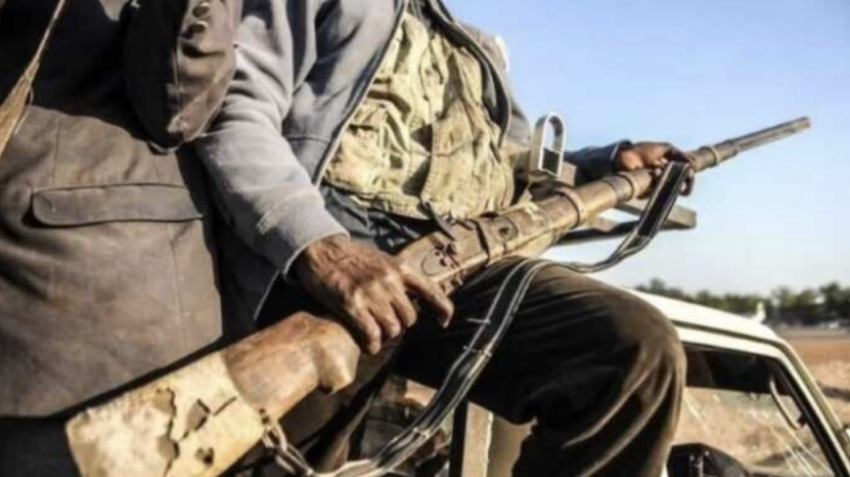
The centre of the country has once again been rocked. The Bandiagara region was targeted by attacks from armed groups, which struck the town of Gomossogou and the village of Kori-Kori on the same day. The death toll stands at around 50, the majority of whom were young people, according to local authorities. These acts were described as “cowardly and barbaric” by Major-General Oliver Diassana, the regional governor, who strongly condemns these “inhuman acts”. The security situation, already fragile particularly due to the attacks on 25 April, has allowed armed groups to expand further across the territory; the centre has now become a new lever for pressure, in addition to the north, which is increasingly occupied by the attackers. It should also be noted that the Dogon region represents a significant part of Mali’s history; this attack symbolically affects the entire population due to the respect held for the region and the importance it holds for Malian culture. The strategy of striking several locations simultaneously allows armed groups to move quickly whilst maximising damage and, at the same time, destabilising the population as much as possible by instilling fear at a time when the central government is seeking to strengthen its offensive. The recurrence of attacks is becoming another problem in security management, which has already been precarious for many years, posing a new challenge for President Goïta, who now holds the dual roles of President and Minister of Defence.
Addressing the Tuaregs’ demands: a path to peace?
Since the attacks of 25 April, a question has arisen: if the Malian government were to take the Tuareg groups’ demands into account, what would become of the political and security situation?
The crisis afflicting Mali continues to worsen, and recent clashes clearly show that military force alone is no longer enough to restore calm. For many observers, the real way to ensure a climate of peace lies in listening to and addressing the demands of the Tuareg populations in the north. Since the country’s independence, these communities have felt a deep sense of abandonment by the central government. They denounce a historical injustice in the development of the region: whilst the south benefits from the majority of investment, schools and hospitals, the northern regions remain largely marginalised and deprived of basic infrastructure. This gap has fuelled anger within this community, driving certain groups to take up arms. Today, the government’s strategy, which relies primarily on military offensives, is showing its limitations in the face of fighters who know the terrain inside out and who draw on this popular discontent. The current situation therefore demands a crucial al choice. It is no longer simply a matter of winning battles on the ground, but of rebuilding a sincere political dialogue and fully integrating the North into the national project.
Resumption of attacks in Mali: President Macron’s position
The recent waves of violent attacks affecting Mali are once again provoking a reaction beyond Africa’s borders, particularly in France. When asked about the rapid deterioration of the security situation in the country, President Emmanuel Macron expressed his views on this crisis. For the French Head of State, these tragic events demonstrate that the Malian transitional authorities did not make the best decision to protect their population by demanding the permanent withdrawal of French military forces. He stated that this choice has now left a security vacuum which armed groups are exploiting to expand. Whilst expressing that the turn of events “broke his heart” for the citizens of Mali, Burkina Faso and Niger who face insecurity on a daily basis, the French President expressed his hope that the region’s leaders would reconsider their position. In his view, a return to stability cannot be achieved without a resumption of dialogue and strengthened international cooperation.
The armed groups’ strategy: block everything to weaken.
Pressure from armed groups is mounting around the Malian capital, plunging the country into an unprecedented logistical and energy crisis. Over the weekend, fighters from JNIM, affiliated with al-Qaeda, tightened their blockade of Bamako by targeting strategic road links. Around ten coaches and several cars were intercepted and set alight between Ségou and the capital, notably near the town of Zambougou. Although the attackers made the passengers alight before burning the vehicles, the operation sowed terror and paralysed traffic, leaving numerous wrecked vehicles on the roads.
Alongside this transport war, a severe blow has been dealt to the economy and the daily lives of Malians by attacking the country’s energy infrastructure. Electrical installations linked to the Manantali hydroelectric dam, located in the Kayes region, have been sabotaged and destroyed. Yet this dam is a vital piece of infrastructure that supplies not only Mali, but also Senegal and Mauritania. Its sabotage immediately plunged several districts of Bamako into darkness, causing massive power cuts that can last for 48 to 72 hours at a stretch. Whilst the state-owned company Énergie du Mali (EDM) referred to a “network incident”, regional experts do not rule out a link between these power cuts and the attack.
Faced with this two-pronged offensive paralysing the capital, the central government is attempting to respond with force. Although it remains silent on these road and energy attacks, the Malian army is continuing its operations on other fronts. In particular, it has successfully escorted hundreds of tanker lorries to resupply Bamako, and has carried out further air strikes in the Gao region against terrorist positions. Whilst the situation remains completely deadlocked in the Kidal region, where fresh clashes seem inevitable, this strategy by armed groups targeting basic infrastructure poses a huge challenge for the central government. The latter must now succeed in protecting the country’s vital points whilst maintaining its military offensives in the north.