 © mondafrique
Timbuktu Institute – Week 2 – may 2026
Download the full Sahel weather report
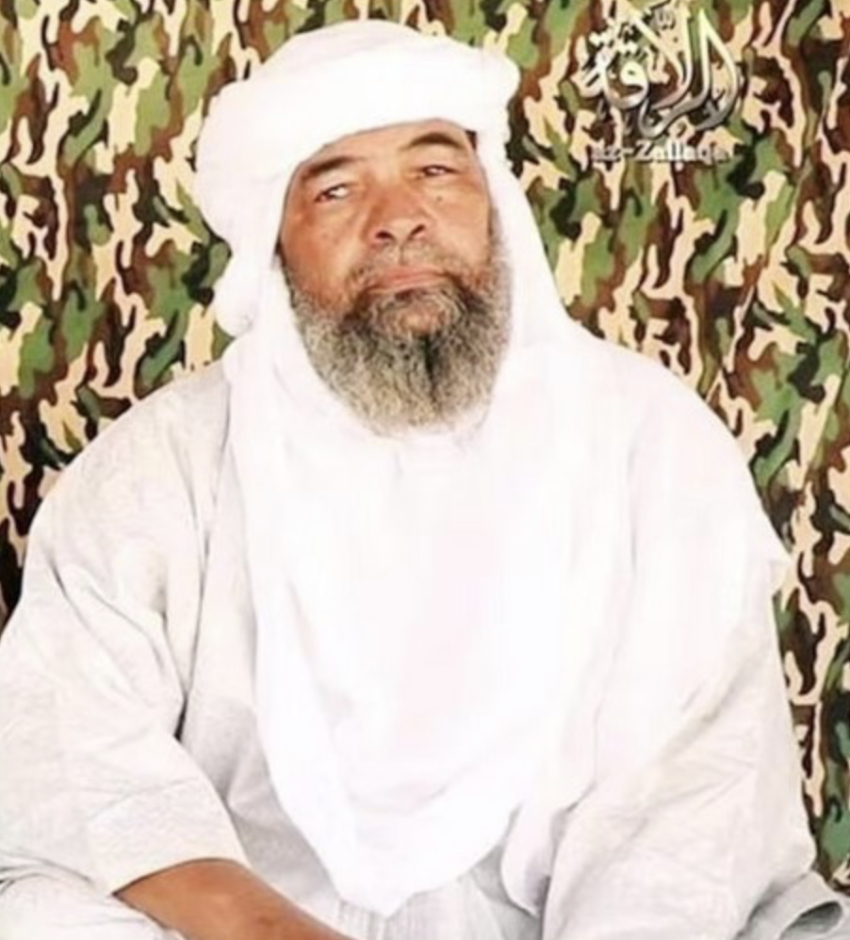
Iyad Ag Ghali, the leader of the al-Qaeda-linked JNIM group, has become the most wanted man in the Sahel and the greatest threat to the Malian government. In recent months, this rebel leader has changed his tactics in waging his war. Instead of simply fighting the army on the ground, he is now employing a strategy of ‘economic blockade’. By cutting off main roads and destroying key infrastructure such as power lines, he seeks to deprive the capital of food, fuel and energy. His aim is to make life unbearable for residents in order to weaken the country from within. Behind these physical attacks, Iyad Ag Ghali’s objective is purely political: he wants to isolate the current regime in power in Bamako and bring about its downfall. According to regional experts, even if he succeeded in bringing down the government, this Tuareg leader would probably not lead the country in an official and visible capacity. He would no doubt prefer to remain in the shadows to control the situation from a distance. For the government, this threat is extremely serious. It is no longer confined to the military front, but is playing out directly in the daily lives of Malians, forcing the authorities to urgently find new solutions to protect the heart of the country.
Coordinated attacks are putting the government and its Russian allies to the test
The security situation in Mali is becoming increasingly critical, according to analyses by the Mediterranean Foundation for Strategic Studies (FMES). The major offensive led by JNIM groups and FLA rebels marked a real turning point. By striking several key cities across the country simultaneously – such as Bamako, Kati, Gao, Sévaré – and even regaining control of Kidal, these armed groups have proven that they can circumvent security measures. For the government, the loss of Kidal is a severe blow: it undermines the official narrative promising to regain full control of the territory and highlights the limitations of the current strategy. This situation greatly undermines the security model chosen by the ruling regime, which relies heavily on assistance from its Russian partners such as the Africa Corps. The simultaneous attacks reveal that this external military support is not enough to halt the attackers’ advance. Whilst a direct military capture of the capital, Bamako, remains unlikely in the short term, the threat has shifted to the daily lives of residents. JNIM is now implementing a strategy of economic strangulation around the capital to demoralise the population. For the government, this combination of military and economic pressure represents a huge challenge, as the threat now risks spreading far beyond Mali’s borders.
A geopolitical crisis threatening to destabilise the region
The Malian conflict is no longer merely an internal affair; it is now at the heart of a major geopolitical crisis that is reshaping the balance of power across West Africa. Long regarded by the international community as a zone of instability, the Sahel region is now bearing the full bri of the deteriorating security situation in Mali. The increase in attacks and the change in strategy by armed groups no longer threaten only Bamako, but also jeopardise the stability of neighbouring countries. This situation is causing immense concern, not only on the African continent, but also as far afield as Europe, which fears the long-term consequences of this security vacuum. The spread of the crisis highlights the limitations of current alliances. Terrorist groups and rebel movements are exploiting the instability of the borders to shift the conflict and extend their influence, transforming the Sahel into a lawless zone that is increasingly difficult to control. Faced with a conflict that threatens to engulf the entire region, the very survival of Sahelian states will now depend on their ability to stem this situation before it becomes completely uncontrollable.
Malian refugees torn by despair
The unfolding crisis is now having dramatic humanitarian consequences across borders, particularly in Mauritania, where tens of thousands of Malians have sought refuge. For these families, many of whom are settled in the Mbera camp, daily life is marked by a constant dilemma. On the one hand, there is a deep-seated desire and a fragile hope of one day returning to their homeland. On the other, the reality on the ground and the persistent violence in Mali cast a constant shadow of fear over a new, even more massive exodus, whilst living conditions in the Mauritanian camps are already extremely precarious.
This continuous flow of displaced people is placing a severe strain on Mauritania’s reception capacity, as the country must manage this humanitarian emergency with limited resources and often insufficient international aid. The refugees, who have fled the fighting between the Malian army, its allies and armed groups, find themselves stranded, waiting for the security situation to improve. This situation serves as a reminder that the current crisis is not merely a matter of tactical or military issues. It represents an immense humanitarian challenge, for as long as stability is not restored in Mali, thousands of people will remain condemned to a life of exile and uncertainty.