Africa - China: Strategic Implications of an Unprecedented Trade Opening Spécial
 ©️ GREG BAKER / AFP
Timbuktu Institute, June 2026
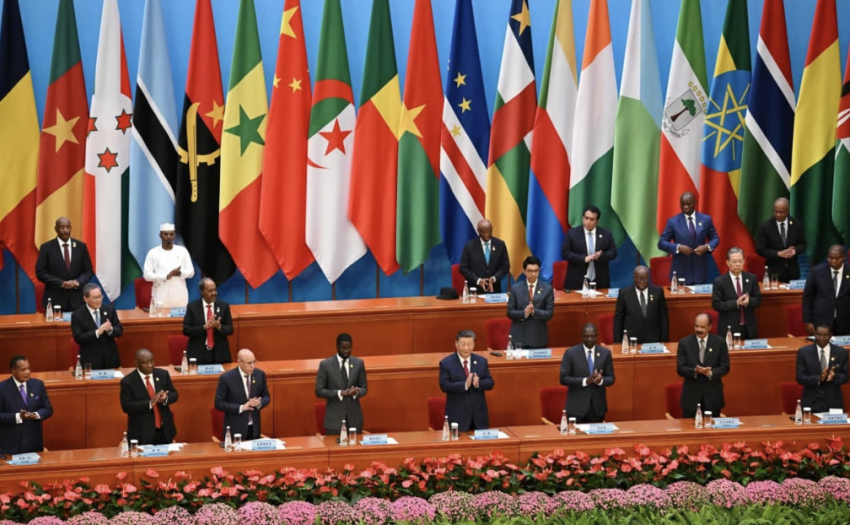
China has decided to eliminate tariffs on African products from 53 countries on the continent. This landmark measure was announced by President Xi Jinping during the China–Africa and African Union Summits. It represents a significant shift in economic relations with the continent, which will have repercussions on the economy as a whole. For China, the intent behind this measure is to support its African trading partners. However, for some analysts, it comes amid specific geopolitical challenges: the trade war between China and the United States, the reduction or restructuring of European and American funding, as well as a profound shift in global relations. In this context, the decision to open the Chinese market to African countries should lead to a quantitative increase in exports, although it simultaneously raises several questions. Will trade imbalances and dependencies be reduced? To what extent will China benefit strategically from such a measure? But, between mutual benefits and soft power, will this decision present geostrategic challenges for both parties in an increasingly multipolar and complex world?
The removal of Chinese customs barriers: a strategic opportunity for Africa?
The removal of customs duties is a discriminatory economic measure that has positive effects: theoretically, it reduces the price of imported goods and increases consumer purchasing power. China has eliminated 100% of tariffs with African countries. This announcement was made on Saturday, February 14, 2026. With the exception of one, all African countries will, in principle, see customs barriers removed in their trade with the People’s Republic of China. Starting May 1, African nations will no longer pay tariffs on their exports to China. As the leading trading partner of African nations for the 16th consecutive year, trade has expanded into areas such as “the digital economy, green development, and finance.” For Senegalese economist Cheikh Mbacké Sène, “at first glance, this offers an unprecedented commercial opportunity for African economies. But upon closer inspection, it is above all a full-scale test of the continent’s ability to transform external openness into a lever of economic power. "Nevertheless, the immediate impact has been called into question, as it depends heavily on a country’s productive capacity and level of development. The elimination of Chinese tariffs on African imports will undoubtedly improve access to the Chinese market, particularly for key commodities such as coffee and cocoa.
Chinese Tariff Exemptions: Support for African Development or a Tool of Soft Power?
It is worth noting that in 2024, China had already granted tariff exemptions to 33 African countries considered the least developed. This measure, already praised at the time, has now been extended to 53 countries through 2028. This measure, which consists of granting special tariff treatment to Africa, is a first in the history of international cooperation with the continent. According to Lauren Johnston, a senior researcher at the AustChina Institute, “China is positioning itself as the champion of trade liberalization and an economic partner favorable to Africa, unlike Donald Trump and the United States.” On the American side, slogans like “America First” and “Make America Great Again” reflect the scale and mindset of the conflict between the United States and other countries—primarily China, which they view as their main adversary. This war, which has resulted in the imposition of trade barriers, has prompted many companies to seek other partners to sell their goods, particularly in Europe and Africa. Thus, unlike the United States, which imposed import tariffs on several African states, China has opted for an exemption. Is this a soft power tool or simply a mechanism designed to support African countries? It should be noted that China, like African nations, also benefits from this trade as part of a “win-win” approach to new trade with Africa, as presented by the Chinese press. It should be noted, however, that in these trade relations, the balance of trade favors Beijing, whose exports of goods to the continent have increased, particularly in manufactured goods.
Africa Facing the Opening of the Chinese Market: What Are the Economic Gains?
For some analysts, this situation helps reduce revenue shortfalls, increase government revenues, and improve competitiveness. For example, more than half of Sierra Leone’s exports are already destined for Beijing. Moreover, the country has a trade surplus in its relations with China, largely due to its mineral exports. Like most African nations, it will benefit from this exemption. According to the Minister of Industry, Alpha Ibrahim Sesay, “we expect benefits from this, particularly for our businesses. If you don’t have to pay customs duties, your products are comparatively cheaper in the markets where you export.” African countries could indeed benefit from this measure, which offers opportunities to be seized provided they remain competitive and depending on their economic performance. It should be noted that this Chinese policy could also benefit African companies. One example is an Ivorian coffee roasting plant that exports approximately 90% of its products to China each year. Senegal, for instance, could take advantage of these exemptions due to its significant export potential for products such as phosphate and, increasingly, oil and gas. During a press conference in Beijing, Yusong Chen, Deputy Director-General of the Department of Treaties and Law at the Ministry of Commerce of the People’s Republic of China, emphasized the importance of this measure, which, in his view, promotes trade between China and Africa in general, and Senegal in particular. According to him, “Senegal is a very important country in West Africa and for China,” and these measures will help increase its exports to that country.
China’s trade strategy in Africa: a win-win partnership or economic domination?
Trade between Africa and China increased between 2024 and 2025. However, of the $348 billion traded in 2025, Chinese exports to Africa amounted to $225 billion. This results in a net trade deficit between the African continent and its partner, a deficit that should be reduced to achieve a better balance in trade. This situation calls for an African trade strategy aimed at finding ways to boost exports, particularly of agricultural and fishery products. It is up to African countries to increase their production in order to reduce the imbalance and take full advantage of the elimination of customs duties. The effects of this measure are already beginning to be felt on the ground. Trade appears to be picking up. According to Chinese authorities, trade flows reached a record high during the first quarter of 2026. The example of Yiwu speaks volumes. It is a major trade hub located in eastern China. It is considered the world’s largest market for consumer goods. Buyers and sellers from around the world gather there to trade in this “global supermarket.” Steve Umba, a Congolese man who has worked in this commercial hub for nearly 20 years, welcomes the measure, which he considers a win-win partnership. “It’s definitely helped; zero tariffs are a plus. It’s boosted many markets and startups—everyone benefits. The Chinese are open-minded. They win, and so do you. And you grow together.” Many merchants are reaping the benefits.
Africa - China: The Rise of a Strategic Partnership in a Multipolar World
For some observers, this decision to eliminate tariffs sends a clear political message. China is reportedly seeking to further expand its influence on the African continent, as European funding dries up and U.S. support is cut off in several strategic areas. African countries seem to welcome this timely measure. South Africa and Kenya, in particular, see it as an “opportunity for exporters, small businesses, and agricultural producers.” In a public statement, Chinese President Xi Jinping, for his part, extended his warm congratulations to the current chair of the African Union on the occasion of the organization’s 39th summit. He assured African heads of state that “China is ready to work with Africa to perpetuate their historic friendship, deepen their mutually beneficial cooperation, strengthen their mutual understanding and affection, and together write a new chapter in the China-Africa community with a shared future, from time immemorial to the new era.” The Chinese president praised 70 years of diplomatic relations between China and Africa—relations that, despite countless challenges, continue to move forward steadily.
Could Senegal truly benefit greatly from such a measure?
However, could this Chinese measure, which runs until April 30, 2028, be a game-changer for a country like Senegal, which has maintained relations with China for several decades? One might expect that key products already prominent in trade with China will now be more easily marketed. In this new landscape, “peanuts, sesame, cashews, fish, phosphates, and other Senegalese products could suddenly become much more competitive” in China’s vast market of 1.4 billion consumers, says this exporter, who has been active for years in trade between Senegal and China. “This is a historic opportunity. It allows for a significant increase in exports, an improvement in the trade balance, the creation of jobs through local processing, and the attraction of Chinese investment in agribusiness, infrastructure, and special economic zones,” adds a business leader who makes no secret of his optimism regarding investment attraction and the development of trade. Indeed, Senegal, which has already benefited from a strengthened strategic partnership with Beijing since 2025, can thus accelerate its Vision 2050 and become a true regional industrial hub despite the enormous challenge of strengthening compliance with Chinese standards, improving logistics (the Port of Dakar and transport corridors), providing better support for SMEs, and ensuring product quality. In short, this “opportunity” will only translate into lasting success if Senegal manages to overcome other major challenges: non-tariff barriers (very strict sanitary and phytosanitary certifications), increased competition with other African countries also benefiting from the Chinese measure, the still relatively limited export capacity of Senegalese SMEs, logistical and payment difficulties (particularly the use of the yuan), and above all the risk of excessive economic dependence, as seen in other countries. While representing what a member of parliament from the Kaolack region describes as a “historic opportunity,” without swift measures and actions and better coordination between the government and the private sector, this tariff advantage could remain largely underutilized, even though Senegal possesses real potential.
In short, China’s decision to eliminate tariffs for African countries is, certainly, a boon in absolute terms. But it is also a means for Beijing to exert greater influence in a rapidly changing world. To take full advantage of this, the African continent would benefit from increasing its production and diversifying its economy to capitalize on this historic opportunity. However, Africa, which represents a major market, is currently coveted by several other major powers, and China does not intend to sit on the sidelines in this competition to “conquer” even more commercial space on the continent.