 © RFI
© RFI
Timbuktu Institute Week 1 – June 2026
Download the full Sahel weather report
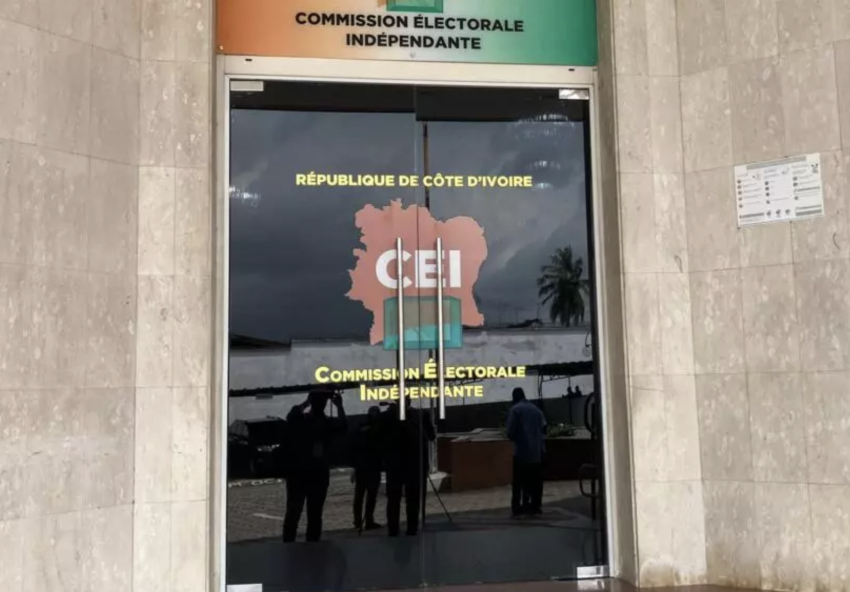
Following the surprise dissolution of the Independent Electoral Commission (CEI) ordered by President Alassane Ouattara in May 2026, Côte d’Ivoire is entering a phase of rebuilding its electoral architecture, with a growing number of voices (religious, civil and political) calling for the definition of a future body capable of meeting the requirements of transparency and consensus. Meeting in plenary session in Abidjan, the Conference of Catholic Bishops of Côte d’Ivoire has taken a stance on the electoral reform initiated following the dissolution of the CEI. Whilst acknowledging the government’s decision, the bishops are calling for a future electoral body that is independent of any partisan influence and representative of all the country’s political sensibilities, urging the authorities to broaden consultations. In the same vein, several civil society organisations are working on concrete proposals, drawing inspiration in particular from the Senegalese, Ghanaian and Beninese models, which are renowned for their consensual nature. These initiatives converge towards a single objective: to provide Côte d’Ivoire with a transparent electoral system capable of restoring, in a sustainable manner, the confidence of citizens and political parties in future elections.
With this in mind, the Rally for Peace, Progress and Sharing (RPP) is proposing a new 11-member electoral body that isentirely independent and free of political party representatives. It would be composed of prominent figures from civil society, academic and legal circles, the public and private sectors, traditional chiefdoms and religious communities. The party insists on strict criteria of independence and transparency, as well as a ban on members having held recent partisan positions. The RPP also calls for a national dialogue and for this body to be enshrined in the constitution to guarantee its autonomy. In the meantime, government spokesperson Amadou Coulibaly sought to reassure the public regarding the suspension of payments for May’s salaries and service providers’ invoices, following the dissolution of the CEI. Transitional measures, in line with standard practice in the event of the dissolution of a public body, will enable the settlement of all financial liabilities, he assured.
The resumption of evictions
Evictions are once again taking place in Abidjan. Following the clearance of three informal settlements in Cocody at the end of May, the Autonomous District of Abidjan launched a new wave of evictions on 2 June in Vridi-3 (nicknamed Zimbabwe), a 28-hectare fishing neighbourhood adjacent to the autonomous port. Thousands of residents were brutally forced to leave their homes. Despite the justifications offered by Minister-Governor Ibrahim Cissé Bacongo, who claimed that these were “operations to clear areas at risk of landslides, drainage channels and sites prone to rockfalls”, criticism of the severity of these evictions is mounting. In a statement published on 4 June, the Pan-African Congress for Justice and Equality of Peoples (COJEP), led by Charles Blé Goudé, condemned what it described as an “essentially coercive approach”. This situation, which is nothing new, once again highlights the structural tensions between the urban modernisation imperatives pursued by the authorities and the right to housing of vulnerable populations who continue to believe that the state is not offering them genuine rehousing solutions.