Benin : Is Wadagni taking the reins to restore regional balance ? Spécial
 © 2026 La Nouvelle Tribune
Timbuktu Institute Week 1 – June 2026
Download the full Sahel weather report
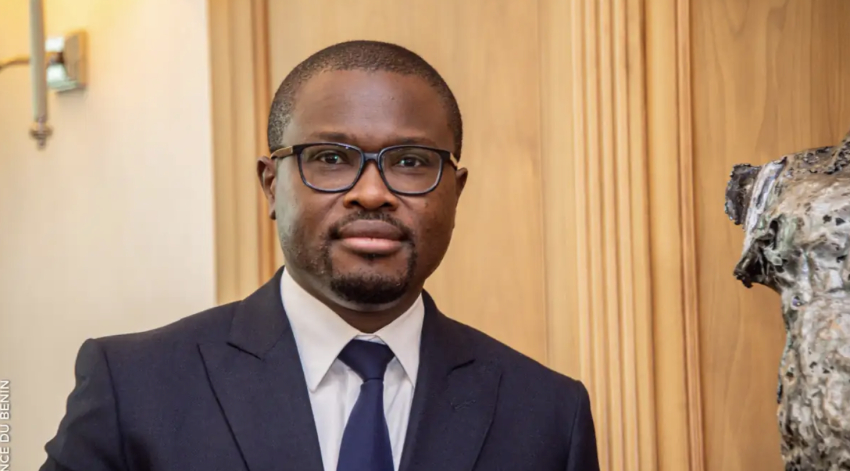
As the saying goes, a good neighbour is a good start to the day. Clearly, Benin’s new president, Romuald Wadagni, seems to have taken this adage to heart. Since the much-appreciated and widely noted presence of representatives from the Alliance of Sahel States (AES) at his inauguration, it is evident that Cotonou is seeking to improve its relations at the regional level. Thus, in the space of four days, the Head of State has demonstrated remarkable diplomatic vigour in his dealings with his neighbours: Nigeria, Niger, Burkina Faso, Togo and, finally, Côte d’Ivoire. Indeed, on1June, at the invitation of his Nigerian counterpart Bola Tinubu, Wadagni travelled to Lagos. Discussions focused mainly on bilateral cooperation between the two countries, particularly issues of border security, cross-border trade, energy and regional cooperation within ECOWAS. Then, the following day, 2 June, the Beninese president was given a formal welcome in Niamey by the Nigerien head of state, Abdourahmane Tiani. The two leaders announced their intention “to work towards removing all obstacles to strengthening cooperation between the two countries, notably the reopening of the Benin–Niger border”, according to the final joint communiqué. To this end, a joint committee of Beninese and Nigerien experts has been officially established (and has 15 days from 5 June) to examine the conditions for reopening the border between the two countries.
On the same day, Wadagni travelled to Ouagadougou, where discussions with his counterpart Ibrahim Traoré focused mainly on security issues related to terrorism and cross-border crime, as well as economic matters, notably trade, infrastructure and the role of the port of Cotonou in supplying Burkina Faso. In Lomé on 3 June, strengthening bilateral cooperation, particularly in the areas of trade, transport s and cross-border security, were the main topics of discussion with Togolese President Faure Gnassingbé. At the final stage of his regional tour, where he was received in Abidjan by his counterpart, President Alassane Ouattara, the meeting provided an opportunity to discuss regional dynamics, notably relations with the West African Economic and Monetary Union (WAEMU) countries as well as the economic reforms currently underway within the WAEMU region.
Towards a peaceful sub-region
In this instance, this diplomatic sequence appears to mark the start of a phase of strategic repositioning for Benin within the West African region, characterised by a desire to balance its relations between regional blocs with divergent political trajectories. Clearly, Cotonou is aware of the cross-border issues on the bilateral agendas at stake, particularly regarding security and economic integration. An immediate benefit is the consolidation of these exchanges with the aim of redefining regional cooperation mechanisms around more pragmatic and flexible approaches. Furthermore, this dynamic of rapprochement could gradually contribute – at least this is what Cotonou seems to hope – to reducing the mistrust that currently underpins relations between states in the sub-region, by fostering more continuous dialogue mechanisms that are less dependent on political circumstances alone. Finally, with a view to strengthening collective resilience in the face of security and economic crises, it simultaneously opens up the possibility of reconfiguring modes of regional cooperation, based more on shared pragmatic interests than on strictly institutional alignments.