From Mali to Nigeria : The New Crisis Arc and Upcoming Fragmentation in the Sahel (By Dr. Bakary Sambe) Spécial
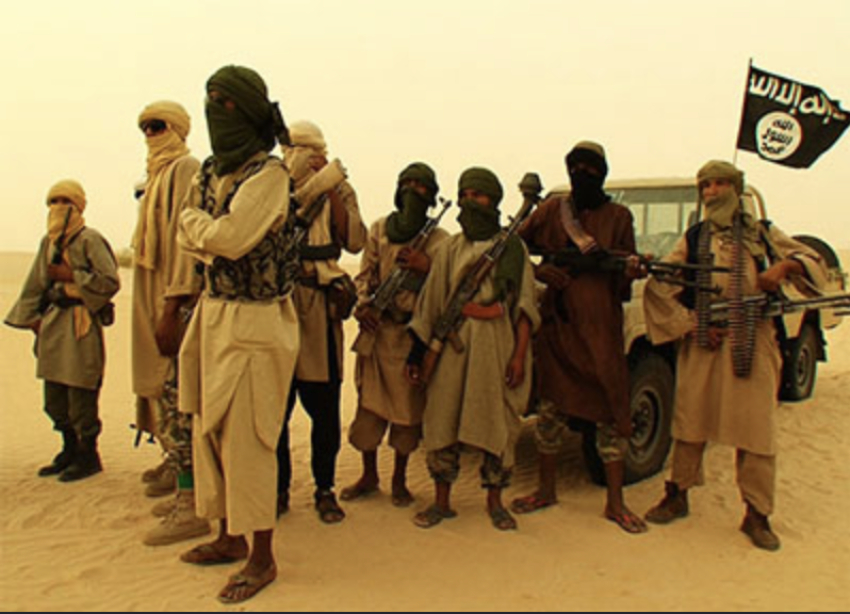
While governments focus their efforts on counterterrorism, communal divisions and radical Islamism are gaining ground across the Sahel and West Africa, warns Dr. Bakary Sambe, president of the Timbuktu Institute.
The Sahel and West Africa are facing a series of intertwined paradoxes. First, caught in the trap of conventional counterterrorism strategies, governments are deploying significant human and financial resources to prepare their armies for a battle at the borders that they are, in reality, highly unlikely to ever fight. The terrorist enemy no longer comes from outside; it is now the work of internal actors—citizens who have turned against their own governments.
This blindness, in addition to being ineffective, prevents leaders from fully grasping the dangerous communalization of violence, which, in a deadly vicious cycle, leads to the fragmentation of societies that in turn fuels new cycles of violence. Even more seriously, the phenomenon continues to spread, now forming an arc of crisis on a regional scale, against the backdrop of a “Fulani issue” that few dare to name.
And in a Sahel region already weakened for decades by the accumulation of multifaceted crises, radical Islam—which sometimes takes on a political dimension—is gaining ground. We have known, ever since the emergence of the Islamic State in the Greater Sahara (ISGS)—which has since become the Islamic State in the Sahel—that the exploitation of the frustrations of marginalized communities has fundamentally changed the situation: once perceived as the result of external invasions, Sahelian jihadism has gradually revealed itself to be the catalyst for internal conflicts.
Unresolved Dialogues and Community Tensions
In Niger, some of those disillusioned by the failed reconciliation efforts between the state and Fulani militias—which have been in conflict since the 1990s—have joined the ranks of the jihadists, particularly within the EIGS, including Issa Baré, Dendou Cheffou, Bello Baré, Petit Thiafori, and Hamadi Belko. The simplistic “security-first” approach—a strategy that now prevails following the unfinished attempts at dialogue that President Mohamed Bazoum had initiated before the July 2023 coup—has driven some of them to join the ranks of the Islamic State, which recruited more from among the Fulani than from the Daoussahak.
From Kollo to Koutoukalé, hundreds of these alleged jihadists are now languishing in prison. This reality is becoming widespread throughout Liptako-Gourma, the so-called “three-border” region between Mali, Niger, and Burkina Faso. Overwhelmed by the scale of the attacks, governments have decided to rely on self-defense militias—often formed along communal lines—to participate in the fight against jihadists, thereby adding fuel to the fire.
By stigmatizing the Fulani community, this strategy has driven many of its members into the arms of the jihadists. Faced with states unable to accommodate all segments of their populations, the jihadists now proclaim themselves the “protectors” of marginalized communities. This is true in the Soum and Oudalan regions of Burkina Faso. It is now also the case in the Savanes region of Togo, as well as in the Alibori and Atacora regions of Benin, and even in northern Ghana.
At the same time, the Group for the Support of Islam and Muslims (JNIM) has adapted its strategy, relying on mobile units of fighters who, like the men of the Katiba Hanifa, are sent to carry out attacks in Benin’s Borgou region, on the border with Nigeria.
Sahelian Societies Facing the Risk of Fragmentation
The explosive reality that we refuse to see is this: an arc of crisis is now unfolding against a backdrop of ostracism and intercommunal mistrust, stretching from Nampala and Koro-Bankass in Mali to Sokoto State in northwestern Nigeria, where the Lukurawa group—which began as a self-defense militia formed to protect Fulani herders—has pledged allegiance to the Islamic State.
But the true fragmentation yet to come will undermine not only regional balances but also Sahelian societies themselves. Long before the rise of terrorist groups, radical Islamist movements had already left their mark. In Niger, the Izala movement—founded in the 1970s in Nigeria—has thus managed to infiltrate the political arena through patronage networks that persist to this day. Advocates of a “re-Islamization” strategy, members of this movement first challenge the leaders of traditional Islam before pushing for their ouster.
These movements, which gained momentum in the wake of the droughts of the 1970s—whose human and social consequences were exacerbated by the structural adjustments imposed by the Bretton Woods institutions—have extended their influence to key sectors, from education to social work, in Mali, Burkina Faso, Niger, and Senegal. Since the secular nature of political systems prevented them from establishing themselves as traditional electoral competitors, these Salafist movements infiltrated political parties, civil society, and even Sufi brotherhoods.
In our countries, they have taken advantage of the “state deficit” to establish a dual education system, to the point of giving rise to two elites with conflicting socialization—the marginalized Arabic-speaking elites and the French-speaking elites, who have been dominant since independence—who coexist without dialogue and cannot even agree on the meaning of the state and citizenship. Unable to impose their agenda, they have sown the seeds of their ideology in parallel educational systems and have forged international partnerships that impose a substitute diplomacy toward the Arab world.
The Rise of “Intellectualized” Islamo-Nationalism
The recent arrest of a Salafist imam in Burkina Faso—which prompted a media outburst from Captain Traoré—the suspension of a religious program on Senegalese national television that attacked the Tijaniyya brotherhood, and the arrest of a Wahhabi activist who criticized the founder of Mouridism are all signs of a new dynamic: the political normalization of Wahhabi Salafism in the region is already having an impact.
Employing both entryism into political and civil society spheres, these movements also wield significant influence on social media. They capitalize on two concurrent phenomena. First, there is the rise of an “intellectualized” Islamo-nationalism—an objective and circumstantial alliance between Salafists and former left-wing leaders united in their opposition to Western models.
Second, the shrinking of civic space—particularly in the three countries of the Alliance of Sahel States (AES)—has stifled opposition groups and secular civil society, which are unable to circumvent censorship and political control of the media. This combination of factors—which is reminiscent of Algeria in the 1980s, when the Islamic Salvation Front (FIS) emerged—has made mosques, places of worship, and digital platforms for preaching the few remaining “free” spaces for expression that escape the iron grip imposed by military regimes.
In this context, all attention is focused on terrorism and its immediate violence, yet there is a failure to monitor radical Islamism, which, over the long term, seeks to destroy the republican form of the state.
Whatever form the end of these transitions takes in the near future, a vast political avenue will open up before these actors of radical Islam, who will also capitalize on the disaffection toward traditional political actors. And to establish their models or impose them on even more weakened states, they will benefit both from the vacuum left by political parties—now banned—and from the disappearance of silenced civil societies, which will take decades to recover from the effects of the unprecedented curtailment of civic and democratic space by populist regimes and military juntas.
Source: Jeune Afrique