Mali : five years of Goïta, between celebrations of power, a security offensive and persistent challenges Spécial
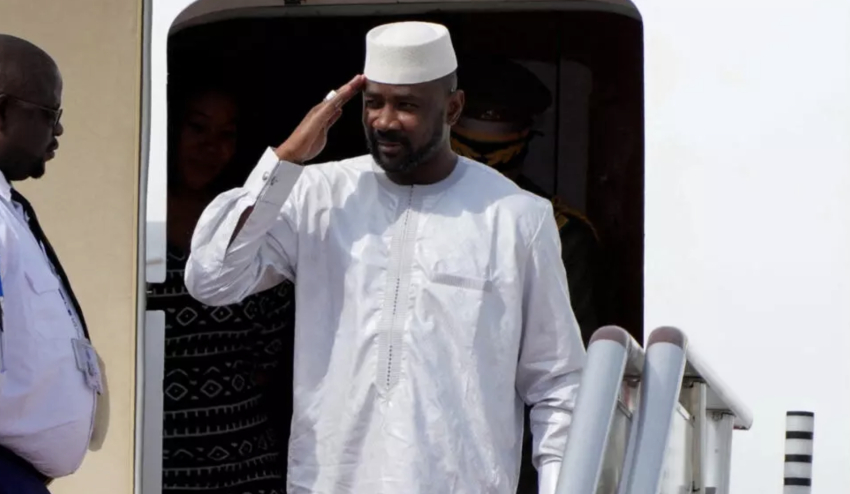 © Ken Ishii / Reuters
Timbuktu Institute Week 2 - June 2026
Download the full Sahel weather report
The Palais des Sports in Bamako welcomed a large crowd who had gathered to celebrate President Goïta’s five years at the helm of the country. There was a notable turnout of Malians, particularly young people, as well as delegations from all regions who turned out in large numbers to show their support. This event could be seen as an attempt by the ruling regime to demonstrate its deep roots within the population, which already shows it unwavering support. A review of achievements over recent years was presented, highlighting the construction and renovation of sports and youth facilities. The celebration of this five-year term highlights the desire to sustain the trust placed in the regime, a way of maintaining a climate of cohesion within the country – despite recent events – whilst remaining focused on new projects.
Operation DOUGOUKOLOKO: the path to ‘ ’ – a guarantee of security?
In an effort to maintain control over their territory, the Ministries of Defence, Justice, Territorial Administration, Security, Transport and the Environment have joined forces to issue a decree formalising the launch of Operation “DOUGOUKOLOKO”. Aimed at changing the approach to the movements of armed groups, this operation seeks to comb through every nook and cranny of all areas likely to serve as a refuge for the attackers. To this end, a measure has been taken: a total ban on civilian access to allow the armed forces to carry out their mission successfully. The vastness of the territory requires the most meticulous inspection and the anticipation of all kinds of attacks. This new decree comes at a time when coordinated attacks and strike forces by armed groups are wreaking havoc across the entire country; it is a means of halting their advance whilst ensuring the physical and moral integrity of the population.
Koro: the new refuge for exiles
“They arrived at our village on the day of our weekly market, ordering us to leave before sunrise.” This is the situation facing thousands of Burkinabés like Hamsetou: abandoning their homeland to survive. Since late May, the town of Koro, situated in central Mali, has become a refugee centre, having welcomed large numbers of people in recent weeks due to threats made by armed groups against these communities, forcing them to abandon everything they own at the risk of reprisals. More and more displaced people are arriving, which is complicating the organisation and reception of them. The deputy mayor has, in fact, launched an appeal for support to accommodate as many refugees as possible. This situation is a cause for concern, as it could be interpreted as a ‘victory’ for the attackers in power by gradually uprooting the inhabitants of the targeted areas. The authorities in both countries will have to tackle this twofold challenge: on the one hand, urgently putting a stop to this harassment; and on the other, taking the necessary steps to house and care for as many displaced people as possible.
Mali–Morocco: diplomatic relations are intensifying
Bamako and Rabat are collaborating in the spirit of complete unity. The two countries are moving forward as promising diplomatic partners for one another, promoting development in numerous sectors such as health, education, agriculture, religion and access to electricity. This alliance highlights the Malian government’s desire to diversify its partnerships by exploring new horizons. Recognising Morocco’s sovereignty over the Sahara further strengthens relations between the two nations, enabling Mali to seize new opportunities and plan new projects that will foster the country’s development. Furthermore, this rapprochement reflects a shared commitment to consolidating their political and economic cooperation within a constantly evolving regional context. Through this strategic partnership, the two states aim to strengthen their exchanges and create a framework conducive to the implementation of projects likely to contribute to the development and stability of their respective territories.
Jouleybib de Nampala: Bamako steps up the hunt for jihadist leaders
The fight against armed groups has reached a new stage with the hunt for Jouleybib de Nampala, described as one of the main jihadist leaders operating in certain areas of Mali. This decision reflects the authorities’ determination to step up the pressure on armed organisations by directly targeting their leaders. In seeking intelligence that could facilitate his arrest or neutralisation, the government is relying on a strategy combining military action with collaboration from the local population. This initiative comes against a backdrop of a surge in attacks against the armed forces and civilians, highlighting the importance for the authorities of reducing the capacity of armed groups to cause harm and restoring state authority in the targeted areas.
Press freedom: the treatment of journalists raises questions
Two recent cases involving journalists have reignited concerns about press freedom in Mali. On the one hand, the journalist Chahana Takiou was placed in custody after criticising the transitional authorities, against a backdrop where relations between the media and the government remain marked by recurring tensions. On the other hand, Abdramane Keïta was remanded in custody following comments relating to the jihadist figure Iyad Ag Ghali, a particularly sensitive subject in a country grappling with high levels of insecurity. In both cases, the authorities generally cite the need to uphold the law and maintain public order. However, these decisions are fuelling debates on freedom of expression as well as opinions on the country’s security situation. They could help to a climate of heightened caution within the press and reinforce questions about the space afforded to critical voices in the current context.
Gao: FAMa crack down on suspected networks
During a special operation carried out in Gao, the FAMa arrested several individuals and seized NINA cards as well as a large sum of money. This action forms part of the authorities’ ongoing fight against networks suspected of supporting criminal or terrorist activities in the region. The items seized could enable investigators to gain a better understanding of certain channels used for the identification, movement or financing of these networks. This operation demonstrates the security forces’ determination to strengthen their presence in an area that continues to face significant security challenges. It also aims to curb activities that could undermine local stability and to reinforce the state’s control over the territory. In a sensitive security context, this type of operation illustrates the ongoing efforts to combat persistent threats.
JNIM reaches a new technological milestone
The release of footage by JNIM showing the use of drones reveals an evolution in the armed group’s weaponry. This demonstration highlights its constant adaptation to new technologies in the context of its activities. The use of drones could enable the group to improve its surveillance, intelligence and coordination capabilities on the ground, thereby posing an additional challenge to the security forces. This development underscores the need for states in the region to strengthen their counter-threat capabilities in order to maintain their operational advantage against constantly evolving adversaries.