Nigeria : Bola Tinubu on a precarious security and economic tightrope as 2027 approaches Spécial
 © 2026 TRT Afrika Français
Timbuktu Institute Week 2 - June 2026
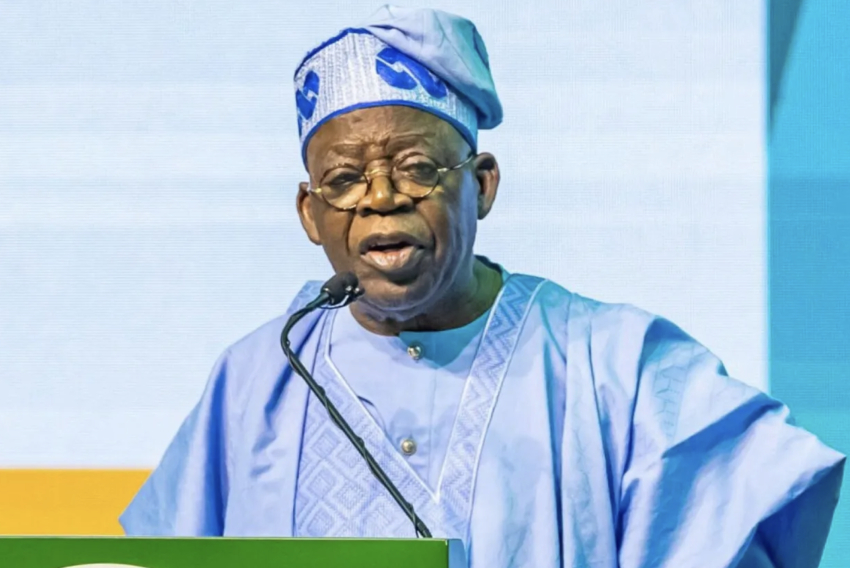
In Nigeria, the 2027 presidential election is already emerging as the defining horizon for the country’s political life. Seeking re-election, President Bola Tinubu is, however, facing a contest that looks anything but a foregone conclusion, against an opposition determined to throw a spanner in the works. Undoubtedly aware of this, the Nigerian head of state has been working for weeks to defend his record. On 12 June, to mark Democracy Day, Bola Tinubu issued a stern warning to armed groups operating within the country, urging them to “surrender or face the full force” of the state. His speech comes against a backdrop of deteriorating security, marked by a resurgence in child abductions and attacks on villages, mainly in the northern and central regions of the country. To tackle this, Tinubu announced the recruitment of more than 50,000 new police officers and a record budget of 5,410 billion naira allocated to defence and security. In terms of results, the president claimed that 13,000 militants had been neutralised over the past year and that civilian casualties attributable to insurgents had fallen by 81 per cent since 2015. These security announcements were accompanied by a defence of his administration’s controversial economic reforms (the removal of fuel subsidies and the liberalisation of the exchange rate), which were presented as essential for stabilising public finances, despite their impact on the purchasing power of Nigerian households.
Three days before this address, on 8 June, two high-ranking commanders of ISWAP (Islamic State in West Africa), Ismail Mohammed and Abu Umar, surrendered to Nigerian forces operating along the Mangari axis in the Lake Chad region. The former was a close associate of the group’s supreme leader, Baa Shuwa, whilst the latter specialised in the manufacture of vehicle-borne improvised explosive devices. Their interrogations also confirmed the earlier neutralisation of a third senior figure, Mohammed Khalifa, a member of ISWAP’s Shura Council. These various developments paint a picture of a Nigeria where politics and security will now proceed along a fine line until the presidential election.
Nigerian diplomacy in action
On 10 June in Addis Ababa, Nigeria and Ethiopia signed a bilateral agreement authorising the transfer of 100 Nigerian nationals detained in the Ethiopian prisons of Kaliti and Aba Samuel, so that they may serve out their sentences in Nigeria. The agreement, ratified by a delegation led by Foreign Minister Bianca Odumegwu-Ojukwu and Justice Minister Lateef Fagbemi, comes after several years of concerns regarding the prisoners’ conditions of detention: overcrowding, deprivation of medical care and food, allegations of torture, and even arbitrary detention. The minister also reported the deaths of four Nigerian prisoners during the negotiation process, highlighting the humanitarian urgency of the situation. This diplomatic breakthrough is, however, tempered by the fact that Nigerian prisons themselves are the subject of similar criticism from NGOs, which regularly denounce their overcrowding and unsanitary conditions.
Following on from this, Minister Odumegwu-Ojukwu, speaking at a strategic seminar held on Saturday 14 June in Uyo (in the south of the country), set out the direction for the ambassadors-designate to ECOWAS countries: “Your posts are not routine diplomatic assignments. They are strategic deployments on the front line of our national interests. ” Her remarks centred on three priorities: the defence of democracy, cross-border security in the face of a Sahelian threat, and economic diplomacy; diplomats were urged to “aggressively pursue” the dismantling of non-tariff barriers. Ultimately, these various initiatives reflect a more operational approach to diplomacy, in which consular, security and economic issues are now aligned with a single strategy of projecting and stabilising Nigerian interests in the sub-region.