Between succession disputes and assertions of sovereignty : Paul Biya’s Cameroon under pressure Spécial
 © Le copyright Qiraat Africa
Timbuktu Institute Week 2 - June 2026
Download the full Sahel weather report
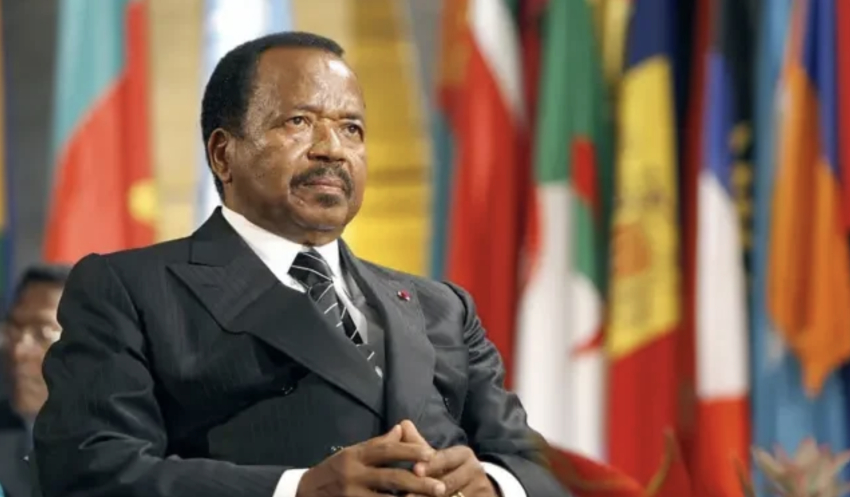
Whilst the absence of a government since October 2025 appears to signal a restructuring of the country’s institutional framework, the question of succession to power in Cameroon is crystallising into an open rivalry. This pits Franck Biya, the President’s son (from his first marriage), against Chantal Biya, the current First Lady. At the heart of the matter is the post of vice-president, established by the latest constitutional amendment as the direct line of succession to the highest office in the event of the head of state’s incapacity. Franck Biya, aged 54, is the subject of a discreet campaign to promote him within the corridors of power, whilst Chantal Biya is backing Ferdinand Ngoh Ngoh, who has been Secretary-General of the Presidency for fourteen years, for the same post. President Paul Biya, for his part, has never made a decision or revealed the outlines of his political legacy, leaving the two camps to clash whilst awaiting a succession whose terms remain rather vague. In a country that has not seen a change of government since 1982, this uncertainty surrounding the succession, given its context (the devolution of power), amply illustrates a system of power centred on the individual, which has long been dependent on internal power struggles rather than established institutional mechanisms.
Meanwhile, the country is entering its June parliamentary session against a backdrop of marked fiscal fragility. On 9 June,the second annual parliamentary session took place, with the agenda including a debate on the budgetary guidelines for 2027 and a likely amending finance bill for the current financial year. This session is taking place against a backdrop of severe budgetary pressures: tax, customs and extractive sector revenues remain insufficient, whilst the bulk of the budget is absorbed by the state’s operating expenditure and the repayment of external debt. As at 31 March, the state owed more than 500 billion CFA francs to its domestic suppliers. Furthermore, the repeated announcements over the past six months of a cabinet reshuffle, which have yet to materialise, have hampered budget implementation and calls for tenders for public procurement contracts. Faced with these constraints, Yaoundé continues to resort to external borrowing and is in negotiations with the IMF for a new support programme.
A tougher stance on issues of sovereignty
Despite the current uncertainties, Yaoundé is attempting to project the image of a state seeking to assert its control over economic and security matters. After the French navy intercepted the oil tanker Tagor off the coast of Brittany at the end of May – on suspicion of circumventing Western sanctions on Russian oil sales by fraudulently flying the Cameroonian flag – Yaoundé reacted firmly. On 8 June, Transport Minister Jean Ernest Masséna Ngallè Bibehe “strongly condemnedthe fraudulent and abusive use of the attributes of Cameroonian nationality”, stating that the Tagor “does not appear in any of the official registers of vessels authorised to fly the Cameroonian flag”.
Furthermore, the Cameroonian government has initiated legal proceedings against more than a hundred mining companiesoperating on its territory, in what constitutes an unprecedented crackdown on regulatory breaches in the sector. In this announcement made on 10 June by the Ministry of Mines, a range of allegations were put forward: failure to pay royalties, non-compliance with specifications, mining outside authorised areas and breaches of reporting obligations. Several of the companies targeted are Chinese-owned, and their presence has regularly been linked to environmental damage and conflicts with local communities. There is also a budgetary dimension to this, in that potential recovery claims could amount to significant sums for a state whose room for manoeuvre is constrained by debt servicing and IMF requirements. This initiative is also part of a regional trend towards regaining control over extractive resources, observable from Bamako to Niamey via Ouagadougou. Its actual impact, however, remains to be assessed, given a judicial system whose slowness is regularly criticised, and where similar proceedings have never previously been successful.