Benin : Improved Relations with Niger and Strengthening of Security and Judicial Systems Spécial
 © Présidence du Bénin / Facebook
Timbuktu Institute Week 3 - June 2026
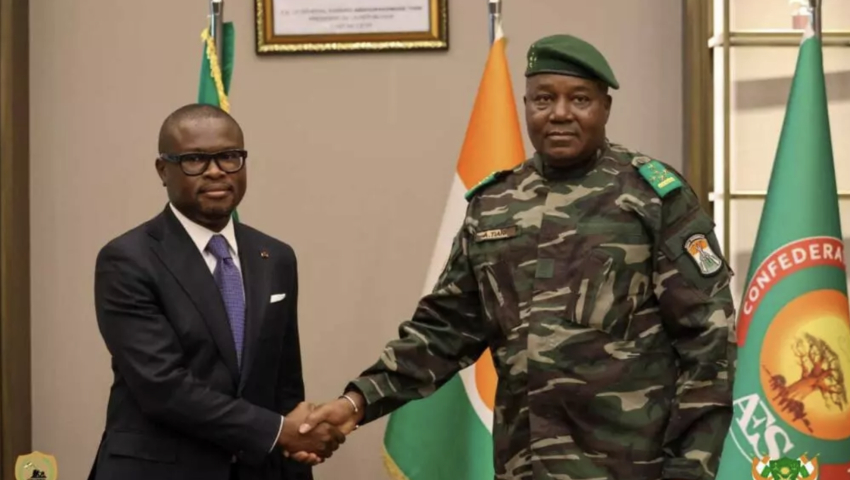
Just a few months ago, mistrust and distance reigned supreme between Benin and Niger. But since the beginning of President Romuald Wadagni’s term, gestures of openness between Cotonou and Niamey have followed one another at a steady pace, a clear sign of a warming relationship. Thus, two days of talks in Cotonou—on June 20 and 21—were enough to lay the groundwork for reconciliation in both security and economic spheres: enhanced cooperation in border areas, reduced burdens on the transit of goods, and the resolution of pending disputes. According to Beninese Minister Adjadi Bakari, the two delegations had effectively become one by the end of the talks. These agreements in principle build on the diplomatic momentum that began on June 2 in Niamey during the meeting between President Wadagni and General Tiani. Although they remain subject to approval by the authorities of both countries, they already outline the contours of a rapprochement that should breathe new life into bilateral cooperation that has long been on hold.
However, Niger’s Minister of the Interior, General Mohamed Toumba, has also set several preconditions for reopening the border with Benin. Specifically, Niamey is demanding, among other things, the signing of a defense agreement as well as a security agreement enshrining the principle of non-use of one country’s territory against the other. The Nigerien authorities are also demanding full transparency regarding foreign military forces deployed near the border area. Finally, General Toumba insisted on the establishment of a bilateral intelligence-sharing unit to strengthen security cooperation between the two countries in the face of cross-border threats. As further evidence of the ongoing policy of détente, Cotonou immediately strongly condemned the JNIM attack that took place on June 18 near the Diori-Hamani International Airport in Niamey.
Opposition figure Candide Azannaï awaits his fate
On the evening of the attempted coup on December 7, 2025, then-President Patrice Talon had adamantly insisted that all those involved, whether directly or indirectly, would be held accountable for their actions before the courts. Since then, numerous convictions—such as that of former lawmaker Soumaïla Sounon Boké, who was sentenced to five years in prison for “glorifying crimes against state security” and “inciting hatred and violence”—have made headlines.
While Cotonou is currently seeking the extradition of activist Kémi Séba from South Africa, other domestic trials are proceeding. It was in this context that on June 18, opposition figure and former minister Candide Azannaï was heard by the investigative commission of the Court for the Suppression of Economic Offenses and Terrorism (CRIET). During this initial hearing, he was questioned about allegations of undermining state security and inciting rebellion; charges he denies. Detained since December 2025, he remains a defendant in a case that is still in the preliminary investigation phase. The defense maintains that “the case is baseless,” and his attorney, Aboubacar Baparapé, is hoping for the case to be dismissed.
Meanwhile, on the same day in Ahozon (near Ouidah), Benin’s National Agency for the Recovery of Confiscated and Seized Assets (Anracs) the incineration of several narcotics seized within the country, including 95 kg of cocaine recently intercepted at the Autonomous Port of Cotonou—proof that Benin’s capital continues to serve as a major transit hub in West Africa. In this instance, the drugs—concealed on a foreign-flagged container ship—had been handed over to the Central Office for the Suppression of Illicit Trafficking in Drugs and Precursors (Ocertid) for investigation prior to their destruction, along with cannabis and psychotropic substances from other seizures. Ultimately, these intertwined dynamics reveal a pattern in which the consolidation of judicial authority and the intensification of the fight against criminal networks are part of the same strategy—articulated by Cotonou—to secure the political and territorial space.