Timbuktu Institute Week 1 - July 2026
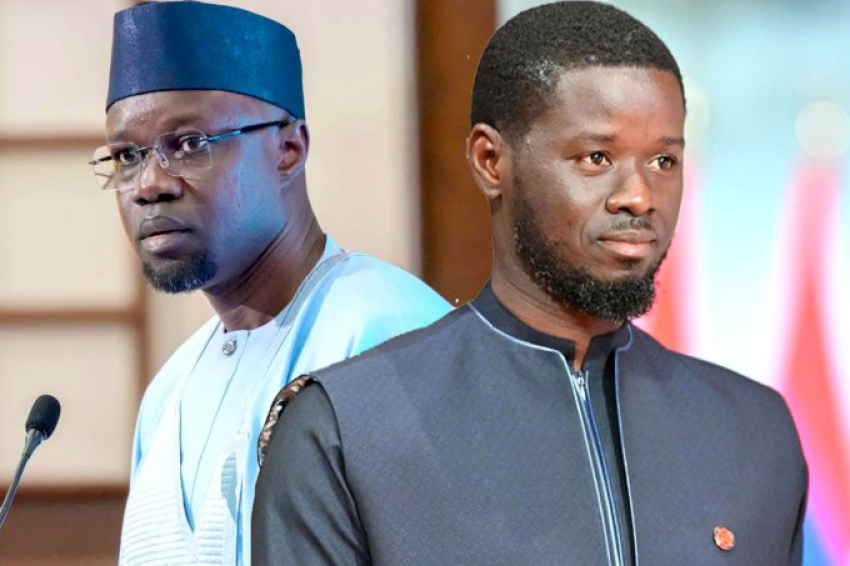
Following a constitutional challenge filed by President Bassirou Diomaye Faye, the Constitutional Council has just issued a ruling declaring the recent law passed and adopted by the National Assembly—chaired by Ousmane Sonko—to be “contrary to the Constitution.” Yet the law had been adopted by an overwhelming majority of Pastef lawmakers and addressed major reforms. This decision follows a period of intense political polarization marked by endless clashes between Pastef leaders and activists supporting Ousmane Sonko and President Faye’s supporters.
In truth, given the latest political developments in Senegal, this was really only a matter of time. President Diomaye Faye’s announcement of the upcoming creation of his own political party formalized the split at the highest levels of government. Indeed, Diomaye is no longer Sonko. On July 3, speaking before an audience of more than 300 mayors from the “Diomaye Président” coalition, the head of state justified his decision by citing a desire to move toward a “more organic unity” among the forces that support him. In reality, this political shift by President Faye had been becoming increasingly plausible amid growing disagreements with his former Prime Minister, Ousmane Sonko, and the Pastef party. But it comes above all after an eventful week that began on June 29 in the National Assembly. On that day, the Assembly unanimously adopted—out of 129 voting members (the opposition having boycotted the vote)—a sweeping constitutional reform, amid a climate of political tension. In substance, the amendment modifies 29 articles of the Constitution and profoundly reconfigures the institutional balance of power. It prohibits the President of the Republic from leading a political party, strengthens the powers of the National Assembly and the Prime Minister, limits the head of state’s ability to dissolve Parliament during his term to a single instance, establishes an Independent National Electoral Commission (CENI), and replaces the Constitutional Council with a nine-member Constitutional Court.
During the plenary session, exchanges were often heated. This was illustrated by the striking incident involving opposition lawmaker Abdou Mbow, who was first jostled by Pastef lawmakers before being forcibly removed from the chamber after refusing to leave the Assembly podium despite orders from the presiding officer, O. Sonko. His political group, the Alliance for the Republic (APR), is demanding the outright withdrawal of the bill. Outside Parliament, protests organized by the opposition were dispersed by law enforcement, and arrests were made. Broadly speaking, opponents criticize the bill as likely to strengthen the influence of the National Assembly president at the expense of the head of state, and they are concerned about the costs, logistical challenges, and political tensions that such a referendum could generate, just a few months before local elections.
At the end of the session, during which National Assembly President O. Sonko called for the immediate enactment of the bill, Pastef lawmakers also rejected all of the amendments proposed by the government, deepening the rift between the Sonko and Faye camps. In doing so, Ousmane Sonko accused Head of State Diomaye Faye of trying to “tinker with” the bill by retaining only the provisions that would suit him personally. “Why call on the people for a referendum?” he lamented. However, in the wake of the session, the government, through Justice Minister Moussa Sarr, announced that the reform would be put to a referendum—a tit-for-tat response.
An inevitable showdown?
The gradual rift between Pastef and President Diomaye Faye has gone hand in hand with the latter’s determination to continue building a political apparatus. Admittedly, in Senegal’s presidential system, it is difficult for a president to consolidate his power if he does not already have one. While neither Sonko nor Faye has officially declared their intention to run in the 2029 presidential election at this time, it is becoming increasingly clear that this election (and, before that, the 2027 local elections) will be the stage for a showdown between the two former allies. In any case, the battle lines between the two camps are already taking shape. On the side of the “Diomaye Président” coalition, preparations are already underway. According to one of its lieutenants, the Minister of Energy and Petroleum Abdourahmane Diouf, the coalition’s guiding principle is President Faye’s bid for a second term. As such, he warns, “a tough political battle [in which] the faint of heart will have no place” is on the horizon. Less confrontational on this point, coalition coordinator Aminata Touré, in this context, laments the opposition’s approach: “We are under a presidential system (…) Some want to wrest power from Diomaye Faye and transfer it to the president of the National Assembly.” In Sonko’s camp, the head of state is accused of trying to “stall for time.” Furthermore, the dismissals—notably of Aida Mbodj (DER/FJ), Ngagne Demba Touré (Somisen), and Toussaint Manga (Lonase)—have been interpreted as further confirmation of Diomaye Faye’s desire to distance himself from Pastef.
That said, since the law does not impose any deadline for organizing a referendum, there is currently no guarantee that it will necessarily take place, especially since President Faye also has his own draft bill.
That said, since the law does not set a deadline for holding a referendum, there is currently no guarantee that it will necessarily take place, especially since President Faye also has his own draft bill. In the meantime, it is clear that the president’s new party will seek to attract as much political support as possible from figures on the political scene, whether from dissidents within PASTEF or elsewhere. In the context of this political battle, no ammunition is superfluous, even if it comes from the Senegalese Democratic Party (PDS) or potential factions within the APR—two political parties whose future positions in this scenario will be very interesting to observe. As for the showdown between the Pastef and “Diomaye Président” camps, the Elders’ decision offers the head of state a welcome institutional reprieve. Moreover, pending the holding of the announced referendum, it appears that the coming weeks will be marked by turmoil and political maneuvering in the Senegalese political arena.