Benin : Beneath the Senate’s New Clothes, the Shadow of the Old Regime? Spécial
Timbuktu Institute Week 1 - July 2026
At the end of last year, the constitutional amendment marked a significant turning point in Benin’s institutional history since the democratic renewal of 1990. Among the new provisions, the creation of a Senate was the one that generated the most discussion. Presented as a way to complement the institutional framework by providing a second chamber tasked with bringing expertise, continuity, and moderation to the legislative process, this reform nevertheless quickly sparked controversy. Caught between the promise of a better institutional balance and fears of a strengthening of the executive branch’s grip on power, it reignited the debate over the evolution of Benin’s democratic model, the legitimacy of an upper house, and the political implications of such a constitutional overhaul. According to the official line of the government at the time, the Senate is a “Council of Elders” tasked with regulating political life and, in particular, has the power to sanction political figures whose statements are deemed contrary to national cohesion or social peace. More specifically, the Senate will be able to require a second reading of all laws passed by the National Assembly, with the exception of finance bills and programmatic laws. Furthermore, constitutional laws, electoral laws, and laws governing the organization of political life must obtain the upper chamber’s approval before they can be enacted.
The Composition of the Senate
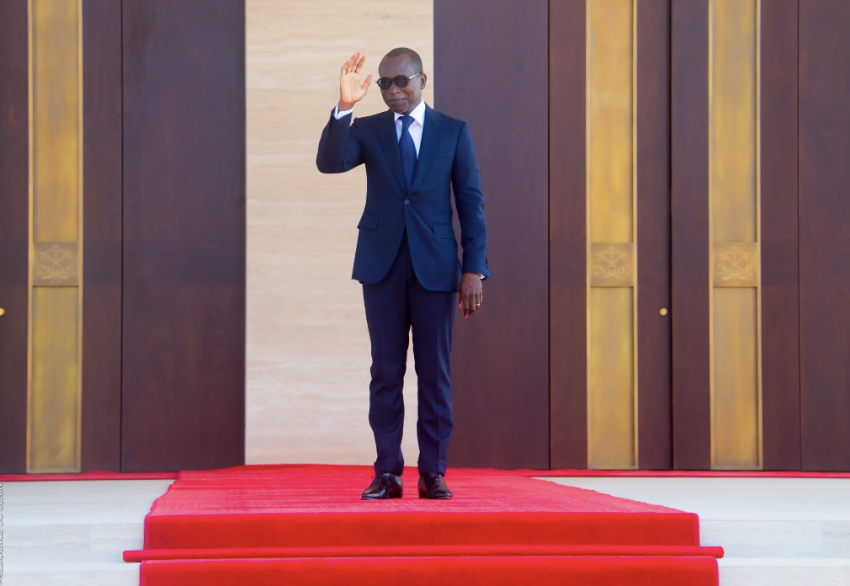
In doing so, former President Patrice Talon had announced, on the very day of the recent presidential election, his intention to serve in the Senate. Unveiled on July 1 by the government, the composition of the Senate is finally known, a few months after its creation. The twenty-five senators, appointed jointly by President Romuald Wadagni and the National Assembly, include several close associates of the government, former aides to Patrice Talon, senior military officers, and Paul Hounkpè, a former candidate in the April 2026 presidential election, who was appointed “as a high-ranking figure.” The institution will also count among its ex officio members former heads of state and former heads of institutions, notably Patrice Talon and Nicéphore Soglo, while the participation of former President Boni Yayi remains uncertain. While the Senate continues to fuel debates on shifts in the institutional balance of power, the presence of Paul Hounkpè—long described as a “moderate opposition figure”—has caused some unease. At least, this is the view of the opposition, which has always regarded him as a “scapegoat” intended to ensure the credibility of an election in which the opposition party, Les Démocrates (LD), was unable to participate. Does his seat in the Senate confirm these suspicions? Given that this appointment comes just a few weeks after his party, the Forces Cauris pour un Bénin Émergent (FCBE), decided to collaborate with the presidential majority, such a question is entirely legitimate. The other important question remains whether Patrice Talon will serve as Senate president. It is at least certain that the appointments made by President Wadagni reflect strong institutional and political continuity with the previous regime. Indeed, among the new senators are several figures who held strategic positions under Patrice Talon, notably the former secretary-general of the presidency, Pascal Irénée Koupaki, whose influence had grown even stronger following the fall from grace of Johannes Dagnon (Talon’s former special advisor) in 2024. The new Senate also welcomes Emmanuel Tiando, former president of the Autonomous National Electoral Commission (CENA), who was involved in the reform of the sponsorship system that profoundly restructured the electoral process. In addition, there are two former ministers of key portfolios from the Talon administration: Alassane Seïdou, former Minister of the Interior, and Fortunet Alain Nouatin, former Minister of Defense.
The Country Faces Flooding
In Benin, it is the rainy season. With its usual share of flooding and disruptions that the population dreads every year. With this in mind, in a press release published on July 4, the Ministry of the Interior and Public Security announced the strengthening of its flood prevention measures, due to the continued heavy rainfall expected in the coming weeks. Accordingly, the Ministry of the Interior and Public Security has called on the public to strictly follow safety guidelines, particularly evacuation orders to safe areas when they are issued. This alert comes amid severe flooding across West Africa. As such, Beninese authorities recommend, in particular, avoiding flooded areas, submerged bridges, and river crossings; not consuming contaminated water; not overloading boats; and reporting any dangerous situations to civil protection services. The main objective is to raise public awareness in order to limit loss of life and property damage caused by severe weather.