Ivory Coast : Flood Management and the Search for a Peaceful Electoral System Spécial
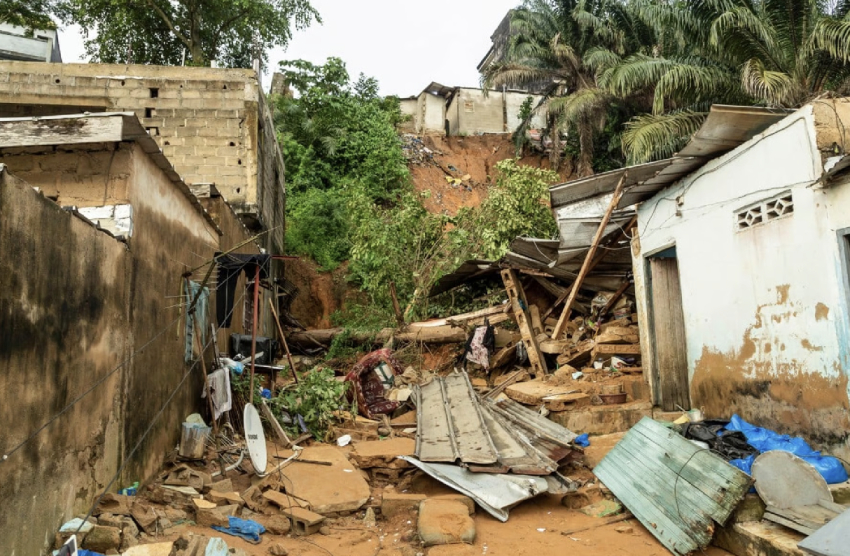 © CHRIS BOLI / AFP
Timbuktu Institute Week 1 - July 2026
In Ivory Coast, the heavy rainfall that has been affecting Abidjan for several weeks is reigniting concerns in neighborhoods prone to flooding. Residents live at the mercy of weather alerts, facing submerged roads and homes that are regularly inundated. A rainy spell has now become a source of anxiety due to the lack of adequate drainage infrastructure. These floods have already caused 59 deaths since the start of the rainy season, according to government spokesperson Amadou Coulibaly, who described the death toll as “particularly high” and linked it to the effects of climate change. The town of Attécoubé, west of Abidjan, is among the hardest-hit areas, with about 20 deaths. These tragedies highlight the persistent vulnerability of many precarious neighborhoods in the Ivorian economic capital, where rapid urbanization has led to people settling in areas prone to landslides and flooding. Faced with this recurring situation, authorities are continuing eviction operations targeting homes located in areas deemed dangerous—a policy regularly criticized by human rights organizations due to its social consequences for displaced populations. In the Campement neighborhood (Koumassi municipality), residents are trying to rebuild their lives after their homes were destroyed nearly a month ago. Several affected families have found refuge in classrooms converted into makeshift dormitories, where living conditions remain difficult, particularly due to overcrowding, health risks, and inclement weather. According to the victims’ collective, more than 3,000 households have been affected by the destruction. While the Ivorian Ministry of Solidarity has announced emergency aid for 400 families, including financial assistance and food supplies, residents are calling for long-term solutions, particularly support with rehousing, as many of them remain homeless. The government has also stated its intention to supplement these measures with a rehousing program that includes “two rehousing sites for the construction of 12,000 affordable housing units” intended for approximately 60,000 people.
At the same time, the flood crisis appears to have taken a political turn. Indeed, the eviction operations are fueling political tensions, particularly between the mayor of Port-Bouët, Sylvestre Emmou, and the minister-governor of the Autonomous District of Abidjan, Ibrahim Cissé Bacongo. The demolition of several homes in areas considered at risk has reignited a conflict over jurisdiction between local authorities and the central government, with the mayor of Port-Bouët contesting the methods used and denouncing interventions carried out without sufficient consultation. But behind the issues of urban planning and the fight against unauthorized squatting, a political rivalry within the presidential majority is also emerging. With the rainy season not yet over, the floods highlight the challenges Côte d’Ivoire faces in terms of urban planning, risk prevention, and adaptation to climate change.
Toward a Consensus-Based Electoral System
Meanwhile, the country is still searching for a peaceful electoral system in preparation for its upcoming elections.
With this in mind, on July 3, several civil society organizations presented a “white paper” on electoral governance reform, ten days after the Prime Minister presented a new electoral system to the political parties. Backed by 1,700 organizations, this document sets out several proposals aimed at strengthening the transparency and credibility of the electoral process. In particular, it calls for the creation of an independent department responsible for the voter registry, staffed through a public competitive bidding process for a single six-year term, as well as a permanent civic and electoral education program.
The main proposed innovation involves the establishment of an electoral commission composed of nine experts, including representatives from both the majority and the opposition, but in a technical rather than partisan capacity. This proposal aims to address the opposition’s criticisms of the former Independent Electoral Commission (IEC), whose composition was deemed unbalanced. The document is scheduled to be submitted to the government and the National Assembly, while the authorities are already working on their own reform of the electoral system, amid heated debates over the transparency of upcoming elections.