COMING SOON — Migration and Human Security in Eastern Senegal: Initial Findings from the Timbuktu Institute–Rosa Luxemburg Foundation Study Spécial
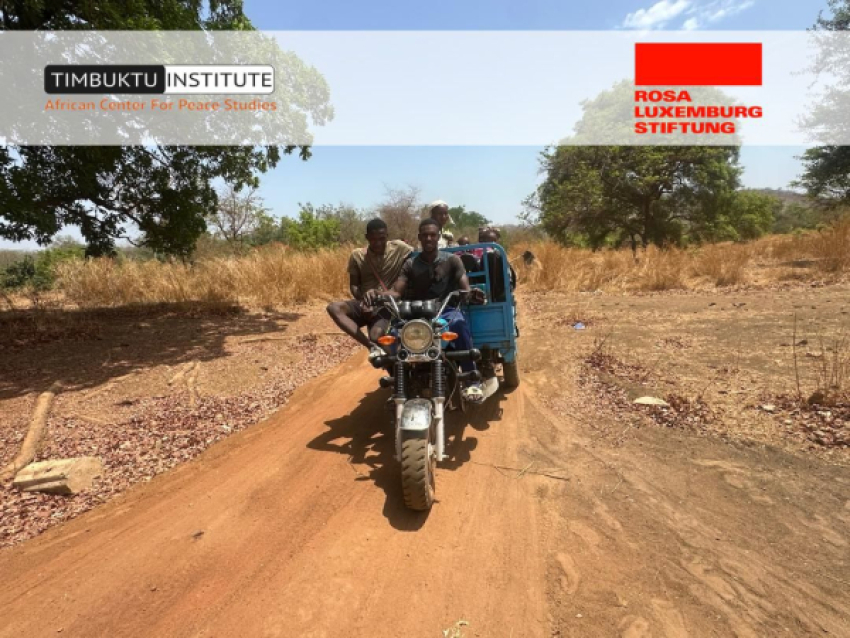
Timbuktu Institute, July 2026
The Timbuktu Institute – African Center for Peace Studies, in partnership with the Rosa Luxemburg Foundation, will soon publish a research report on migration, resilience, and human security in the departments of Goudiry and Bakel, in the far east of Senegal. Based on a mixed-methods field study combining quantitative data, qualitative interviews, direct observations, and life narratives, this work offers one of the most detailed analyses ever conducted of this border region, at the crossroads of historical migration dynamics and shifting regional security landscapes—particularly in light of the current security situation in Mali.
A Border Region Under Dual Pressure
Bordering the Senegal and Falémé rivers and in direct contact with Mali and Mauritania, Goudiry and Bakel face multiple challenges: as one of the country’s oldest regions of emigration, the area is now also exposed to porous borders and the deteriorating security situation in neighboring Mali. This situation is exemplified by significant events such as the recent attack in Diboli and the concerns of a youth population that faces chronic unemployment, precarious living conditions, and socioeconomic vulnerabilities. It is against this backdrop that the Timbuktu Institute, supported by the Rosa Luxemburg Foundation, has chosen to conduct a large-scale field study, utilizing quantitative questionnaires, semi-structured interviews, direct observations, and life narratives, distributed across the two departments in eastern Senegal.
Initial trends: Migration, a structural pillar rather than a temporary phenomenon
Preliminary results confirm that migration is not a marginal phenomenon but rather the central social reality of the region: in nearly all households surveyed, at least one member is currently migrating, and one-quarter of households include a migrant who left more than ten years ago. Remittances, received “regularly” by nearly three out of four respondents, primarily fund families’ food and healthcare, ahead of education and housing; this is a sign that the remittance economy remains largely focused on short-term resilience rather than productive investment.
This structural dependence on migration is accompanied by a shared awareness of its human cost: tragedies at sea and in the desert, the brain drain, and the breaking up of families. The life stories collected from returning migrants who passed through Libya, Algeria, Morocco, or France give this statistical reality a face and a voice, reflecting both the hardships endured during their journey and the pride in the achievements made possible by the money sent home.
Unemployment and Radicalization: A Link Identified by All Field Actors
One of the most obvious findings of the study is the interesting convergence of viewpoints among heads of households, young people, women leaders, religious guides, and members of the Defense and Security Forces regarding the link between a lack of economic opportunities and vulnerability to radicalization. The report documents a three-stage process, described with great insight by the respondents themselves: the loss of direction linked to unemployment, frustrations with the system, and then the search for recognition and a sense of social belonging—a fertile ground that extremist networks know how to exploit in neighboring countries. In the face of this risk, religious leaders and families are widely regarded as the two primary actors in prevention, far ahead of formal institutional mechanisms. One specific trend, noted in Bakel, deserves particular attention: the recent arrival of new preachers delivering an unusual religious message, mentioned independently by several respondents.
Human Security, Trust in the FDS, and Community Dialogue
The study also explores the public’s perception of their security and of their Defense and Security Forces: a majority of respondents rate the security situation as good to very good and express genuine trust in the Defense and Security Forces, while noting a persistent shortage of human and logistical resources. Notably, the proximity of the regional threat appears to have further strengthened cooperation between civilian populations and security forces
Regarding inter-community dialogue, the study confirms the vitality of traditional mechanisms—embodied by customary chiefdoms, religious mediation, and “joking kinship”—which, far ahead of formal mechanisms, remain the primary recourse for communities in conflict resolution.
A Report to Inform Public and Partnership-Based Action
Beyond the analysis, the study outlines the concrete expectations expressed by the populations of Goudiry and Bakel regarding the state, local authorities, the Defense and Security Forces, technical and financial partners, and the diaspora—ranging from vocational training for young people to improving road access, and including the channeling of remittances into sustainable productive investments.
The full report, which details all of these findings by department and contextualizes them with field data, will be released in the coming weeks by the Timbuktu Institute and the Rosa Luxemburg Foundation. Based on initial trends and current findings, it will serve as a key reference resource for public actors, development partners, and civil society organizations working in the Tambacounda region and, more broadly, in eastern Senegal.