Challenges in the Dialogue Between the Malian Government and Armed Groups Spécial
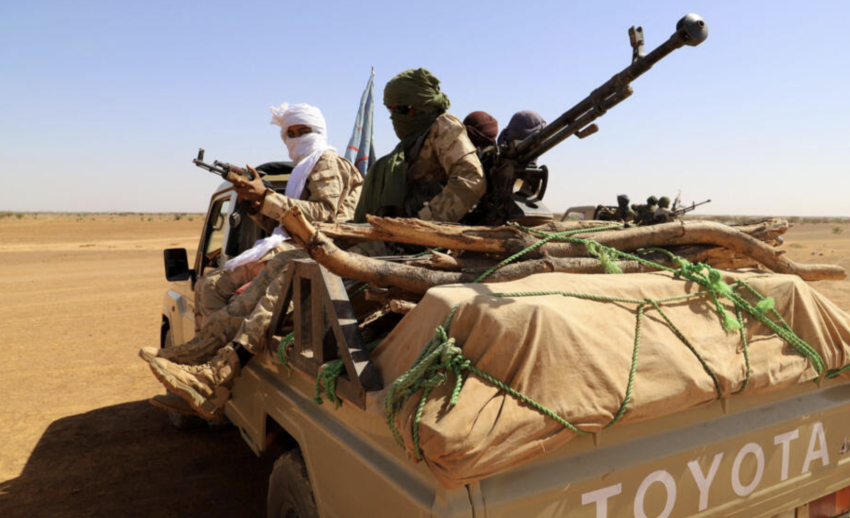 Source : RFI
By Yague Samb, Researcher and Senegal Director of the Timbuktu Institute
Abstract
Since the coordinated attacks of April 25, 2026 —the first of such magnitude carried out jointly by JNIM and the Azawad Liberation Front (FLA) since 2012—the Malian government appears so shaken by the scale of its losses that it has publicly declared its refusal to engage in any dialogue with the groups it labels as terrorists. Although local mediation has already yielded tangible results, it is important to note that it has often ended in failure in the long term—and even in the medium term. This is all the more true given that the two historic attempts at direct dialogue with jihadist leaders (in 2020, the authorities at the time sent emissaries to explore dialogue with jihadist leaders Iyad Ag Ghaly and Hamadoun Koufa, and the 2015 peace agreement with the northern movements) resulted in setbacks: the discreet abandonment of contacts following the August 2020 coup, followed by the outright denunciation of the Algiers Agreement by the transitional authorities in January 2024. This history sheds light on Bamako’s current caution while also raising questions about its long-term sustainability.
Beyond the unprecedented security crisis created by the scourge of terrorism, this note aims to outline several well-documented arguments in favor of dialogue, before addressing the unfortunate costs of an anti-terrorism response focused exclusively on military means, then examining the foundations of the Malian government’s official refusal to engage in dialogue, as well as analyzing the obstacles that must be overcome.
Well-Documented Arguments in Favor of Dialogue
Among the key developments supporting dialogue is local mediation as a preliminary form of dialogue within a limited framework. In this regard, the president of the Timbuktu Institute, Bakary Sambe, advocated for strengthening endogenous mediation efforts involving village chiefs and neutral families—for example, in the Kayes region—to heal social rifts (such as those stemming from the legacy of descent-based slavery and farmer-herder conflicts) that JNIM systematically exploits for recruitment purposes. Furthermore, in a report focused on central Mali, the International Crisis Group recommended as early as 2020 that dialogue efforts be intensified and harmonized in order to negotiate local ceasefires through village peace committees overseen by a regional committee.
These mediations, while effective in the short term, remain precarious. In September 2018, the leader of the Dan Nan Ambassagou militia signed a unilateral ceasefire agreement before breaking it two months later, illustrating the limitations of local arrangements not guaranteed by a broader framework.
Additionally, there is a precedent for direct dialogue with Katiba Macina. In this regard, a report on Katiba Macina—a branch of JNIM active in central Mali—documents regular contacts established over several years by community leaders, humanitarian organizations, and religious figures, concerning the release of hostages, humanitarian access to areas under jihadist control, and the group’s religious doctrine. This can be seen as evidence of a certain pragmatism on the part of local fighters, despite the lack of compromise on substantive issues.
Furthermore, even at the very highest levels of the central government, there are precedents for openness to dialogue. Indeed, in early 2020, Dioncounda Traoré, then President Ibrahim Boubacar Keïta’s high representative for the Central Region, sent emissaries to meet with Iyad Ag Ghaly and Amadou Koufa, in accordance with a recommendation from the Inclusive National Dialogue; IBK eventually publicly acknowledged these contacts in February 2020, before the coup d’état in August of that same year brought the process to a halt. Then, in October 2021, the transitional government took a further step by officially mandating the High Islamic Council of Mali, chaired by Imam Chérif Ousmane Madani Haïdara, to initiate a dialogue with the JNIM coalition. This echoes the persistent call by Imam Mahmoud Dicko. From his exile in Algeria, this influential religious figure—who had broken with the junta—reiterated in February 2026, during an African peace conference in Nouakchott, his call for dialogue among all Malians (politicians, civil society, and armed groups) before it is too late. While his supporters present his regional network as a strategic resource for any lasting solution, the authorities in Bamako—who forced him into exile in 2023—seem, in turn, to have chosen to publicly ignore him rather than respond. Meanwhile, the costs of a strictly military response are being felt.
The Fallout from a Strictly Military Response
Among the consequences of draconian military strategies in response to terrorism is the use of blockades as a tool of governance. Beyond combat operations, JNIM has turned blockades into a systematic means of exerting pressure. The blockade imposed by JNIM on the supply routes to the Malian capital constitutes a sophisticated strategy that merits closer examination. This siege, which affects a metropolitan area of more than four million inhabitants, does not follow conventional military tactics but rather a networked disruption strategy: it combines the logistical strangulation of an isolated capital with a decapitation strike targeting the leadership of the security apparatus. The regional shockwave was immediate: the temporary closure of an Ivorian border post at Pogo, the suspension of Mauritanian commercial traffic at Sélibaby, and the discreet rerouting of Senegalese fuel exports to Guinea to avoid interception.
The Russian Africa Corps operation, reoriented toward securing fuel convoys, reportedly cost the Malian junta nearly one billion dollars for results deemed limited by several observers.
At the same time, it seems increasingly clear that the asymmetric nature of the conflict is intensifying. According to Jean-Hervé Jézéquel, the JNIM has learned to adapt to the threat posed by the Malian army, to evade it, and to develop its capacity to put pressure on major cities, including by disrupting trade flows all the way to the capital. Furthermore, the Center for Strategic Studies in Africa points out that casualties attributed to militant Islamist groups have tripled since the junta came to power, a sign that the intensification of military pressure has not, at this stage, led to a reduction in the threat.
However, several analysts qualify the scenario of a complete collapse of the state, as JNIM and the FLA likely lack the capacity to administer such a vast territory, do not enjoy strong popular support in a multi-faith country, and neighboring states have little interest in regional contagion. The armed groups’ objective may instead be to weaken the regime sufficiently to eventually impose a balance of power favorable to negotiations on their own terms.
The Malian government’s official position: a reaffirmed refusal
In May 2026, speaking before the diplomatic corps accredited in Bamako, Foreign Minister Abdoulaye Diop reaffirmed that the government was not considering any dialogue with armed groups designated as terrorists, just a few days after the state funeral of General Sadio Camara. The minister drew a distinction between this refusal and the pursuit of a political dialogue strictly governed by republican institutions, citing the continuation of the National Reconciliation Agreements (ANR) and the Inter-Malian Dialogue (DIM), which were presented as the only legitimate platforms for consultation. He further stated that the FLA’s alignment with JNIM—an organization subject to United Nations sanctions since 2018—effectively placed the independence movement outside any framework for official dialogue.
On the legal front,the Bamako military prosecutor’s office announced on May 1, 2026, that it had identified several suspects in the planning of the April 25 attacks, including active-duty military personnel and political opponent Oumar Mariko, indicating that the authorities are prioritizing criminal proceedings over any form of negotiation.
In short, Dan Nan Ambassagou’s breach of the ceasefire in 2018, the ICC’s arrest warrant against Iyad Ag Ghaly for war crimes in 2024, the suspension of contacts following the August 2020 coup,
and the denunciation of the 2015 Algiers Agreement in 2024 all complicate efforts to hold a dialogue between the Malian government and armed groups.
Obstacles to Overcome
Four obstacles stand in the way of holding a dialogue. First, there is a fundamental ideological incompatibility between the state and armed groups. This initial obstacle stems from the gap between the principles the state must defend (secularism, sovereignty over the entire territory) and the maximalist demands of jihadist groups. Second, the failure of the Algiers Agreements does not seem to facilitate the holding of a dialogue. Signed in 2015 between the Malian government, the Coordination of Azawad Movements (CMA), and the Platform, the Agreement for Peace and Reconciliation in Mali—known as the Algiers Agreement—aimed to end the conflict in the north through decentralization and power-sharing. However, its implementation has remained chronically incomplete: MINUSMA has regularly denounced ceasefire violations by the signatories themselves, and one of the most sensitive institutional components—namely, constitutional reform—was postponed as early as 2017 in the face of popular opposition. Today, the transitional authorities have finally unilaterally denounced the agreement amid renewed fighting with the CMA, resulting, among other factors, from the withdrawal of MINUSMA and the presence of Russian forces. This episode constitutes the most direct and recent precedent for institutionalized dialogue with armed groups: its failure now undermines the credibility of any new attempt in the eyes of the Malian authorities. Furthermore, one of the most likely dangers is the political risk facing the current government. Indeed, opening negotiations exposes the junta to a high political cost: in the current climate, any gesture of dialogue could be interpreted as an admission that military offensives are not sufficient to guarantee security, following setbacks such as the loss of Kidal and the withdrawal of the Africa Corps.
Finally, there is a justice-versus-peace dilemma surrounding the case of Iyad Ag Ghaly. On June 21, 2024, the International Criminal Court unsealed an arrest warrant—originally issued in July 2017—against Iyad Ag Ghaly, then leader of Ansar Dine, for war crimes, including sexual violence and crimes against humanity, committed in northern Mali between January 2012 and January 2013. Human Rights Watch has emphasized that many Malians deserve to see those responsible for these abuses brought to justice in fair trials. However, Iyad Ag Ghaly now leads JNIM: he is, in fact, the key interlocutor in any high-level negotiation, which concretely illustrates the tension between the demand for justice and the pursuit of peace mentioned above.
Conclusion
The precedents documented in this note all point to the same conclusion: dialogue, whether local or national, has already produced concrete results in Mali, but none has so far proved sustainable—whether in the form of broken community ceasefires, discreet contacts interrupted by a coup d’état, or a formal peace agreement that was ultimately denounced.
This history fuels the authorities’ current mistrust and raises questions about the viability of a strategy based solely on military action. Caught between a state that relies on a firm stance to avoid appearing to yield to armed pressure, and groups that may be seeking less to seize power than to establish a balance of power favorable to future negotiations, the Malian situation remains, at this stage, unresolved, with the civilian population—which is most directly affected by the blockade and the fighting—as the key factor in any outcome, whether achieved through dialogue or military means. Beyond the dialogue itself with the armed groups lies the urgent need to rebuild national cohesion in Mali and to include all communities in the national narrative.