AES-ECOWAS Disagreements : What Solutions for Regional Stabilization? Spécial
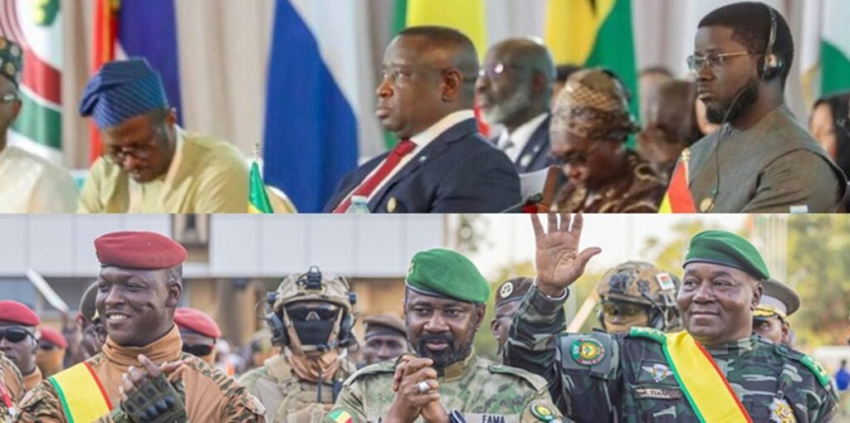 Source : APANEWS
By Yague Samb, Researcher and Senegal Director of the Timbuktu Institute
Abstract
Since the formal withdrawal of Mali, Burkina Faso, and Niger from the Economic Community of West African States (ECOWAS) on January 29, 2025, West Africa has been operating under two quasi-competing regional frameworks: ECOWAS, an organization of fifteen (now twelve) states based on economic, social, and cultural integration, and the Sahel States Alliance (AES), a bloc born of military regimes and structured around sovereignty and collective defense. More than a year after the split, neither a complete break nor reconciliation has occurred: the two blocs oscillate between residual confrontation and functional pragmatism. This note provides an overview of the points of friction (political legitimacy, security, currency, free movement), identifies the ongoing dynamics of rapprochement—notably the African Union’s mediation and ECOWAS’s appointment of a chief negotiator—and proposes pragmatic solutions for regional stabilization, based on differentiated cooperation rather than a return to institutional unity.
From a Political Crisis to an Institutional Rift
The rift has its origins in the wave of coups that struck Mali (2020–2021), Burkina Faso (2022), and Niger (2023).
In response to these military takeovers, ECOWAS applied its standard doctrine of suspension and economic sanctions, including a financial and trade blockade that entailed the closure of borders and the freezing of Malian assets held at the Central Bank of West African States (BCEAO). The three military regimes interpreted this sequence of events as proof that a country deemed too sovereignist could be cut off from the regional banking system from afar, which fueled lasting mistrust toward the organization.
In response, Mali, Burkina Faso, and Niger—under the framework of the “Liptako-Gourma Pact”—established the Alliance of Sahel States in September 2023, which was transformed into a confederation at the Niamey summit in July 2024. That same year, the three countries notified the ECOWAS of their intention to withdraw; in accordance with the organization’s treaty, which requires one year’s notice, the withdrawal took effect on January 29, 2025. At the same time, the Sahel States Alliance (AES) began issuing its own biometric passport. Now reduced to twelve members, ECOWAS has lost a large portion of its territory and a combined Sahelian population of more than 70 million people, while the AES claims a defense zone extending “from Rosso to the Senegal-Mauritania border” to the borders of Libya.
Structural Divisions
Four key divisions have been identified in light of this divergence
Political Legitimacy and Constitutional Doctrine
ECOWAS remains committed to its Protocol on Democracy and Good Governance, which makes the reintegration of the three countries contingent on a timeline for restoring constitutional order. The transitional authorities in Bamako, Ouagadougou, and Niamey reject this condition, which they perceive as interference in their sovereignty, and have described their withdrawal as “irrevocable.” This doctrinal divergence—arising from the primacy of community law versus the primacy of national sovereignty—remains the most difficult political knot to untangle.
A Dual Security Architecture
On the military front, the AES has accelerated the development of an autonomous defense capability. A unified force of 5,000 troops, officially launched on December 20, 2025, in Bamako, saw its strength increased to 6,000 and then, at a meeting of chiefs of staff in Ouagadougou in April 2026, to a target of 15,000 soldiers, equipped with their own air, ground forces, and intelligence capabilities. For its part, ECOWAS is continuing to establish its own standby force, a project estimated at $2.6 billion per year, conceived before the rift but whose operational coherence with the AES force has yet to be established. This coexistence of two collective defense frameworks within the same region, where the same armed groups operate, constitutes an unprecedented and potentially counterproductive situation in the face of a cross-border jihadist threat.
Monetary Issue: The Announced Exit from the CFA Franc Zone
The leader of the Nigerien junta announced as early as February 2024 that the AES was considering an exit from the CFA franc zone and the creation of a common currency. This project, driven primarily by political considerations of sovereignty, carries significant economic risks, and withdrawal from the union would, in theory, deprive AES nationals of the freedom of movement, residence, and access to employment guaranteed by the UEMOA treaty. However, no official timeline has been made public, as Sahelian authorities are proceeding cautiously in light of the risks of monetary instability and loss of confidence that a poorly managed currency creation would entail. At the same time, ECOWAS is moving forward with its own single currency project, the Eco, now slated for 2027 under a scenario that could unfold without the UEMOA, raising the prospect of a multi-speed West African monetary zone.
Free movement of people and goods: an achievement under threat
The 1979 ECOWAS Protocol on Free Movement remains theoretically in force, but its implementation is increasingly erratic. For example, ECOWAS auto insurance no longer covers the AES area. Furthermore, according to estimates presented at an Ivorian parliamentary meeting, barriers to free movement result in an annual loss of approximately 2% of regional GDP. The AES responded by introducing its own passport (in circulation since January 2025), while affirming that it would maintain a reciprocal visa-free regime with ECOWAS nationals.
Very Real Trends Toward Rapprochement
Despite the political rift, several channels of functional cooperation have been maintained or reopened:
Special technical status: In late 2025, ECOWAS admitted Mali, Burkina Faso, and Niger as non-ECOWAS members of the Intergovernmental Action Group Against Money Laundering in West Africa (GIABA) and approved their continued participation in the ECOWAS Bank for Investment and Development (ECIBD) as “non-regional countries,” thereby ensuring the continuity of banking operations and ongoing development projects.
African Union mediation: The AU intensified its diplomatic efforts to prevent a complete breakdown, appointing a special representative for Mali and the Sahel, who was received in March 2026 by Sierra Leonean President Julius Maada Bio—then the current chair of ECOWAS—to develop a roadmap for enhanced collaboration.
Appointment of a Chief Negotiator: On March 29, 2026, ECOWAS entrusted former Guinean Prime Minister Lansana Kouyaté with the task of leading negotiations with the AES, with a mandate to reconcile regional interests and preserve the achievements of integration.
B Bilateral pragmatism:B Several coastal states—Senegal, Togo, Ghana, and more recently Benin under the presidency of Romuald Wadagni—are increasingly extending overtures toward the AES outside the ECOWAS framework. Ghanaian President John Mahama described the AES as an “irreversible reality” and appointed a special envoy dedicated to security cooperation with the Sahel bloc. During his inauguration in May 2026, the Beninese president called for strengthened regional cooperation in the face of common security threats. In June 2026, a convergence of views emerged between Dakar and Cotonou in favor of dialogue and regional solidarity.
Mutual declarations of good faith: The three AES heads of state reaffirmed their willingness to negotiate “in good faith”with ECOWAS while maintaining their participation in several of the regional organization’s technical bodies.
This situation illustrates an unprecedented regional architecture in which political division coexists with ongoing sectoral cooperation.
Persistent Obstacles
Several obstacles continue to weigh on the negotiations:
External geopolitical manipulation: the AES has drawn closer to Russia, while ECOWAS continues to be perceived by the juntas as aligned with Western interests; this does not rule out the influence of both blocs, which would undermine the credibility of any mediation.
B Bilateral crises spilling over into collective dialogueB : The deterioration of relations between Burkina Faso and Côte d’Ivoire—exacerbated by sensitive legal and diplomatic issues—illustrates how bilateral tension between an AES country and a major coastal member of ECOWAS can undermine the trust necessary for comprehensive negotiations.
Persistent mistrust between administrations: diplomats reportedly point to enduring mistrust between AES member states and their coastal neighbors, which hinders the very implementation of technical agreements already concluded.
Possible Solutions for Regional Stabilization
In light of these observations, lasting stabilization requires not so much a return to institutional unity as a differentiated and functional cooperation, organized around five pillars.
Consolidating an association status rather than seeking political reintegration
Rather than making all cooperation contingent on the AES’s return to ECOWAS, extending the model already initiated with GIABA and BIDC—the statuses of “non-regional countries” or “non-ECOWAS members”—to other technical institutions (customs, statistics, health, energy) would help secure the gains of integration without reopening the debate on the political legitimacy of military regimes.[1] This associate status would create a stable intermediate level between member and non-member.
Building Security Interoperability Without Merging Command Structures
Some analysts recommend reestablishing direct lines of communication between the general staffs of the two blocs to resume intelligence sharing and the coordination of cross-border operations, without necessarily merging the AES Unified Force and the ECOWAS Standby Force. A coordination mechanism—modeled after a joint staff committee—could be led jointly with the African Union as a neutral mediator, in order to address a jihadist threat that disregards institutional boundaries. Funding for the ECOWAS force should rely on the member states’ own resources rather than on Western partners, in order to avoid any perception that security cooperation is viewed through the lens of rivalry among external powers.
Securing the gains of free movement through bilateral or regional treaties
In light of the observed erosion of free movement (denial of entry, expiration of auto insurance coverage), a pragmatic solution is to negotiate specific bilateral or multilateral agreements between the Economic Community of West African States (ECOWAS) and coastal countries, focusing exclusively on the mutual recognition of identification documents, the free movement of people, and commercial transit, without waiting for a comprehensive political settlement. The reciprocal recognition already announced by the AES for ECOWAS passport holders provides a foundation that should be formalized and extended to national biometric ID cards.
Decoupling the monetary issue from the timeline for political separation
Given the identified economic risks (loss of freedom of movement for migrants and their remittances, inflationary risk, loss of confidence) in the event of a hasty exit from the Franc Zone, a gradual and technically sound approach—including joint impact studies, transition mechanisms for remittances, and a published timeline—would limit the shocks to the Sahelian populations, who are also the most dependent on these remittance flows. The ECO ECOWAS project and the AES common currency project should, at the very least, be the subject of technical consultations among central banks to prevent uncontrolled monetary fragmentation in the subregion.
Ensure the sustainability of the African Union’s mediation and establish it as a permanent mechanism
The appointment of a chief negotiator on the ECOWAS side and a special representative on the AU side represents a significant procedural step forward. To be effective, this framework should be formalized as a permanent dialogue mechanism (such as an ECOWAS-AES-AU “contact group”), involving the diplomatic missions most committed to reconciliation—Senegal, Ghana, Togo, and Benin—which have a direct interest in the stability of their northern borders and in preserving trade flows to the Sahel.
Conclusion
More than a year after the AES’s effective withdrawal, West Africa is moving neither toward full institutional reconciliation nor toward a complete break between the two blocs. The appointment of a chief negotiator by ECOWAS and the mediating efforts of the African Union and countries such as Togo show that structured dialogue remains possible, but the fundamental differences—the political legitimacy of the juntas, overlapping security structures, the announced exit from the CFA franc zone, and the erosion of free movement—will not be resolved by a simple return to the status quo ante. The most realistic path to regional stabilization lies in differentiated and functional cooperation that safeguards vital interdependencies (security, trade, the free movement of people, and monetary stability) without making such cooperation contingent on a comprehensive political settlement, the timeline for which remains, at this stage, uncertain.