Challenges and Prospects of Geopolitical Rivalries in the Context of the Sahel Conflict Spécial
 Source : Maroc Diplomatique
Timbuktu Institute – July 2026
By Mbassa Thioune, Analyst, Director of Research at the Timbuktu Institute
For more than a decade, the states of the Central Sahel have been facing large-scale terrorism, with extremist groups occupying parts of their territory. This terrorist expansion has, in fact, shifted its focus to Burkina Faso, Mali, and Niger, all of which have experienced coups d’état. These countries are now led by military leaders who have made the fight against terrorism and the recapture of territory their top priority. This struggle has transformed the security approach, leading to a realignment of partnerships with foreign countries. Following the “failures” of Operations Serval and Barkhane, these countries—which share the Liptako-Gourma region—have turned their backs on ECOWAS and so-called Western nations, and have resolutely aligned themselves with new partners. This break with traditional allies reflects a desire to move away from old methods and make a fresh start alongside countries such as Russia, China, and Turkey. We are thus witnessing a decline in French influence, which is giving way to Wagner and then Africa Corps, brought in to reinforce the defense forces of Sahelian states that are struggling to cope with the terrorism plaguing the region. This represents a redefinition of strategies and positions, as well as a power struggle among major powers on Sahelian soil. Since the creation of the AES, victories have been achieved on the ground, including the recapture of certain strategic regions previously controlled by armed groups. However, the resurgence of attacks of unprecedented violence in the three countries, as well as the inability of Russian paramilitary forces and the joint force to defeat terrorism, highlight the challenges these states face. What conclusions can be drawn from the partnerships forged so far with foreign powers? How are these powers playing out their rivalries in Africa, and what are the short- and medium-term consequences? What challenges lie ahead?The Sahel is one of the most important theaters of competition among foreign powers. Indeed, due to its geographic location, its commercial growth, and its significant mineral resources, this geopolitical region is coveted by the world’s major powers, which rely on its natural resources to meet their energy and technology needs. Given this reality, this vast territory situated between the Maghreb, the coastal countries, and the rest of Africa continues to be the scene of international rivalries, with each country seeking to establish it as its strategic base. Thus, the Sahel region is the arena for significant diplomatic, economic, and military stakes, which have led to a reconfiguration of the international landscape. The security challenges facing these countries make the relationship between nations plagued by widespread terrorism and their international partners even more complex. A restructuring of partnerships is necessary following the rejection of traditional actors. Consequently, we are witnessing the rise of new powers and international competition for security and resources.
Decline of French Influence: Between Popular Protest and Geopolitical Realignment
The security situation in this region has attracted the interest of foreign powers, making it an area of particular geopolitical and geostrategic significance. These countries are projecting their rivalries into the region, and each is attempting to gain control of these territories, which are rich in large quantities of valuable natural resources. Gold from Mali and Burkina Faso, as well as uranium from Niger, are highly prized by Western nations, which are waging a war for control of these mines. France, a traditional partner of these countries, has supported them since the crisis began. Thus, from Operation Serval to Operation Barkhane, the French armed forces have supported the Sahel countries in the fight against terrorist groups, which has helped halt the advance of armed groups toward the capital, Bamako, and temporarily contain the advance of terrorist groups. These operations mobilized more than 5,000 French military personnel.
Amid both successes and failures, their presence on Sahelian soil is viewed differently by local populations. A study by the Timbuktu Institute on security cooperation in the Sahel documented local populations’ perceptions of the military presence of foreign partners in Africa. According to the study’s findings, these perceptions are generally mixed. In Niger, however, the data is alarming: 38% of those surveyed believe this presence is “very bad.” A civil society activist sees in this presence “a lack of transparency, mysteries, a lack of communication, and a worsening or exacerbation of local conflicts.” These numerous grievances could explain France’s withdrawal from the Sahel. While Paris appears to have lost interest in the region, many observers see this as a way to make a soft return with a new approach. According to researcher Bakary Sambe, “the main difficulty for France in the Sahel, compared to other partners, is that it must constantly manage both the immediate crisis and historical baggage at the same time.”
The Russian Gamble: Between Hopes for a Break with the Past and the Limits of a New Security Partnership
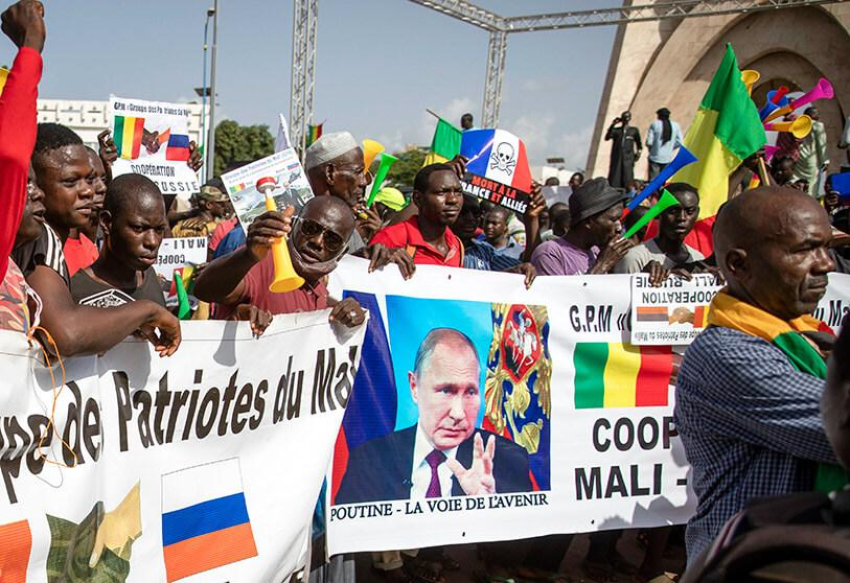
The AES countries have resolutely turned their backs on their traditional partners to forge a partnership with countries like Russia, which they view as an alternative model. According to the findings of this study, Russia ranks first among models of security cooperation, far ahead of France, which was once a preferred partner, especially in Niger. What could explain this lack of interest in France among the local populations? Is it due to the colonial past, the “failures” observed on the ground, or accusations of abuses committed against civilians? However, French authorities do not seem to acknowledge their “failure” in this large-scale intervention. According to the French president, they were right to get involved in Africa as part of the fight against terrorism. “If we hadn’t gotten involved with Operations Serval and then Barkhane, there would undoubtedly be no more Mali, no more Burkina Faso, and I’m not even sure Niger would still exist,” said Emmanuel Macron. In this context, France is withdrawing from the Sahel to make way for other partners, including Russia, a major power that continues to expand its influence in the region.
The Russian forces’ strategy is based on an effective deployment, with joint command with the host country.
According to an analysis by the Timbuktu Institute, this strategy rests on four pillars: protecting allied regimes, securing access to natural resources, developing sustainable partnerships in the infrastructure and energy sectors, and limiting the influence of Western powers, particularly France. Thus, it aims to address the needs of Sahelian countries plagued by terrorism by providing a reassuring military presence. From Wagner to the Africa Corps, the Russians have deployed alongside Sahelian states and helped bring about periods of calm, even if the threat has not been defeated. Russian forces have suffered several defeats on the ground, particularly in Mali, which has tarnished Russia’s reputation in Africa. Their withdrawal from Kidal, following the atrocities committed last April by the JNIM-FLA group, is proof of this. The human and material resources made available do not appear to be effective in light of the evolving security situation, which remains dire. The Russian myth has collapsed. The Russians have failed to protect the population or to secure the ruling military regime. Violence and attacks continue, as do abuses committed against the population. The incident involving Wagner Group forces, who were filmed burying bodies in a mass grave in Mali, is proof of this. This continues to raise questions about respect for human rights, which could jeopardize the success of the Russian mission in the Sahel. The change in partner has not ended the war. Should the nature of the partnership be reevaluated?
China’s Rise: A Strategy of Influence Based on Sovereignty and Pragmatism
For its part, China proposes a type of partnership based on non-interference in conflicts, though it does intervene, for example, to protect mining and transportation infrastructure, among other things. As the leading trading partner of African countries, Beijing presents itself as a disciplined partner that does not meddle in internal affairs, particularly those related to security. It is currently strengthening its foothold in Sahelian countries through a patient and practical strategy on the ground, combining investments and military cooperation with near-total discretion. This is how China is now able to position itself as an alternative to partners who have failed in their missions in the Sahel. The win-win partnership has always been China’s policy in Africa. This is why countries such as Burkina Faso have chosen China for the purchase of weapons and military vehicles. This strategy of supporting countries while allowing them a certain degree of independence and flexibility could prove successful, as the Chinese appear to be learning from the criticisms leveled against other competing partners. This approach is based on what these states want: to combat terrorism while preserving their sovereignty. China’s success in the Sahel states could thus be viewed as a threat, as it is poised to become the leader in the power struggle for influence among the major powers. Consequently, the Chinese are gaining ground in a highly competitive environment centered on control of resources. Alongside them, the Turks continue to expand their presence and influence through an approach very similar to Russia’s.
Turkey in the Sahel: Pragmatic Diplomacy in the Service of Growing Influence
Turkey, a Western country, sets itself apart from the practices of its European counterparts in Africa. It favors a discreet partnership that benefits all parties. It positions itself as a preferred partner for the purchase of drones intended for airstrikes and intelligence gathering. In this context, Turkey could very well come out on top. All of this can be summed up in this observation by Göktuğ Çalışkan, a foreign policy analyst at the Center for Crisis and Policy Studies in Ankara: “Ankara is a unique geopolitical actor: as a NATO member, it has access to NATO’s military capabilities, but it is also a diplomat that speaks the language of the Global South.” This approach could bear fruit in the long term, given the aspirations of Sahelian states that wish to be treated as equals. Furthermore, Erdogan also intends to position himself as a preferred trading partner, second only to China, which holds the top spot. It should be noted that Turkey has repeatedly provided material and financial support to Sahelian states in the fight against terrorism. It is also making slow but steady progress toward signing trade agreements with countries such as Niger, which have begun diversifying their partnerships. In this regard, we could expect, in the medium term, a possible “battle” over drone procurement between Beijing and Ankara, as well as other powers such as France, which has not yet had its final say. Tensions between Paris and Ankara could intensify given Turkey’s strong position in the Sahel, which was once a French stronghold. As a reminder, Macron accused Turkey in 2020 of fueling “anti-French sentiment.”
The U.S. Return: Toward a New Strategy of Influence in a Competitive Region
Two years ago, the United States completed the withdrawal of its troops from the Sahel, notably from its last military base in Agadez. This process, which had been underway for several years, saw the Pentagon gradually withdraw from the Sahel region. It is worth noting that the Nigerien authorities had denounced the terms of the agreement with Washington. Nevertheless, the United States was still willing to come to Niamey’s aid if necessary. Following U.S. airstrikes against Islamic State fighters, many observers were already anticipating a U.S. return to Africa, particularly to the Sahel. A new partnership between the United States and the Sahel appears to be taking shape; an American return to Sahelian soil cannot be ruled out. What will be the format and terms of reference for this agreement?
For now, nothing is official yet. But if we are to believe the statements of a senior official from the U.S. State Department’s Bureau of African Affairs, who was on a working visit to Ouagadougou last March, the idea of a new partnership is being widely discussed. This visit followed one to Bamako, where he met with officials to reestablish dialogue. According to Nick Cheke, “we discussed our desire to revitalize relations between the United States and Burkina Faso, and to work together on issues of shared interest.” The fight against terrorism will play a prominent role within this partnership. This time, it will be “with respect for the country’s sovereignty.” The new “U.S. Sahel Envoy” clearly signals the United States’ ambition to return to the Sahel, which it had previously left on tiptoe. With this return, the United States will find Russia, China, Turkey, and others already on the ground, and the battle promises to be fierce.
Germany in the Sahel: A Stabilization Approach Based on Assistance and Cooperation
The Sahel is also a priority of German foreign policy in the area of security. Indeed, Germany provides military support combined with humanitarian aid to mitigate the economic consequences of the conflict in this region. With France’s withdrawal, Germany is positioning itself as an option that could help stabilize the region without interfering in internal affairs.
Toward a New Geopolitical Order in the Sahel: Intensifying Rivalries and Strategic Resource Issues
With this rush of major powers toward the Sahel, a new order in the battle for influence is undoubtedly and inevitably taking shape. These powers are sharpening their weapons and adjusting their positions in light of geopolitical stakes. In the medium term, the specter of large-scale competition will persist. Behind this military partnership lies a desire to gain control of the mineral resources essential for technological and industrial advancement. These rivalries will intensify and risk dealing a severe blow to the fight against terrorism.
Recommendations
Based on this analysis, we can formulate six general recommendations for the countries of the Sahel and West Africa, structured around six strategic priorities:
Regain sovereign control over security partnerships
The countries of the Sahel have demonstrated that they can sever ties with partners who have become unpopular, but so far they have merely replaced one form of dependence with another. The lesson to be learned is that neither France, nor Russia, nor any external power can defeat terrorism on behalf of Sahelian states. We must therefore reverse the logic: first define national security needs in terms of training, equipment, intelligence, and an effective territorial presence, then select partners based on their ability to meet those needs—not on the basis of current political or ideological affinities. This entails deliberately diversifying partnerships rather than replacing one monopoly with another; ensuring that any cooperation agreement is enshrined in a transparent legal framework with performance and exit clauses; and requiring each partner to be held accountable for human rights violations committed by its forces on national soil.
Protecting strategic resources as a lever of sovereignty, not as a factor attracting rivalries
Mali’s gold, Niger’s uranium, and Burkina Faso’s resources are at the heart of competition among major powers. Today, these resources are more a source of foreign covetousness than a driver of national development. It is imperative that Sahelian states strengthen public control over their mineral resources by auditing existing contracts and renegotiating those that place mining operations under exclusive foreign control. Local processing of raw materials must be encouraged to create added value within the country. Mining revenues must be prioritized for the national armed forces, basic public services, and the development of marginalized areas that fuel recruitment by armed groups.
Rebuild the regional security architecture on realistic foundations
ECOWAS, the now-defunct G5 Sahel, and the AES have all shown their limitations. None of these frameworks has succeeded in producing an effective collective response to the terrorist threat. Rather than creating new, competing structures, efforts must be focused on a few concrete and financially viable mechanisms: a regional intelligence fusion center fed by all member states, rapid-response units pre-positioned at the most porous borders, and a protocol for the automatic activation of military solidarity with clear and binding thresholds. The political rift between the AES and ECOWAS must not prevent technical cooperation on border security, intelligence sharing, and the monitoring of the flow of weapons and fighters. Algeria and Mauritania, which have often remained on the sidelines, must be included in these mechanisms as key neighboring actors.
Address the root causes of terrorism rather than merely its symptoms
Ten years of foreign and domestic military presence have not eradicated terrorism in the Sahel, because no military measure alone can resolve a crisis whose roots are political, economic, and social. Armed groups recruit from communities abandoned by the state, economically marginalized, and exposed to injustices. A sustainable strategy must therefore address three dimensions simultaneously: reestablishing an effective state presence in areas recaptured by military means; investing heavily in the development of historically neglected border and pastoral regions; and initiating political dialogues tailored to the specific types of armed groups, distinguishing between transnational jihadists and movements with local grievances that can be disarmed through political solutions.
Building a Demanding and Balanced Relationship with External Powers
Rivalries among major powers in the Sahel are a lasting reality that African states cannot ignore, but they can capitalize on them rather than fall victim to them. The competition among Russia, China, Turkey, the United States, and Europe for influence in the region gives Sahelian governments real bargaining power, provided they exercise it collectively and strategically. This requires speaking with one voice within regional forums, demanding reciprocity in all agreements—particularly regarding the transfer of expertise, the training of national forces, and investment in local defense industries—and preventing the Sahel from becoming a battleground for external powers whose priorities may differ from the needs of the local populations. The non-interference advocated by China and Turkey can be an advantage, provided it does not serve as a pretext for the covert exploitation of resources without any real compensation for the host states.
Investing in Domestic Legitimacy as a Prerequisite for Any Security Strategy
Foreign military presence is viewed with mixed feelings, or even hostility, by local populations. But military regimes that have seized power in the name of the fight against terrorism will face the same lack of legitimacy if they fail to produce visible results for civilians. No external partnership, however well-equipped it may be, can compensate for the lack of trust between states and their populations. Legitimacy is built through transparency regarding military results and human costs, through the effective protection of civilians in areas of operation, through the fight against impunity for national and foreign security forces, and through the inclusion of local communities in the design of peace strategies. It is this domestic legitimacy, more than any external partnership, that will form the sustainable foundation for a resolution to the crisis in the Sahel.