 © sana
Timbuktu Institute, Week 3, July 2026
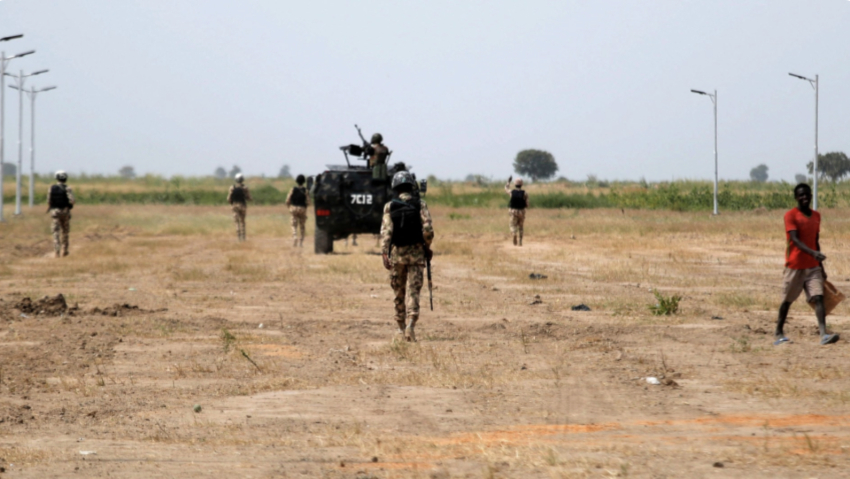
In Nigeria, it seems that every week serves as a reminder, sometimes with stark brutality, of the scale of the security challenges the country continues to face. The latest example: on 18 and 19 July, in Zamfara State in the northwest of the country, an armed gang led by a gang leader known as Kachalla Sa'idu attacked eleven villages, abducting at least 40 people, mostly women and children. These abductions are part of a pattern in a region where kidnapping for ransom and criminal group violence remain endemic, despite Abuja's stated efforts to curb the phenomenon. The army had in fact announced in early July that it had killed around 300 suspected members of gangs specialising in kidnapping and cattle theft. Faced with the persistence of this insecurity, President Bola Tinubu has launched a reform aimed at establishing state police forces, a project that remains, however, pending approval by the federated states — a sign of the institutional resistance faced by any attempt to decentralise law enforcement.
In the northeast of the country, the fight against the jihadist insurgency is following a different trajectory, marked by gains claimed by the armed forces. Operations Hadin Kai and Fansan Yamma have enabled, according to the army, the release of hostages, the interception of logistical resources intended for armed groups and the arrest of several suspects, including a Sudanese national presented as a suspected “foreign terrorist fighter”, arrested in the Askira/Uba area alongside a woman claiming to be an undocumented Ghanaian migrant. Several suspected Boko Haram and Islamic State West Africa Province (ISWAP) fighters have also laid down their arms, including two senior figures. Surrenders that military authorities attribute to the combined pressure of ground operations, airstrikes and intelligence work. These two fronts — one in Zamfara, the other in the Lake Chad basin — depict a country where the geography of violence remains multifaceted, spanning organised crime and ideological insurgency.Several suspected Boko Haram and Islamic State West Africa Province (ISWAP) fighters have also laid down their arms, including two senior figures. Surrenders that military authorities attribute to the combined pressure of ground operations, airstrikes and intelligence work. These two fronts — one in Zamfara, the other in the Lake Chad basin — depict a country where the geography of violence remains multifaceted, spanning organised crime and ideological insurgency.
Oil dispute and ambitions of becoming a continental gas hub
This security instability finds an echo, on an entirely different terrain, in the power struggles shaping the exploitation of Nigeria's resources. Thus, a court in Bayelsa State dismissed the lawsuit filed by Bubaraye Dakolo, monarch of the Kingdom of Ekpetiama, against the oil group Shell, which sought to freeze the sale of the company's onshore assets until the environmental damage caused in the Niger Delta had been repaired. The court ruled the claim “premature and inadmissible”, finding that the pollution allegations were time-barred under Nigerian law. A decision welcomed by Shell, which attributes much of the degradation to sabotage and oil theft, but which the monarch's defence team intends to challenge on appeal. This case illustrates the persistent difficulty faced by Delta communities in asserting their rights against oil majors, in a context where the national legal framework tends to favour the latter.
And yet it is on this very same energy front that Nigeria is displaying its most continental ambitions. Indeed, at the ECOWAS summit on 19 July in Freetown, member states signed an intergovernmental agreement defining the legal and institutional framework for the Nigeria-Morocco Atlantic African Gas Pipeline, marking a decisive step in a project jointly driven by Abuja and Rabat. Stretching several thousand kilometres and crossing thirteen countries along Africa's Atlantic seaboard, before a planned connection to the Maghreb-Europe Gas Pipeline, the corridor is intended to carry Nigerian gas to Morocco, with an announced capacity of around 30 billion cubic metres a year, for an estimated cost of several tens of billions of dollars. Revived in the wake of the energy crisis triggered by Russia's invasion of Ukraine and the 2022 halt of Algerian gas transit to Spain via Morocco, the project is now entering its operational structuring phase, with the establishment of governance bodies and the mobilisation of financing. Beyond its energy ambitions, the project aims to strengthen regional integration by facilitating access to gas for the countries it crosses, supporting industrialisation and improving the continent's energy security. It also represents a major geopolitical lever for Nigeria, which is seeking to further capitalise on its substantial gas reserves, and for Morocco, which aims to consolidate its role as an energy hub between Africa and Europe. Construction is scheduled to begin in 2028, with first deliveries not expected until 2031 — a horizon that gives Nigeria both the time, and the obligation, to demonstrate that its ambition to become a regional energy hub can be reconciled with resolving its internal security and environmental fractures.