Côte d'Ivoire : the opposition regroups amid an easing political climate Spécial
 © wadr
Timbuktu Institute, Week 3, July 2026
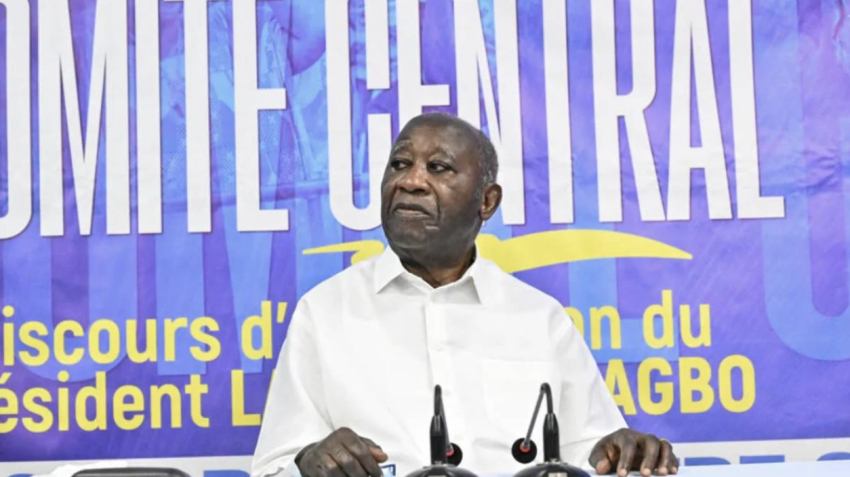
Nearly eight months after a presidential election that durably reshuffled Ivorian politics, the opposition continues to search for ways to reorganise itself, caught between initiatives designed to offset its lack of institutional representation and internal rifts exposing contested strategic choices. The African Peoples' Party-Côte d'Ivoire (PPA-CI) of Laurent Gbagbo offers a direct illustration of this. Denied representation in the National Assembly after boycotting the December 2025 legislative elections, the party announced the creation of a Parliamentary Decisions Observatory, a nine-member body presenting itself as a body for “monitoring and counter-proposal” with regard to parliament, tasked with following the work of MPs, analysing bills under discussion and, where necessary, formulating amendments or counter-proposals. While the PPA-CI sees this as a way to maintain its influence over the national debate through citizen oversight of parliamentary action, some observers believe the initiative's reach could remain limited, given the lack of elected officials able to exert direct influence in the chamber. A finding that, implicitly, lends weight to criticism of the strategic choice to boycott.
This difficulty in translating grassroots influence into institutional weight has also fuelled internal rifts within the political opposition, of which Ahoua Don Mello is the clearest illustration. Expelled from the PPA-CI in May 2026, along with several other cadres, for having taken part in the 2025 presidential election despite Laurent Gbagbo's boycott instruction, the party's former vice-president in charge of strategic projects is now preparing to launch his own party, “A Sovereign Côte d'Ivoire” (CIS), whose founding congress (the “pioneers' congress”) is expected in October 2026. A strategy meeting held on 11 July in Abidjan set out its broad orientations, down to its official colours, red and blue, while several foreign delegations, notably Russian ones, are expected to attend the launch. Positioned on a sovereigntist and pan-Africanist line, the new party aims to bring together political cadres, elected officials and investors from varied backgrounds, with further rallyings, still confidential, expected to be announced soon. A sign that, beyond the personal break with Gbagbo, a new sovereigntist pole is emerging and seeking to establish itself on the Ivorian political scene.
That same day, 11 July, in Abidjan, another opposition party, Pro-Côte d'Ivoire, held its congress to unveil a programme built around entrepreneurship and job creation. Led by its president Kévin Fiéni, who advocates transforming the country into a federal republic, this programme aims to reduce the economic constraints weighing on private initiatives, namely by limiting deposits and rent advances, lowering rents, abolishing “key money” payments, and easing taxes on traders and entrepreneurs, in line with a philosophy summed up by Fiéni's formula: “through work alone, one gets what one wants”. The party also announced the upcoming publication of concrete results on employability and called for a “tamper-proof” electoral system, a condition it says is essential for a structural reform guaranteeing the transparency of future elections.
A gradually easing political climate
That said, this partisan effervescence, reflecting an opposition in the throes of realignment, coincides with a gesture that some might read as a signal of appeasement from the authorities. In this vein, six local officials of the Democratic Party of Côte d'Ivoire (PDCI), arrested between late September and early October 2025 in the midst of the presidential campaign, were released on 20 July 2026 after nine months in detention, following a hearing before the anti-terrorism chamber whose grounds have not been disclosed. Their lawyer, Maître Ange Rodrigue Dadjé, confirmed their return home, as part of a series of gradual releases affecting several PDCI activists as well as figures close to Laurent Gbagbo's camp, including former minister Moïse Lida Kouassi and cyber-activist Ibrahim Zigui. Ivorian authorities, who had always insisted these arrests were judicial rather than political in nature, are thus allowing a calmer climate to emerge — without this erasing the memory of an electoral context that saw the opposition, in its various forms, seeking ways to reinvent itself in the face of an authority in a position of strength. It remains to be seen whether this judicial lull reflects a lasting shift in the authorities' stance towards their opponents, or whether it is merely a pause in a political cycle bound to tighten again as the next elections approach.