Benin – Wadagni : from managing the Talon legacy to forging his own path Spécial
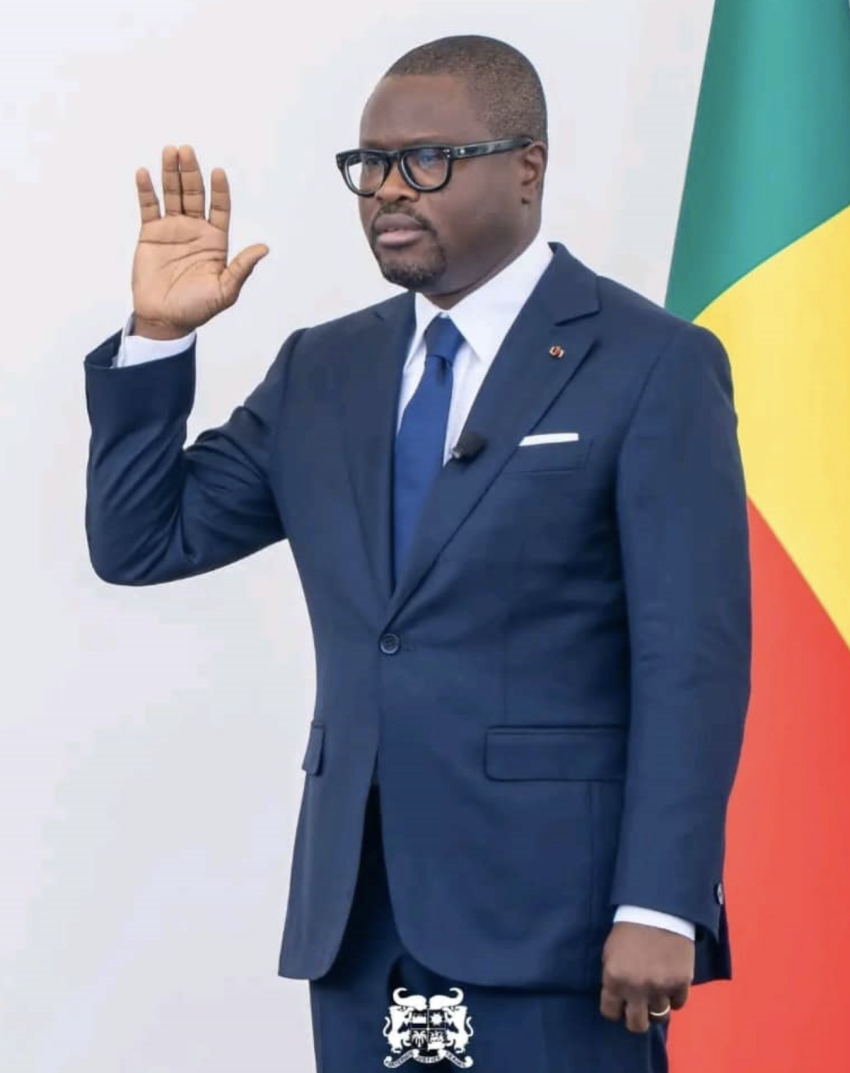 © Matin Libre
Timbuktu Institute Week 1, September 2026
After a decade spent steering public finances under Patrice Talon, Romuald Wadagni is approaching his first months at the helm of Benin without seeking to turn the page on his predecessor. The major economic balances remain at the heart of his action, as do the structuring projects launched in recent years. Yet behind this assumed continuity, a shift seems to be taking shape: that of a president who now intends to make more room for social policy while giving fresh impetus to Benin's relations with its regional environment. Perhaps a way of gradually moving from consolidating past gains to pursuing a political imprint of his own. By the end of his first hundred days at the helm of the country, this shift appears to follow a path from economic legacy to social promise. Indeed, Romuald Wadagni's equation is first and foremost that of a legacy difficult to separate from his own career. As the linchpin of Talon's economic policy for nearly ten years, the new head of state knows its workings, its successes and the expectations that come with it. The macroeconomic fundamentals consolidated over the past decade and the investments made in infrastructure are thus less a legacy to be questioned than a foundation to be built upon. The Glo-Djigbé industrial zone, port infrastructure and logistics facilities remain at the heart of this ambition.
The social equation
However, part of this challenge also lies in the ability to make the effects of this economic transformation more tangible for the population. Health, education, agriculture, as well as youth employment and entrepreneurship, occupy a more visible place in the new government's initial orientations. The announced support for women's entrepreneurship, with 100 million CFA francs in financing mobilized with the support of the World Bank, reflects this desire to make growth a less abstract and more tangible instrument in everyday life. This social recalibration does not, however, mean abandoning the economic playbook of the Talon era. In reality, it seems rather to reflect a desire to extend its results by working more on their redistribution, particularly between territories and population groups. In other words, having focused on transforming the economy, Wadagni's government now appears keen to focus more on what this transformation concretely produces in the lives of Beninese citizens.
Still, this economic continuity inevitably raises a political question. How does one leave one's mark when succeeding someone whose principal minister one was for nearly ten years? The question is all the more delicate given that several figures from the former administration remain in strategic positions, and that the new Senate President, Patrice Talon, retains, after leaving power, a political influence that cannot be ignored. For Wadagni, the challenge is therefore less about breaking with the legacy than about gradually becoming its own interpreter. The question of national reconciliation, particularly regarding political detainees and exiles, could in this respect be one of the most sensitive markers of this expected emancipation.
At the heart of the new diplomatic tempo, the regional neighborhood
Yet it is perhaps in the diplomatic sphere that the change in tone appears most clearly. Wadagni's prompt visits to Niamey, Ouagadougou, Bamako and Lomé reflect a desire to reconnect with several neighboring capitals, at a time when Cotonou had seen its relations deteriorate with part of its regional environment. As is well known, Cotonou intends to consolidate and strengthen its role as a regional platform for mediation and trade. Thus, the quality of neighborly relations is also a first-order economic issue.
Furthermore, the recent Nigerien episode illustrates this. Following the mutiny that took place on 28 and 29 August in Niamey, during which Nigerien authorities reported an attempted destabilization, accusations implicated several neighboring countries, including Benin and Côte d'Ivoire. An accusation that Cotonou quickly and firmly rejected. Government spokesperson Wilfried Léandre Houngbédji recalled that “Benin is not their enemy,” while reaffirming that the country opposed any undertaking aimed at destabilizing its neighbor. These accusations, which also implicate Chad and France, have not, at this stage, been accompanied by evidence enabling their veracity to be independently established. Their political significance nonetheless remains considerable. They are a reminder of how much the relationship between Cotonou and Niamey remains marked by the aftershocks of the crisis triggered by the change of power in Niger in 2023. In this context, Benin's choice to respond with de-escalation rather than confrontation appears to be an attempt to keep open the space for dialogue that has existed since Wadagni came to power. “We are against the destabilization of Niger today, and we will be tomorrow,” Cotonou stated firmly.
The ambition of a regional role
On the other hand, Cotonou's diplomatic reopening finds another natural extension in Benin's presidency, assumed in September, of the African Union's Peace and Security Council. Having joined this body a few months earlier for a two-year term, Benin intends to use this responsibility to give greater visibility to its priorities and, beyond that, to its own continental positioning. The roadmap announced combines security concerns with issues now inseparable from conflict prevention: the protection of children in wartime, the “Women, Peace and Security” agenda, but also the consequences of climate change on the stability of fragile regions in the Sahel and the Lake Chad basin. The ministerial seminar devoted to women, peace and security, scheduled in Cotonou on 9 September, followed by the 23 September meeting in New York on the sidelines of the UN General Assembly, are set to be the main highlights of this presidency. In this context, the choice of “good neighborliness” as one of the pillars of this continental sequence takes on particular resonance. As Benin seeks precisely to ease relations with some of its neighbors, Cotonou intends to carry, at the continental level, a message that makes regional cooperation a response to security challenges. Beninese diplomacy thus appears to want to turn a period of tension with its immediate environment into an opportunity to reaffirm its role in Africa's peace and security mechanisms.