 © AFP
© AFP
Timbuktu Institute September 2026, Week 2
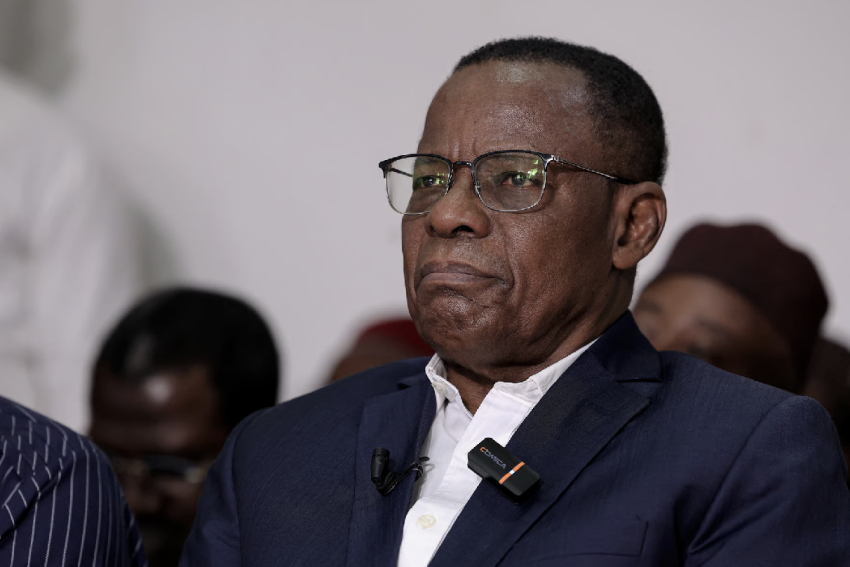
Since Paul Biya's re-election last year, the Cameroonian opposition has been going through something of a wilderness period. Controlled, and at times even obstructed, it has since been trying, one way or another, to carve out room to maneuver. It is against this backdrop that the Cameroonian political rentrée opened with a somewhat surprising sequence of events.The resignation, on September 8, of opposition figure Maurice Kamto from the presidency of the Cameroon Renaissance Movement (MRC), along with that of his first vice-president Mamadou Mota, comes as the main opposition party prepares its return to the electoral arena, having boycotted the 2020 local elections. In a terse letter, Kamto invoked the “higher interest” of his party, its members and the “People of Change,” without further specifying the reasons for his withdrawal. Mota was more explicit, denouncing “constant harassment by the Cameroonian administration” and explaining that he wanted to step back to avoid giving the authorities a “focal point” that could hamper the MRC's activities. But behind this double resignation lies a complex political equation: preserving the party's electoral chances while easing the administrative and judicial pressure on its leading figures.
The Opposition Jostles for Position
The decision by Maurice Kamto comes after several months of controversy surrounding his return to the leadership of the MRC. Formalized by a convention in December 2025, this reinstatement had been challenged by two appeals filed by former party members. More importantly, on August 19, the Minister of Territorial Administration, Paul Atanga Nji, informed the MRC Secretary-General that he had not deemed it appropriate to “take note” of the convention, raising questions about the recognition of Kamto’s leadership and, by extension, the party’s participation in upcoming elections. Officials from the presidential camp had even publicly presented the departure of the former presidential candidate as a condition for the MRC’s participation in future elections. Under these circumstances, Kamto’s withdrawal may appear to be a tactical choice. The legislative and municipal elections scheduled for early 2027 are indeed a major issue for a party that could become the ruling RDPC’s main opponent, following the announced withdrawal of Issa Tchiroma Bakary. That said, it should be clarified that Kamto and Mota are not leaving the MRC. Pending a new extraordinary convention, convened for October 10 in Yaoundé, Second Vice-President Balbine Tiriane Noah is taking over the party’s leadership. This solution keeps the electoral machinery moving, but it does not resolve the question of leadership. Within the MRC, some portray the departure of the two men as a sacrifice made to safeguard the party’s interests. Others see it as an unprecedented development that could force the opposition to rethink its internal balance. The strategy is therefore clear: remove the two figures at the center of tensions with the administration from the forefront, without abandoning the electoral battle.
The Credibility of the State Under Scrutiny
This political sequence comes as Yaoundé is simultaneously seeking to regain control of its financial situation. Since August, the Ministry of Finance has been conducting an audit of the “floating debt” accumulated between 2020 and 2025 by public administrations, state-owned enterprises, universities and local authorities. The claims concerned range from salary arrears and bonuses owed to civil servants to invoices from suppliers and service providers, as well as academic, social and rental debts. The files must be submitted to the Directorate-General of the Budget by October 31. The exercise echoes a previous audit conducted in 2020 covering the period from 2000 to 2019, which identified a stock of 752.1 billion CFA francs, nearly two-thirds of which have since been cleared. It also revealed, however, the existence of thousands of claims tainted by duplicate entries or falsifications. Furthermore, this new audit aims to establish a more precise picture of the State’s outstanding commitments and strengthen confidence in their management, as Yaoundé negotiates a new program with the IMF.
At the same time, another case—far more troubling—has emerged on this same issue of institutional credibility: the burglary of the Special Criminal Court (TCS) in Yaoundé, which occurred during the night of August 29–30. The burglars reportedly took a computer and a relatively modest sum of money. But the break-in has taken on an entirely different dimension since the chief registrar, Joel Tsik, who had been in office since the TCS was created fourteen years ago and reached retirement age in June, has remained unreachable after citing health problems. He alone reportedly held the key to the safe containing seized items, evidence, valuables, sensitive documents and cash, including money from plea-bargaining proceedings. According to Jeune Afrique, several billion CFA francs could be stored in this safe , including funds linked to proceedings involving former officials convicted of embezzling public funds. At this stage, there is no evidence establishing that such an amount has disappeared. But the inability to verify the contents of the safe already appears to be fueling speculation that the theft may have been far greater than what was observed during the burglary. The court’s leadership eventually referred the matter to the Minister of Justice, Laurent Esso, to report its suspicions. If the allegations were confirmed, the case would carry particularly serious symbolic implications for a court created precisely to combat the embezzlement of public funds.
To some extent, a certain Cameroonian paradox may lie in the following: as the authorities tighten their grip on spaces for dissent, they are also confronted with signs of fragility within the institutions meant to embody their authority. The opposition can be contained, but it does not disappear; administrative mechanisms can be used to regulate the political arena without necessarily dispelling the suspicions now surrounding the functioning of the State. Just months before the 2027 legislative and municipal elections, these pockets of tension are bound to raise questions. For while the regime may still be able to dictate the terms of the game, it will now have to convince people that the rules it sets remain credible enough to be accepted.