Nigeria : Between electoral manoeuvring and security challenges, Abuja bets on BRICS Spécial
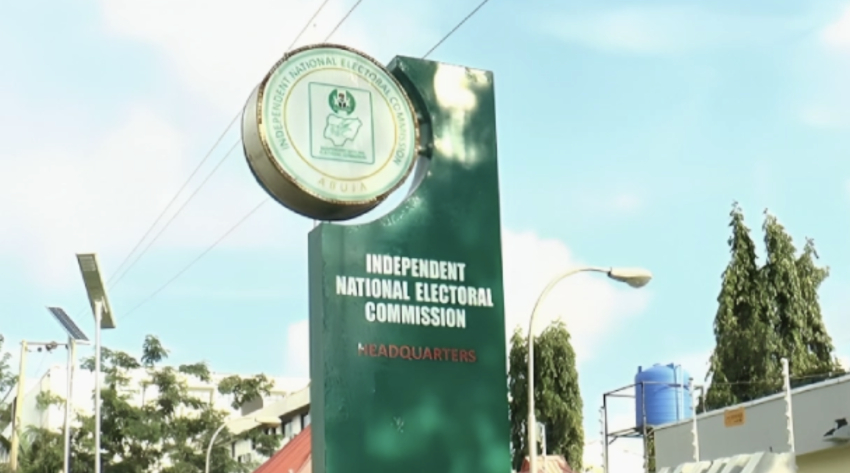 © INEC Headquarters
Timbuktu Institute - Week 3 September 2026
As the January 2027 presidential election approaches, Nigerian political competition is entering a phase in which alliances are becoming almost as decisive as candidacies. Beneath the surface of a now-established contest, power struggles are still being played out that could redraw the balance between parties and within the various coalitions themselves. The race is already officially open. On 12 September, Nigeria’s Independent National Electoral Commission (INEC) published the final list of candidates for the presidential election scheduled for 16 January 2027. Eighteen contenders appear on the list, including incumbent President Bola Ahmed Tinubu, as well as Atiku Abubakar and Peter Obi, who came second and third respectively in the 2023 election. Former President Goodluck Jonathan’s candidacy, however, was not accepted.
The publication of this list now sets the official framework for the contest, without ending the negotiations under way for several months within the opposition. As none of the main candidates opposing Bola Tinubu has withdrawn, discussions on a joint candidacy have so far come to nothing. The fragmentation of candidacies thus remains one of the features of this new electoral sequence, even as the prospect of an opposition coalition continues to fuel negotiations. However, tensions are not limited to the parties seeking to challenge the ruling power. They also run through the presidential camp, where strategies for the various 2027 elections are not unanimously supported.
The presidential camp’s balance put to the test
A few months before the general elections, frictions are emerging over the strategy advocated by Nyesom Wike, Minister of the Federal Capital Territory and an ally of Bola Tinubu. Wike is calling for the formation of a “rainbow coalition” bringing together supporters from different parties to help re-elect the president. He also proposes that the APC (All Progressives Congress) support PDP candidates in certain states in the governorship elections scheduled for February 2027. This approach has drawn reservations from several APC governors. Tensions were heightened by Wike’s remarks, in which he notably suggested that some of them were too “lazy” to win an election. The former governor of Rivers State nonetheless maintains his support for Bola Tinubu and says the PDP will field its own candidates in the various elections. The proposal of such an electoral architecture thus illustrates the complexity of the alliances (federal and local) at work in the run-up to 2027. Relations between the APC and the PDP, as well as the internal balance within each of these parties, could weigh on the strategies deployed in the states.
A persistent security front
While political parties refine their strategies, the security forces continue to face a persistent armed threat in the north-east of the country. On 17 September, Nigerian forces of Operation Hadin Kai repelled two attackstargeting forward operating bases in Gajiram and Mairari, in Borno State. In Gajiram, the attackers were forced to withdraw after a response combining intelligence assets and air support. In Mairari, an attack by ISWAP fighters left four dead in their ranks. Nigerian forces recovered AK-47 rifles, ammunition, RPG rockets and a video camera, while several soldiers were wounded. The army then reinforced the positions attacked and continued clearance operations in the surrounding areas. The same period, however, saw another development. On 16 September, two JAS members, including a commander, surrendered to the security forces with three AK-47 rifles, ammunition and a motorbike. These surrenders come as the army continues its operations against armed groups active in the Lake Chad Basin. They reflect a situation marked both by persistent confrontations and by attempts at disengagement within the armed groups.
At the same time, the fight against criminal networks remains another important front for the Nigerian authorities. On 13 September, the National Drug Law Enforcement Agency (NDLEA) announced that it had seized more than 2.3 tonnes of illicit drugs during operations in several states. In Lagos, officers notably intercepted shipments of “Colorado” synthetic cannabis coming from the United Kingdom. Some were concealed in loudspeakers. In Kano, 669.4 kilograms of pregabalin capsules and diazepam tablets had been hidden in bread. Large quantities of cannabis, tramadol and other substances were also discovered in several states, leading to several arrests. The NDLEA is also continuing its awareness-raising activities against drug use as part of the WADA campaign. But recent operations also highlight the transnational dimension of some networks. On 15 September, the agency announced the dismantling of a clandestine methamphetamine laboratory in Ebonyi State and the arrest of a Mexican national, Arturo Carrera Loaiza, presented as a member of a transnational network.
Abuja seeks to turn its weight into capabilities
This drive to strengthen national capabilities is also found, in a very different register, on the international stage. At the 18th BRICS summit in New Delhi, Nigeria called for greater investment, infrastructure and technology transfers with the group’s member countries. Abuja intends to target agriculture, energy, industry, critical minerals, health and digital technology in particular. The government also wishes to develop digital skills, artificial intelligence, fintech and cybersecurity, with the ambition of making better use of its youth and the size of its domestic market. President Bola Tinubu summed up this approach by declaring that “a nation that owns no technology risks renting its future”. Through this position, Abuja seeks to frame its cooperation with BRICS in a logic that goes beyond trade alone. The stated objective is to strengthen the country’s productive and technological capacities while attracting more investment. Nigeria is also advocating reform of global governance and wants cooperation within BRICS to move “from dialogue to action”. Abuja is thus calling for measurable results in terms of investment, jobs and productive capacity. The challenge now is to convert diplomatic and economic openings into infrastructure, skills and activities capable of sustainably supporting the national economy.