Côte d’Ivoire: Between Diplomacy of Trust and the Fight Against Trafficking Spécial
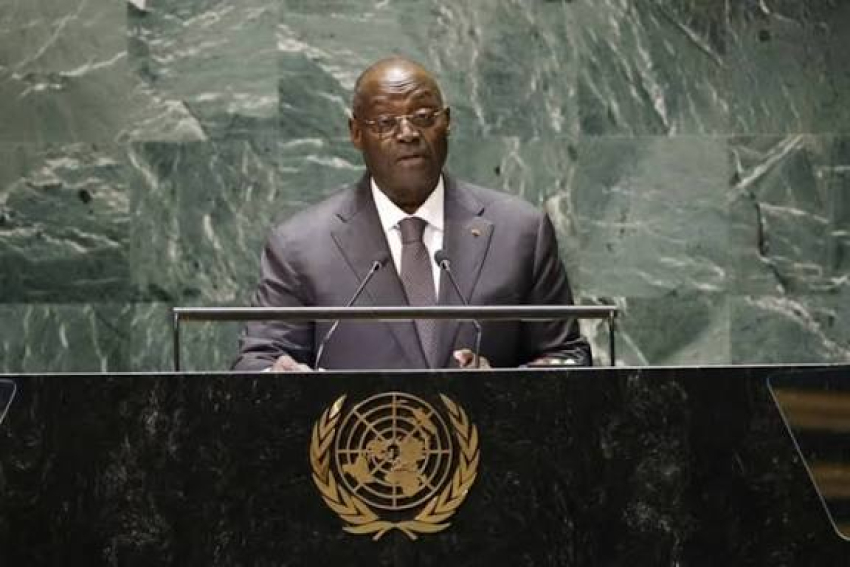
Abidjan made its mark at the 81st ordinary session of the United Nations General Assembly in New York. On 24 September, Tiémoko Meyliet Koné, Vice-President of the Republic and representative of President Alassane Ouattara, voiced Côte d’Ivoire’s position, calling on the international community to engage in dialogue. In the face of the various crises affecting the world, he believes that “we must choose dialogue over confrontation”.
Diplomacy: Côte d’Ivoire Champions International Cooperation and Dialogue
During the general debate held under the theme “Restoring trust, supporting transformations: a UN that serves all”, he advocated collective responses and stronger international cooperation. In his address, he stressed the importance of bringing positions closer together and rebuilding trust.
An Offensive Against Criminal Networks and Illicit Trafficking
On the security front, the success of Operation “Épervier spécial” was praised by the National Security Council, notably because of the stability it maintains. The council considered that this stability is reflected in the decline in armed robberies, burglaries, thefts and other forms of crime. The published statement reads: “This operation, which mobilises 1,320 members of the national police and gendarmerie, recorded the following results for the period from 7 to 16 September alone: the destruction and non-reoccupation of 56 drug dens; the seizure of nearly 183 tonnes of SFMPs and diverted medicines; the seizure of more than 3,500 vehicles, mainly for failure to wear a helmet and lack of registration plates; and the arrest of 196 individuals, brought before prosecutors for incitement to violence and trafficking in SFMPs and narcotics…”. This large-scale operation was launched on 7 September for a period of ninety days in the cities of Bouaké, Daloa and Korhogo. The objective of dismantling illicit trafficking networks for substandard and falsified medical products (SFMPs) and diverted medicines, combating drugs and cracking down on reckless road behaviour is being achieved, as shown by the successes recorded on the ground.
Bouaké, Daloa, Korhogo: “Épervier spécial” Put to the Test by Criminal Networks
It is therefore necessary to ask a number of questions: is there a network behind these distribution channels and laundering mechanisms? Who are the actors? Which countries are affected? In any case, the challenge is enormous, especially given the tense security situation on Côte d’Ivoire’s doorstep. The President of the Republic made a point of congratulating the Vice-Prime Minister and Minister of Defence, Téné Birahima Ouattara, the Minister of the Interior and Security, Vagondo Diomandé, as well as the defence and security forces mobilised for this operation, in view of the positive results achieved in such a short time. He also urged them to maintain this momentum.
Illegal Gold Mining: Abidjan Toughens Penalties for a Persistent Phenomenon
Furthermore, on 23 September, the government adopted a bill aimed at toughening penalties against illegal gold mining, a phenomenon that continues to concern it. Indeed, the measures are being steadily reinforced in the face of the persistence of this phenomenon. According to data from the National Security Council, more than 8,500 illegal gold mining sites have been destroyed and 4,474 people have been brought before the courts. Despite all these efforts, these criminal activities continue to harm the country’s economy in terms of lost revenue. Sentences can now reach up to 20 years in prison if the offence involves a public official. This decision makes it clear that this illicit activity is no longer the exclusive preserve of isolated traffickers; it could be an organised system involving high-ranking figures within the state apparatus. The challenges ahead are therefore the formalisation of operators, control of entries into the country through this activity, the traceability of gold and the fight against corruption.