Mali : Does the Jihadist Escalation Reveal the Limits of Bamako’s Security Strategy? Spécial
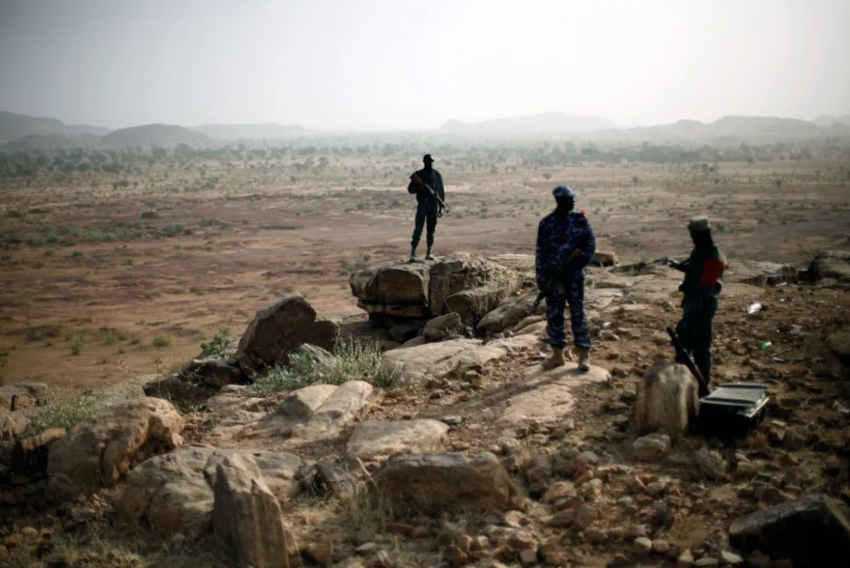 © Jerome Delay / AP
Timbuktu Institute - Week 4 September 2026
At the end of this rainy season, the JNIM affiliated with Al-Qaeda is stepping up its attacks with increasingly sophisticated modus operandi. On 14 September 2026, the main air command post in Sévaré, as well as the Kona base, were targeted by kamikaze drone and mortar attacks. The jihadists reportedly put drones and helicopters out of action, killed at least 30 Malian army soldiers and ambushed a convoy of Russian mercenaries. This situation highlights the undeniable rise in strength of the JNIM but also the vulnerability of the Malian army and its partners in this densely populated area, considered for about a decade to be the epicentre of jihadist activity.
After the attack on the Dioura military camp, the Malian state has still not released an official toll for the assault, despite the figures reported by the international press. Faced with this silence from the Malian army, the victims’ families have reportedly turned to images published by the JNIM, which claims at least 150 soldiers killed and more than 90 captured, in an attempt to identify the victims.
An Accusation of War Crimes
Despite Mali’s announced withdrawal from the Rome Statute in June 2026, the International Criminal Court remains competent to pursue the investigations the country has been subject to since 2013, until the withdrawal takes effect in June 2027. Moreover, in a research report conducted by Amnesty International between 2025 and 2026 in 10 localities of the Hodh Ech-Chargui region in Mauritania, where UNHCR has registered 290,000 Malian refugees, 119 of them from Mopti, Ségou and Timbuktu were interviewed. The report denounces serious violations of international humanitarian law and human rights committed by the parties to the armed conflict between the Malian army and non-state armed groups. The same report details two FAMa drone strikes in Timbuktu, which targeted a market and a family home in November 2025, killing at least 23 civilians. One of the people interviewed stated: “We found no evidence of the presence of members of armed groups or of military objectives at either of the sites targeted by these strikes. If confirmed, they would constitute direct attacks on civilians and civilian objects, and should be investigated as possible war crimes”. Relatives of victims reportedly said that there were no fighters in the market and that the 16 people killed were all civilians. Amnesty International also reports several violations committed by members of the JNIM and members of the FLA, to the point that some Malian survivors of the conflict have been driven into exile. “They told us to leave and never come back”, testifies one refugee.
When Mali Accuses Ukraine Before the UN
Malian Foreign Minister Abdoulaye Diop accused Ukraine of interference and of supporting “terrorist groups” in the Sahel at the UN General Assembly on 28 September 2026. He accuses Kyiv of providing financial, logistical and intelligence support to organisations linked to transnational organised crime whose aim is to destabilise Mali and thereby block its determination to free itself from “colonial domination”. He also called on Africa not to remain silent, especially as the consequences could spread regionally.
This denunciation comes just after President Assimi Goïta called for national reconciliation in his radio and television address on the eve of the 66th anniversary of Mali’s independence. The Malian president firmly affirmed the importance he attaches to territorial integrity and national unity, and did not fail to pay tribute to the soldiers who fell at the front and to announce the creation of the Observatory for Peace and National Reconciliation. Caught between accusations against Ukraine and an alliance with Russia that has shown its limits amid heightened insecurity, Bamako’s stance and strategy are largely justified, according to the Malian authorities.