 © Nigerdiaspora
Timbuktu Institute - Week 4 September 2026
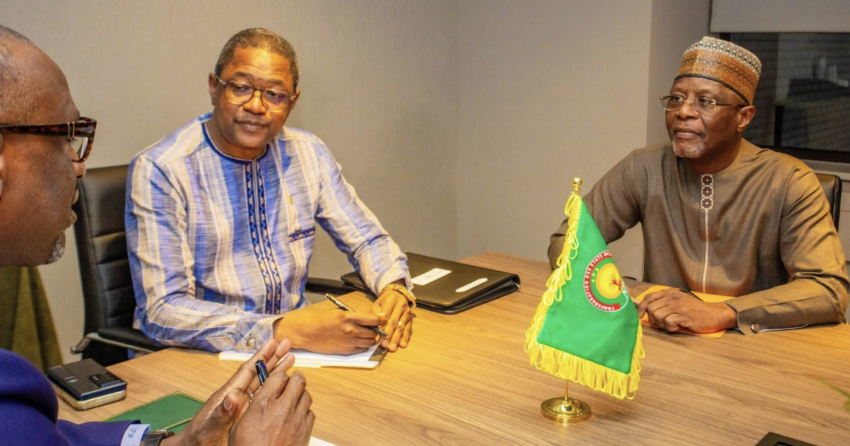
The foreign ministers and heads of the AES diplomatic missions in New York and Washington met on Sunday 21 September 2026 to prepare the messages to be delivered at the United Nations General Assembly. The objective is clear: to speak with one voice in defence of sovereignty, security and the right of peoples to set their own priorities, while offering an African reading of the realities of the Sahel, as opposed to “external” narratives. At the same time, a meeting devoted to the Confederation was organised in order to hold discussions with international partners. As a reminder, the 81st session of the United Nations General Assembly is being held under the theme “Restoring trust, managing transformation: a United Nations that delivers for all”. The three member states of the Confederation of Sahel States agreed on a coordinated diplomatic strategy. This approach reflects a desire to give concrete substance to the political union, initially focused on defence and security and since extended to diplomacy and development, and to have the AES recognised as a collective interlocutor capable of making an impact internationally. It shows the determination of the Confederation’s member states to turn their political unity into an indispensable multilateral force in a context of sovereigntist assertion.
A Common Identity for the Confederation’s Member States
Enrolment for the AES biometric national identity card was officially launched on 15 September 2026 by the Secretary-General of the Agadez Governorate, Souleymane Saidou Boulhassan, at the premises of the Regional Directorate of the National Police. As with any procedure, supporting documents and processing fees are required, and the card is valid for five years. The data are collected locally, sent to Niamey where the card is produced, and then returned to the region for delivery to the holder. The official urged the population to enrol, stressing the secure nature of this new document. This operation is part of the modernisation of civil registration and the securing of identity in the AES member states. This rollout of the AES biometric ID card in Agadez, a strategic region, is a concrete illustration of the Confederation’s administrative integration. It aims to combat fraud and identity theft, protect personal data and facilitate access to public services, while symbolising shared sovereignty and the digitalisation of the administration.
Review of the Refoundation Programme Deemed Satisfactory
The governor of the Agadez region, Major General Ibra Boulama Issa, presented on 20 September 2026 a review of three years of implementation of the Refoundation Programme 2023–2026 and of the 2025–2026 activities of the Regional Peace, Security and Development Committee (CRPS/D), set up in January 2025. The four main pillars are strengthening security and consolidating peace, which is a priority; effective territorial governance, which necessarily requires proximity to the ground; the coordination of interventions; and tools for measuring results. He claims a consolidation of stability, the defusing of anything that might threaten social cohesion, and progress in the fight against non-state armed groups. Other challenges, and by no means minor ones, remain, notably access to water and electricity, infrastructure and economic development. The objective is to strengthen basic social services, develop natural resources and expand decentralised cooperation among the member states of the Confederation of Sahel States.