Burkina Faso : Captain Traoré Pushes the Sovereigntist Logic on All Fronts Spécial
 © TDR
© TDR
Timbuktu Institute - Week 4 September 2026
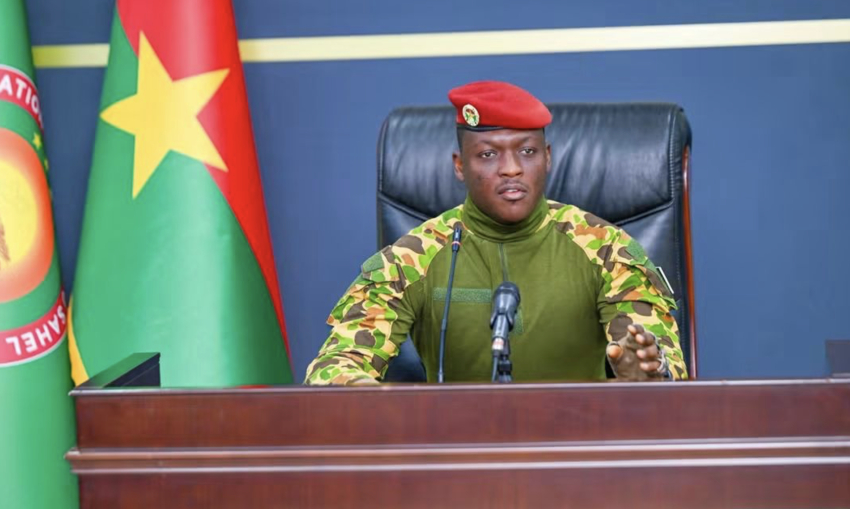
News in Burkina Faso was marked by the strengthening of the military-industrial apparatus. Captain Traoré announced the production of some 300 vehicles in just 10 months. During an exchange with young female winners of a women’s competition, he stated that “from November 2025 to today, the national production line has delivered nearly 300 armoured vehicles to the Defence and Security Forces (FDS) and the Volunteers for the Defence of the Homeland (VDP)”.
Defence Industry: Burkina Faso Seeks to Strengthen Its Military Autonomy
The Burkinabè leader thus intends to respond to ambushes and explosive devices, particularly in the north of the country, and to overcome the logistical constraints linked to the fight against terrorism. These vehicles are adapted to the terrain where the conflict is taking place in order to be more effective. Moreover, the fact that this equipment is produced locally is in itself a strong signal: the country is pursuing a logic of reducing imports and continuing its march towards sovereignty. Through the company “Faso Armored” and other firms specialising in this field, the authorities intend to further develop local production by drawing on national expertise. For the time being, there is no way to verify this information. Furthermore, many observers question the authorities’ ability to keep these machines running over the long term and to make the current models more robust.
Diplomacy: AES States Coordinate Their Positions at the UN General Assembly
Furthermore, the three AES countries consulted each other in order to speak with one voice at the United Nations General Assembly. The foreign ministers of Burkina Faso, the Republic of Mali and the Republic of Niger, as well as the heads of the diplomatic missions of these three countries in Washington and New York, met to harmonise their positions. Burkina Faso, which currently holds the presidency, will deliver the joint speech. Karamoko Jean Marie Traoré, Burkina Faso’s Minister of Foreign Affairs, will advocate a “fairer” and “more equitable” multilateralism, more focused on the interests of peoples. For his part, Niger’s top diplomat stated: “Since 2023, we have always spoken with one voice... In 2024 and 2025, we had the same confederal discourse.” The three states intend to take this opportunity to present their achievements and their vision to the whole world. It will be a unique opportunity to increase their visibility on the international stage. It should be recalled that since their withdrawal from ECOWAS, they have sought to establish a common identity in order to fight terrorism together and make sovereignty their rallying cry.
80% of Resources to the Field: Burkina Faso Imposes New Requirements on NGOs
Meanwhile, the regulation of NGOs in Burkina Faso continues to make the news. This time, it concerns a tightening of the rules applicable to these NGOs: from now on, at least 80% of the resources mobilised by NGOs in Burkina Faso must be devoted to direct investment in the field. The announcement was made at the latest Council of Ministers. According to Aboubakar Nakanabo, Minister of the Economy, “a framework agreement will be mandatory for associations under Burkinabè law and a headquarters agreement will govern foreign entities”. These new provisions require framework agreements, establishment agreements and above all evaluations, so that aid is more effective in this crisis context. The aim is to enable aid to have a direct impact on vulnerable populations. Several observers see this “radical” measure as a way of driving these organisations out through coercive measures.