Guinea-Bissau : between promises of credible elections and a ban on the former president’s return Spécial
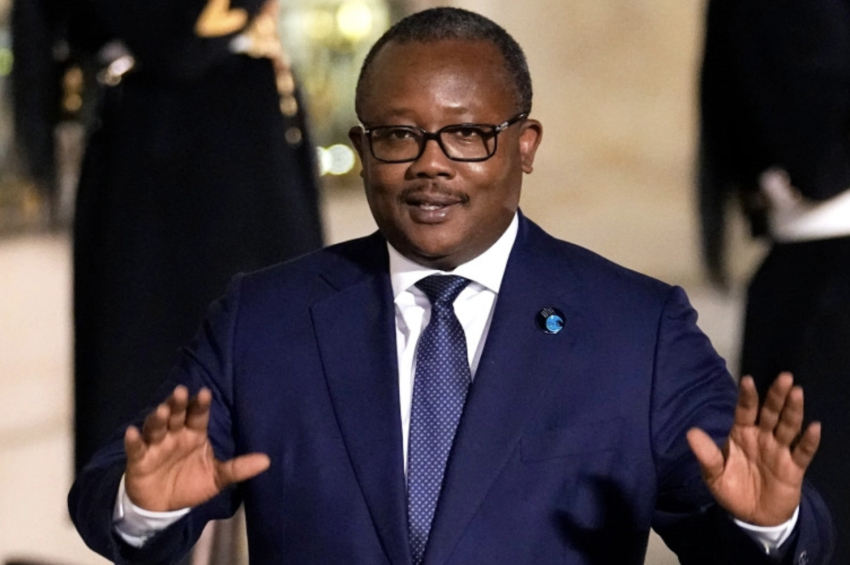 © TDR
© TDR
Timbuktu Institute October 2026 - Week 1
At the UN, the Bissau-Guinean transition is promising an “inclusive, free, transparent and credible” vote on 6 December. On the ground, however, political space continues to shrink. Former President Umaro Sissoco Embaló, a declared candidate, has been barred from returning by the Military High Command, which cited security reasons. This decision lends itself to two readings: a genuine rupture between the junta and its former mentor, or a staged move to pave the way for his return. The review of his candidacy, in light of the residency requirement set by the new Constitution, will show which one prevails.
Promise of “credible” general elections
Before the United Nations General Assembly, the transitional Prime Minister, Ilídio Vieira Té, pledged that the 6 December vote would be held in an “inclusive, free, transparent and credible” manner. This promise, however, contrasts with developments in the domestic political situation. From the ban on political meetings decided in January to the seizure of the PAIGC headquarters at the end of September, the space left to the opposition has steadily shrunk since the start of the transition.
Umaro Sissoco Embaló prevented from returning to Bissau
Overthrown in a military coup on 26 November 2025, former President Umaro Sissoco Embaló announced at the end of September in an interview with Jeune Afrique that he would be a candidate in the 6 December election, under the banner of the Republican Platform. From exile, he said he intended to return to Guinea-Bissau on 4 October. Initially, the transitional government’s spokesman, Fernando Vaz, recalled “the inalienable right of every Bissau-Guinean citizen to return to their country” and deemed his candidacy “admissible in principle”. But three days before the announced date of his return, the Military High Command issued an official statement closing the door to the former president’s return, citing “security conditions” that were not currently met. The statement also reaffirmed that restrictive measures remain in force, including the ban on demonstrations, gatherings and political meetings. Following this decision, Umaro Sissoco Embaló called on his supporters to remain calm, while stating that he remained “determined” to pursue his presidential bid.
Genuine rupture or staged move? Two readings of the same decision
The first reading of this situation is that of a total rupture between the junta and Embaló. The ban on his return would then be part of the gradual lockdown of political space by the transitional authorities, who would be targeting a potential rival. The military officers previously considered close to him would now be seeking to free themselves from his influence. The second reading is that of a staged move intended to preserve, or even restore, the former president’s influence. The measure could then be part of a broader strategy that some describe as a “fake coup”. As early as November 2025, opponents and some observers suspected Embaló of having orchestrated the putsch himself in order to halt an electoral process whose victory the opposition was claiming. These accusations rested in particular on the links between the former president and several figures now at the heart of the transition. The transitional president, General Horta Inta-A Na Man, had been his personal chief of staff and then Army Chief of Staff, while the transitional Prime Minister, Ilídio Vieira Té, had been his Minister of Finance.
The new Constitution, approved by referendum on 30 August and significantly strengthening presidential prerogatives, also lends weight to this second reading. Embaló, who had dissolved the National Assembly several times, had indeed shown himself to be opposed to the principle of separation of powers. For opposition figure Agnelo Regalla, this constitutional change makes it possible to “create favourable ground for Umaro Sissoco Embaló to regain presidential power ”. PAIGC President Domingos Simões Pereira takes the same view, arguing that the manoeuvre aims to “keep trusted elements” in power until the conditions for the former president’s return are met.
One legal factor could, however, call this second reading into question. The new Constitution requires five years of continuous residence in the country in order to run in the presidential election. A former president who has been living abroad for several months could therefore, in principle, fail to meet this requirement. The review of his candidacy will thus be the real test: if it is validated despite this provision, it would support the collusion theory; if it is rejected, it would reinforce the rupture theory.