Migration, Resilience, and Human Security in Eastern Senegal: A Second Phase of Action Research in the Departments of Goudiry and Bakel Spécial
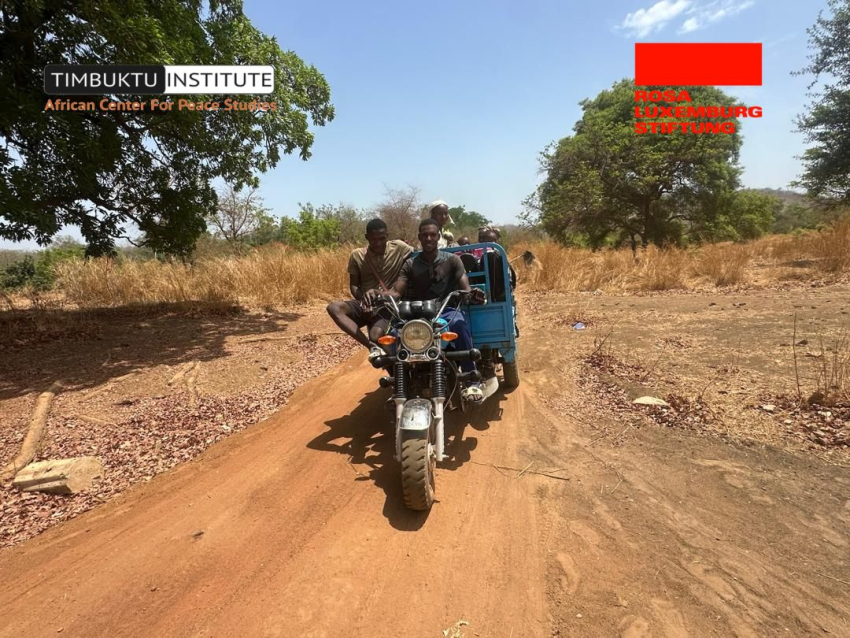 © Timbuktu Institute
Building on its January 2026 pilot initiative—which laid the groundwork for a new understanding of migration as a driver of socioeconomic resilience in eastern Senegal—the Timbuktu Institute, in partnership with the Rosa Luxemburg Foundation, is launching a new, expanded phase of action research covering the departments of Goudiry and Bakel.Conducted within the framework of a consolidated institutional partnership, this study aims to produce evidence-based data, grounded in community realities, to inform public policies and the interventions of development actors in a border area facing multiple challenges.
A territory at the crossroads of mobility, fragility, and resilience
Located in the Tambacounda region of eastern Senegal, on the border with Mali and Mauritania, the departments of Goudiry and Bakel constitute one of the country’s main migration hubs. For generations, these territories have maintained an ambivalent relationship with migration that goes beyond security-focused approaches: while mobility serves as an essential safety net for households facing agricultural precariousness and climate-related risks, it is also accompanied by structural vulnerabilities and growing security challenges linked to the proximity of Mali, which has been in crisis for over a decade. It is precisely the interplay between these migratory, economic, security, and social dynamics that this action-research project aims to explore in depth in order to better inform authorities and stakeholders in the area.
A mixed-methods and participatory approach
The study employs three complementary tools: a quantitative household questionnaire, a semi-structured interview guide for key stakeholders—including returning migrants, community and religious leaders, as well as women leaders, youth, local elected officials, and representatives of the defense and security forces. The Timbuktu Institute also intends to collect up-to-date data using, among other tools, a direct observation guide at border crossings and migration departure points. According to Mbassa Thioune, Director of Research at the Timbuktu Institute, “this methodological triangulation allows us to cross-reference prevailing perceptions, individual trajectories, and collective dynamics, capturing the complexity of a region that univocal interpretations—whether exclusively security-focused or strictly development-oriented—have so far struggled to grasp.”
Continuing an ongoing research initiative
This study builds on the analysis initiated in January 2026, when a report by the Timbuktu Institute established that migration in eastern Senegal was also an endogenous mechanism of resilience.
“The new phase of this action-research project aims to further contextualize and quantify this reality, identify the conditions for its sustainability, and formulate operational recommendations for decision-makers,” explains Dr. Bakary Sambe, president of the Institute.
This aligns with the Institute’s founding mission, which the Rosa Luxemburg Foundation intends to support: generating endogenous knowledge through rigorous research methodology, rooted in reality and serving public policies better adapted to the challenges of peace and human security.
The results will be published in a month by the Timbuktu Institute and presented at a participatory workshop involving communities, local authorities, and various partners active in this region, which faces multidimensional challenges amid security pressures stemming from its border with the Kayes region in Mali.
Dernier de Timbuktu Institute
- Migration, résilience et sécurité humaine dans l'Est du Sénégal : une seconde phase de recherche-action dans les départements de Goudiry et Bakel
- Russian Perspectives on the April 25, 2026, Attacks in Mali: Between Narrative Coordination and Dissenting Voices
- Lectures russes des attaques du 25 avril 2026 au Mali : Entre coordination narrative et voix dissidentes
- RAPPORT - Mali : Anatomie d'un séisme sécuritaire et perspectives régionales
- Austerity in Niger: a May Day without a parade