 French
 Arabic
 English
 Portuguese
 Spanish
 Swahili


Sacré-Coeur 3 – BP 15177 CP 10700 Dakar Fann – SENEGAL.
+221 33 827 34 91 / +221 77 637 73 15
contact@timbuktu-institute.org

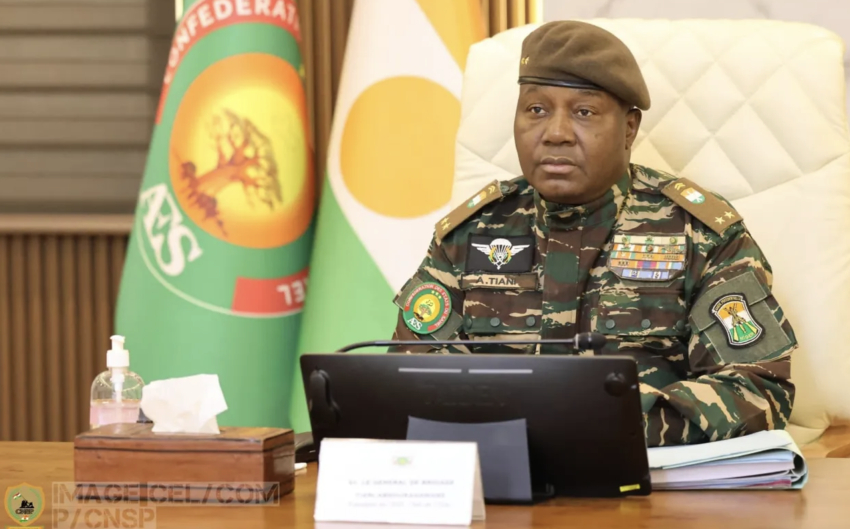
Timbuktu Institute – Week 1 – May 2026
Download the full Sahel weather report
Labour Day celebrations in Niger were marked by an exceptional decision from the transitional government: the cancellation of the traditional military and civilian parades. The authorities justified this measure as a necessary response to the ‘current challenges’, referring to the tense security situation and the need to mobilise resources for the front line. The government opted for low-key ceremonies and awareness-raising messages focusing on national resilience and the sacrifices made by workers. This decision reflects a desire to move away from costly celebrations in order to focus the nation’s energy on defending territorial integrity. The trade unions, whilst acknowledging this decision, took the opportunity to present their list of grievances, emphasising that the fight for security must not overshadow the need to protect purchasing power in an economy under pressure. This imposed austerity underscores the shift towards permanent crisis management, where every public event is reassessed. The cancellation of the parade is a strong political signal aimed at establishing a climate of “general mobilisation”. By removing the festive nature of Labour Day, the transitional government reinforces the idea that the country is in a state of emergency. It is a strategy that helps legitimise budgetary restrictions and call for further sacrifices from the population. However, it also reduces the space for public expression by trade unions, transforming a day of social demands into a day of controlled national solidarity.
Popular mobilisation: march in support of the government in Niamey
The capital, Niamey, was the scene of a large-scale popular demonstration in support of the transitional authorities. This march, organised by several civil society groups, aimed to reaffirm the backing of a section of the population for the government’s strategic choices, particularly regarding national sovereignty and the diplomatic break. Demonstrators marched through the main streets to express their opposition to external pressure and their support for the Defence and Security Forces (FDS). This mobilisation comes amid a climate of regional tension, with Niger seeking to consolidate its alliances within the Economic and Monetary Community of West African States (ECOWAS). For the organisers, the aim was to demonstrate that the current government enjoys solid popular legitimacy in the face of international criticism. The march also served as a platform to denounce past economic sanctions and call for a united front around the ideals of the transition, illustrating the strength of patriotic sentiment in the current political debate. These support marches function as tools for internal and external legitimisation. For the government, they serve as proof of national consensus in the eyes of foreign partners. However, in a transitional context, the line between spontaneous support and orchestrated mobilisation is often a fine one. This demonstration proves that the idea of the country’s sovereignty remains a widely shared consensus among the population. This is what allows the people to remain united despite diplomatic tensions.
Economic inclusion: financial projects for women and young people
On a different note, the Nigerien government has announced the launch of two projects aimed at transforming the country’s financial landscape: improving access to financial services for women and young people. These initiatives aim to remove the structural barriers that exclude a large part of the population from the formal economy. By facilitating access to credit, microfinance and financial education, these projects seek to encourage local entrepreneurship and reduce poverty. The strategy is based on the digitalisation of financial services and the establishment of specific guarantee funds for vulnerable groups. The objective is twofold: to stimulate domestic economic growth by drawing on the country’s driving forces and to ensure social stability through financial empowerment. In a context where international funding is becoming increasingly scarce and is sometimes redirected, Niger is banking on mobilising local savings and the dynamism of its youth to build a more inclusive economy resilient to external shocks. These projects signal a commitment to moving from a subsistence economy to a participatory development economy. Targeting women and young people is a strategic decision, as these groups represent Niger’s most significant—but also its most fragile—driver of growth. The success of these measures will depend on the state’s ability to ensure the sustainability of funding and to overcome bureaucratic obstacles. This is an attempt to build national economic autonomy, in line with the political discourse on sovereignty championed by the transition.
Sacré-Coeur 3 – BP 15177 CP 10700 Dakar Fann – SENEGAL.
+221 33 827 34 91 / +221 77 637 73 15
contact@timbuktu-institute.org