Benin: the return of Sèmè oil and the broadening of partnerships Spécial
In Benin, recent developments highlight the new levers on which Cotonou intends to build its ambitions. After nearly three decades of interruption, Beninese oil is returning to international trade channels with the resumption of production at the offshore Sèmè field and the loading of a first cargo of 330,000 barrels. This revival opens up new revenue prospects, but raises the question of the State's capacity to sustainably manage the development of this resource. At the same time, Benin is seeking to diversify its partnerships: at the Russia-Africa summit in Moscow, it set out its priorities in agriculture, energy and local processing, while the prospect of a military cooperation agreement with Russia has been raised. Finally, on the security front, the review of the Coastal States Stability Mechanism shows that the prevention of violent extremism in the north of the country increasingly relies on community anchoring and local ownership.
After nearly three decades of interruption, Beninese oil is about to return to international trade channels. The resumption of production at the offshore Sèmè field, long uncertain, is now under way, as Cotonou seeks to strengthen its economic capacities and diversify its sources of partnership. Nevertheless, the question remains of the country's ability to convert its natural resources into genuine levers of development, insofar as, between operating conditions, revenue management and prospects for transforming its economy, the return of Beninese crude opens up as many opportunities as it raises challenges.
In this context, the return of Sèmè oil opens up a new economic prospect for Cotonou, while raising the question of the conditions under which this resource can contribute sustainably to the country's ambitions. A first cargo of around 330,000 barrels of crude is due to be loaded on 1 and 2 November 2026 aboard the tanker Kriti Jade, bound for the Netherlands. This shipment marks an important milestone for the offshore Sèmè field, discovered in 1967 and operated between 1982 and 1998, a period during which some 22 million barrels were extracted. Several attempts to revive the field had so far failed to durably restore commercial production. The new start of operations therefore opens an unprecedented chapter for Benin's oil sector, even though its economic scale remains to be assessed in light of production and marketing conditions.
The revival is led by Akrake Petroleum Benin, a subsidiary of the Singapore-based Rex International Holding group, which holds 76% of the block, alongside the Beninese State with 15% and Octogone Trading with 9%. Initially estimated at 250,000 barrels, the first cargo ultimately reached 330,000 barrels. The company is currently operating under a special authorisation, pending the negotiation of a definitive production contract with the Beninese authorities. For three years, it will handle the lifting and transport of the crude. According to the daily La Nation, the negotiations enabled the State to obtain the maximum share permitted by the national regulatory framework. While opening up prospects of additional revenue for Cotonou, this first sale also brings to the fore the contractual conditions of the operation and the authorities' capacity to sustainably manage the development of this resource.
Moscow: broadening the scope of partnerships
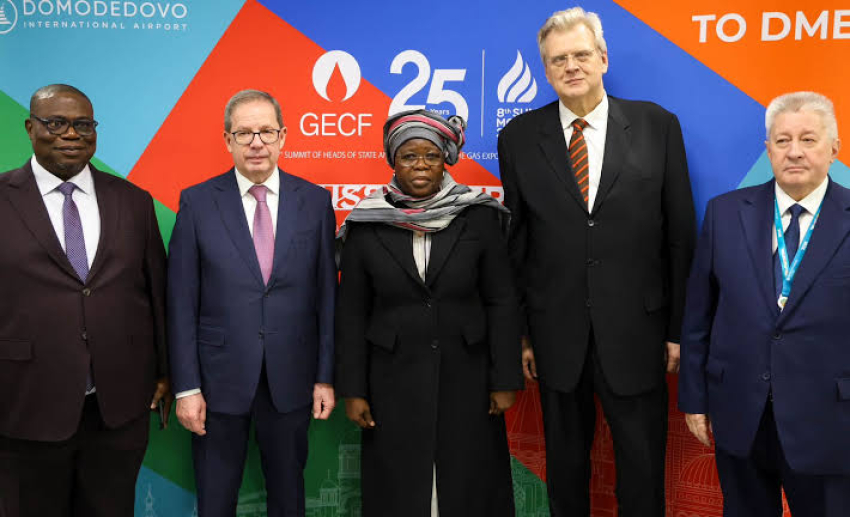
This search for new economic margins is also reflected in the orientations set out by Cotonou at the third Russia-Africa summit, held in Moscow on 28 and 29 October. Vice-President Mariam Chabi Talata led the Beninese delegation there, representing President Romuald Wadagni. His absence raised questions, as the Head of State's personal participation had apparently been expected in the Russian capital following his trip to the United Arab Emirates. President Wadagni's absence had not been officially explained by the time the summit opened. His representation by the Vice-President did not, however, prevent Benin from making its priorities known at this meeting, which brought together representatives of 48 African countries to discuss the future of relations between Moscow and the continent.
On the economic front, agriculture is among the sectors favoured by the Beninese authorities. Cotonou notably wishes to secure its supply of fertilisers, consolidate its food reserves and develop commercial outlets for locally processed products. The prospects for cooperation also cover energy, health, education and digital technology. Through these various fields, Benin intends to steer its relations with Moscow more towards productive investment and the local processing of natural resources, with the aim of increasing industrial value added and the country's economic sovereignty. The goal is thus to give a long-standing bilateral relationship, established in 1962, more concrete extensions in the sectors deemed priorities for national development.
Furthermore, it does not seem to be ruled out that cooperation could extend to the military sphere. Following the signing of a memorandum in the sports sector in 2023 and several port calls by Russian warships in Cotonou, the Russian ambassador mentioned the preparation of a military cooperation agreement between the two countries. This prospect comes as Benin continues to benefit from various Western security support, notably from the United States and the European Union. Should this be seen as a desire to also diversify the partners likely to support the strengthening of national capabilities? The question deserves to be asked, without prejudging the scope of an agreement that has not yet been concluded. For Cotonou, the main challenge is to broaden the possibilities of cooperation with Moscow, while giving an economic and sectoral expression to a rapprochement whose prospects remain to be clarified.
Stability put to the test of community anchoring
At the same time, the diversification of external partnerships is also evident in the prevention of violent extremism. While northern Benin remains exposed to the insecurity dynamics affecting the border areas of the Gulf of Guinea, the authorities are pursuing initiatives aimed at strengthening institutional presence and local prevention mechanisms. On 27 October, Cotonou hosted a national workshop devoted to the review and future directions of the Coastal States Stability Mechanism (MSEC), implemented for the past three years by the International Organization for Migration (IOM), with funding from the United Kingdom, Germany and the Netherlands. The meeting brought together, among others, the Minister Delegate for the Interior and Public Security, Djibril Mama Cissé, his counterpart for Nursery and Primary Education, Armand Kuyema Natta, and diplomatic representatives of the partner countries.
The mechanism is based on an approach that favours bringing together populations, administrative authorities and security forces in the border municipalities most exposed to the threat of extremist groups. The MSEC is in fact part of a broader national framework, with Operation Mirador mobilising some 3,000 soldiers, while a unit created in 2023 is specifically tasked with counter-terrorism in border areas. In addition, there is support from external partners, notably American and European. In this regard, the discussions provided an opportunity to review the conditions for consolidating the mechanism's achievements and the need to better coordinate the interventions of the various actors. Djibril Mama Cissé notably called for strengthening local ownership of the actions undertaken, improving their coordination and making youth and community inclusion levers of stability. Also stressing the need for monitoring and evaluation, he recalled that “these results must first and foremost benefit the communities concerned”. One of the main challenges now is to measure the achievements of the initiatives carried out over the past three years and to assess their capacity to be sustained beyond the funding period.
Dernier de Timbuktu Institute
- Bénin : le retour du pétrole de Sèmè et l’élargissement des partenariats
- Niger : between accusations against Chad and Algerian security anchoring
- Niger : entre accusations contre le Tchad et ancrage sécuritaire algérien
- Senegal: from a budget of discord to a political “divorce” now final
- Sénégal : Du budget de la discorde au divorce politique « consommé »