Senegal: from a budget of discord to a political “divorce” now final Spécial
 TDR
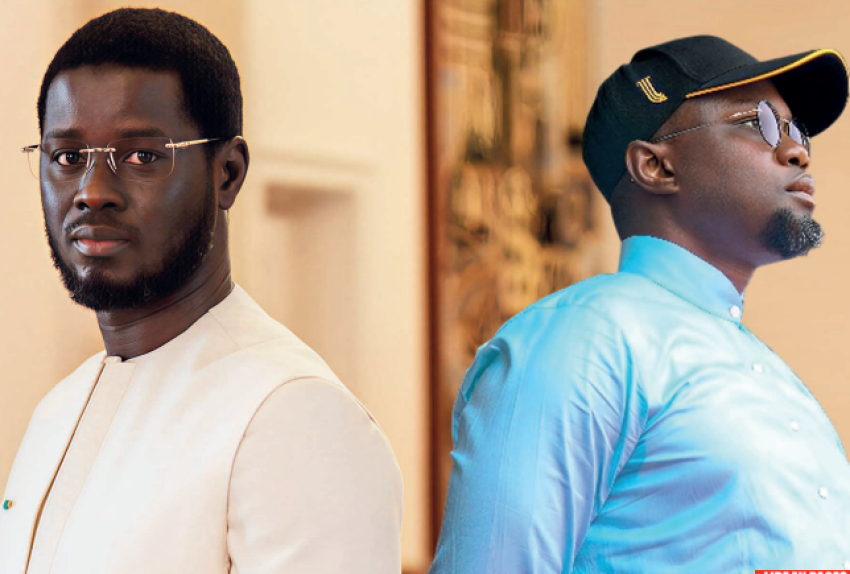
In Senegal, the split between President Bassirou Diomaye Faye and Ousmane Sonko is now openly acknowledged. On Saturday 14 November, before party officials gathered in Dakar, the Speaker of the National Assembly and leader of Pastef declared: “Politically, the divorce is complete, once and for all.” This statement crowns several weeks of confrontation between the executive and the legislature. On 3 November, the Assembly rejected the 2026 amended budget law. Since 7 November, its finance committee has been rejecting most of the 2027 budget bills, citing a lack of credibility in the forecasts. The budget standoff, against the backdrop of negotiations with the IMF, is thus taking an openly political turn. As the dissolution of the Assembly becomes constitutionally possible and local elections draw closer, the country is entering a period of strong polarisation.
The tug-of-war has probably never been so visible. In the space of a few days, the National Assembly delivered three successive rejections of the amended budget bill (LFR) for 2026. An unusual episode in Senegalese parliamentary life in recent years, this triple rebuff sharply reveals the depth of the duel now being played out between the executive and legislative branches, against the backdrop of a rift between the camps of Ousmane Sonko and Diomaye Faye. Indeed, the rejection, on 3 November, of the 2026 LFR bill by the National Assembly puts the executive in a delicate position, as Senegal seeks to consolidate its agreement with the International Monetary Fund (IMF). Only a few days earlier, on 27 October, the text had been sent back to the technical committee at the government's request, as it still hoped to reach a compromise with the parliamentary majority. This was before the text was officially rejected three days later. If proof were still needed, these episodes demonstrate the intransigence of the Pastef parliamentary majority in its determination to act as a counterweight to the executive.
At the heart of the disagreement lie the transparency of budgetary trade-offs, the preservation of public investment and guarantees on purchasing power. Ousmane Sonko's party notably contests the proposed cuts in appropriations for health, education, water and infrastructure, arguing that savings should instead focus on non-priority operating expenditure. The parliamentary majority also says it is concerned about the weight of energy subsidies, whose 2026 forecasts have changed significantly compared with initial estimates. For Pastef, any reduction in these subsidies should be accompanied by measures to ease taxation on petroleum products and electricity supply costs. These are reservations that the government's explanations have clearly failed to dispel. Defending the text, Prime Minister Ahmadou Al Aminou Lô had tried to point out, at a press conference on 25 October, that this budget revision was a response to falling public revenue and rising expenditure, particularly due to higher energy prices. The head of government also stressed that the bill was an extension of the initial budget law drawn up when Ousmane Sonko was still leading the government. But to no avail.
Clearly, nothing more was needed to set the chamber and the political class ablaze. Several opposition voices criticised the parliamentary majority's approach, including Abdou Mbow of the Alliance for the Republic (APR), who denounced a “tasteless film” and a “piece of theatre”. The leader of the Senegal Bi Nu Bokk executives' network, Barthélémy Dias, for his part, deplored a “political deadlock ”, while Aminata Touré, supervisor of the Kiiraay party, criticised the “irresponsibility” of the Pastef MPs. Moreover, since the 2026 LFR bill is decisive for the IMF's debt reprofiling process, it appears that the parliamentary majority is using its ultimate constitutional lever to slow down a process that many of its members have not hesitated to criticise. In addition to the shadow of dissolution hanging over the National Assembly - the law allowing President Faye to dissolve it from 2 December - one cannot fail to see in this episode the signs of a final political battle before the major test of the local elections.
The political equation of a contested budget
It hardly needs recalling that Senegal is seeking to consolidate the staff-level agreement reached with the IMF on 1 September 2026, for a financing programme of 2.2 billion dollars over 36 months. The amended budget bill thus provides for revising the budget deficit to 7.6% of GDP, compared with the 5.4% initially projected. This revision is intended to take account of the deterioration in financial balances and to present new budgetary guidelines to the country's partners. While the rejection of the text does not automatically mean the abandonment of the programme, it could complicate its approval by the Fund's Executive Board and delay the first disbursement. The IMF has indicated that it is closely following developments in the legislative process, while considering it premature to assess the final consequences.
Nevertheless, it should be borne in mind that several options are now open to the executive to overcome the parliamentary obstacle. First, the government could resubmit the text incorporating some of the parliamentary demands, notably additional guarantees on purchasing power and audits to justify the deficit forecasts. It could also resort to decrees to release certain appropriations needed to pay hydrocarbon and electricity suppliers and companies, without however being exempted from having a comprehensive amended budget adopted before the end of the year. Finally, Article 86 of the Constitution allows the government to stake its responsibility in order to have the text adopted without a parliamentary vote. However, this last option would carry a major political risk: the Pastef parliamentary majority could table a motion of censure against the government.
It is thus clear that the Senegalese political weather is particularly stormy these days. All the more so since, while the presidential party Kiiraay hopes - through alliances - to reduce Pastef's room for manoeuvre, controversial remarks by a Kiiraay official, Arona Coumba Ndoffène Diouf, sparked an outcry among part of the political class. At a press conference, the official declared: “We must trap Ousmane Sonko. It is time to stop him. That is the message to convey”. Pastef immediately denounced “threats and hateful remarks (...) constituting in particular an attack on State security”. Be that as it may, by allowing violent statements of this kind to flourish within its ranks, the Kiiraay party may see the “rallying” discourse it claims challenged by a rhetoric of confrontation, at the risk of blurring its positioning with part of the electorate. Moreover, however it may be viewed, this sequence has the merit of recalling the depth of the divisions between the Sonko and Faye camps. As local elections approach, both parties make no secret of their desire to consolidate their respective positions. In this respect, despite its attempts to forge alliances in all directions, Kiiraay appears, for the time being, less well prepared than Pastef. The latter, by contrast, seems confident enough in its own strength to consider not only winning the local elections, but also regaining control of the National Assembly should it soon be dissolved.
Dernier de Timbuktu Institute
- Benin: the return of Sèmè oil and the broadening of partnerships
- Bénin : le retour du pétrole de Sèmè et l’élargissement des partenariats
- Niger : between accusations against Chad and Algerian security anchoring
- Niger : entre accusations contre le Tchad et ancrage sécuritaire algérien
- Sénégal : Du budget de la discorde au divorce politique « consommé »